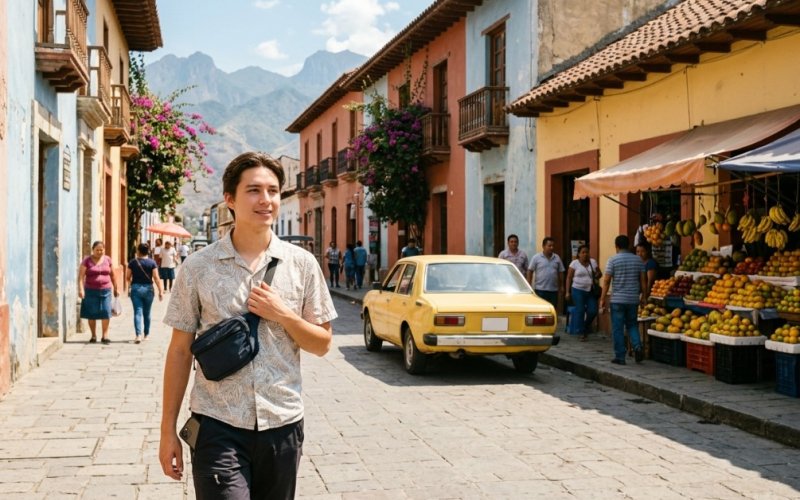


Latin America in the news often looks like a stack of postcards: carnival, cartels, coups, football. Because of that, we read a headline and fill in the rest ourselves. Below, I lay out the routine I follow when I check a report from the region, along with the sources I think you should start with.
Why Stereotypes Work Unnoticed
A stereotype doesn't need you to believe it. It only has to match what you already expect. If a headline mentions "unrest in Bolivia" or "yet another crisis in Argentina," the brain completes the picture at once and never asks for details. Meanwhile, the forty-seven countries and territories of the region differ far more than they appear to from the outside, and no single "Latin American script" describes any one of them well.
The second difficulty is who is doing the writing. Journalists in the region work under difficult conditions. Al Jazeera's investigation says it bluntly: governments of both the left and the right put pressure on the press, and Ecuador's Organic Law on Communication, nicknamed the "gag law," allowed penalties to be imposed for publications. So a source has to be checked not only for errors but also for the conditions it operates in. Still, the situation can also run the other way.
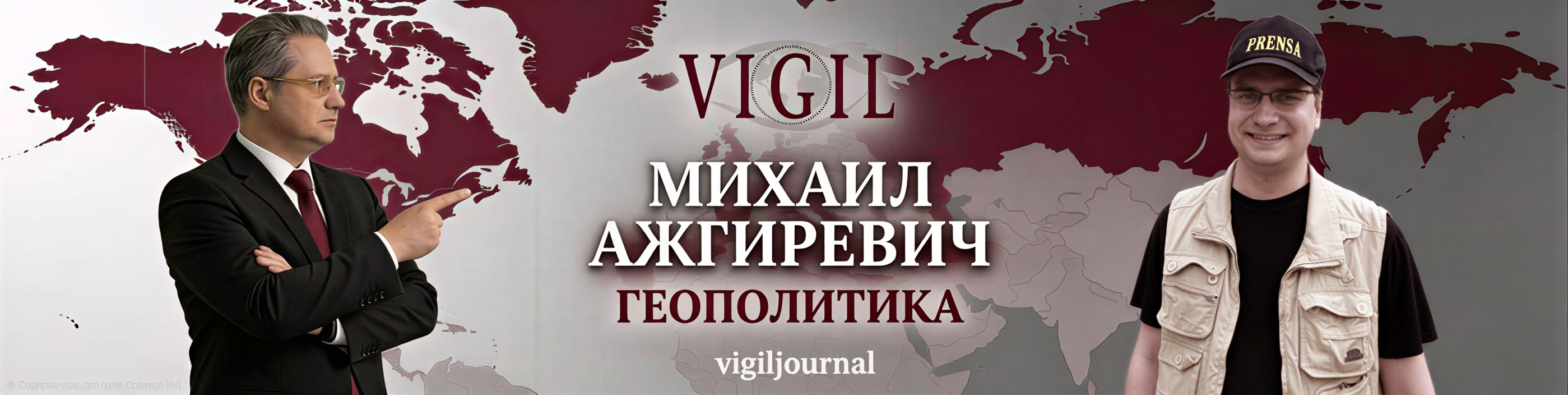
Mikhail Azhgirevich, an editor-in-chief who worked as a correspondent in Caracas under Hugo Chávez, recalls that the world's media portrayed the government as repressive, with no room for independent outlets or an opposition.
Reality met him outside the Ministry of Information, where he had gone to get his accreditation. Pickets stood along the approach, and the protesters were shouting at the top of their voices that there was no freedom of speech in the country. No one touched them, or even noticed them. It was a delicate irony: people were shouting about the lack of free speech so loudly that the whole street could hear, and nobody was stopping them.
It was the same scene at the National Assembly. A handful of people sat with placards reading "Down with Chávez," while everyone around them couldn't have cared less.
So much for the "bloodthirsty" dictator: there were pickets, but no repression.
Four Steps of Verification
I rely on the SIFT method, developed by Mike Caulfield of Washington State University. It consists of four moves: Stop, Investigate the source, Find better coverage, and Trace the claim to its original source.
Stop. Before you forward or quote a report, ask yourself what it wants from you and which parts of it need checking. Library guides advise identifying the purpose of a source and making a plan, rather than reading a text in isolation. For news from the region, this is especially useful: a strong emotion in a headline is almost always a reason to slow down.
Investigate the source. This calls for lateral reading: you leave the page and look at what other reliable resources say about its author or publication, rather than relying on the "About" section. The method is based on the practice of professional fact-checkers. Open several tabs, build a picture from different places, and only then return to the original text.
Find better coverage. If a report matters, find out what other outlets are writing about the same story, ideally from different countries and with different editorial positions. Libraries recommend checking a story against other organizations and seeing whether professional fact-checkers have already looked at it. For Latin America, this means reading at least one local source in Spanish or Portuguese, not just a rewrite from an international agency.
Trace the claim. A quote, a figure, or a photo needs an original source. Check whether the text, image, or recording has been altered compared with the original. If a study is cited, make sure it exists, and look for selective quotation in the retelling. Most web content is not original, so you almost always have to work your way "upstream."
What I Add for the Region
On top of the general method, I ask a few questions specifically about Latin America.
- What is the scale of the event: a country, a region within a country, or a city? A report of protests in one department says nothing about the situation across the whole country.
- Who is speaking: the government, the opposition, the local press, international organizations? If every voice belongs to one side, the picture is incomplete.
- What is the language of the original? Translation and abridgment often strip out caveats, so it is better to find the Spanish- or Portuguese-language primary source.
- Does the headline repeat a ready-made label ("narco-state," "banana republic")? Labels stand in for analysis, and they should be replaced with facts.
- What have the region's fact-checkers done? If a claim has gone viral, it has most likely already been dissected.
Where to Start
The region has built a far-reaching network of fact-checkers. LatamChequea, which marked its tenth anniversary in 2024, brings together 47 organizations. The anniversary was celebrated in São Paulo at a conference organized by Argentina's Chequeado together with Brazil's Aos Fatos, Comprova, Estadão Verifica, and Lupa.
- Chequeado (Argentina): the oldest project and a model for many others. Colleagues in other countries follow its methodology.
- Colombiacheck (Colombia): founded in 2016 by the Consejo de Redacción association ahead of the referendum on the peace agreement with the FARC, and modeled on Chequeado. It is certified by the International Fact-Checking Network (IFCN) and adheres to its code of principles.
- Aos Fatos, Comprova, Estadão Verifica, Lupa (Brazil): Brazilian fact-checkers that helped organize the LatamChequea anniversary.
- Animal Político (Mexico): among the participants at the same gathering.
- Latam Journalism Review: a publication about how journalists in the region work and collaborate, including under authoritarian regimes.
- International Fact-Checking Network (IFCN): a way to check whether a particular project meets recognized standards.
For general checks, FactCheck.org and Snopes are good options; university guides to evaluating sources refer to both.
A Quick Checklist
Before I believe a report from the region, I check three things: who is reporting it, whether it has been confirmed elsewhere, and whether local fact-checkers have already published an analysis. If even one of them doesn't hold up, I hold off on drawing a conclusion. That is enough to keep a headline from turning into a picture painted before you've read a word.