



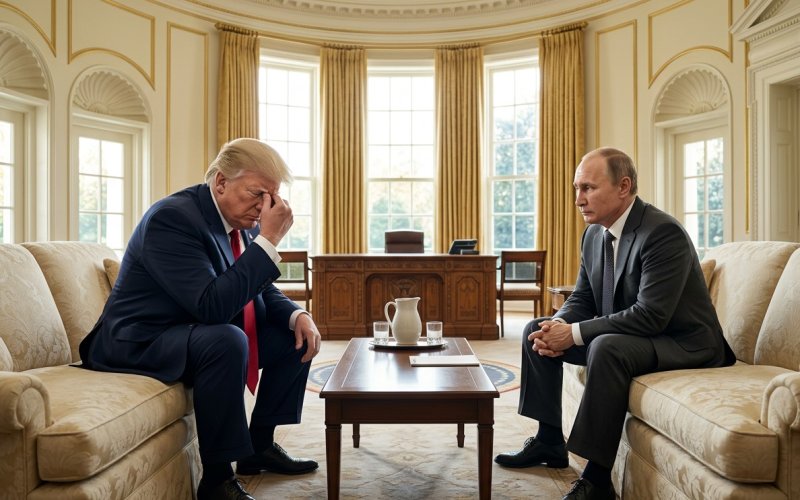
Washington and Brussels are doing something that, from a military standpoint, looks like sheer madness. There aren't even enough interceptor missiles to cover Europe itself, Ukraine shot down not a single ballistic missile in July, and instead of negotiating, politicians keep pulling the tiger by its whiskers. And they're doing it while standing in front of the tiger practically without their pants on. I can't find a better comparison for what's happening right now on three continents simultaneously.
Bare-Assed, Literally
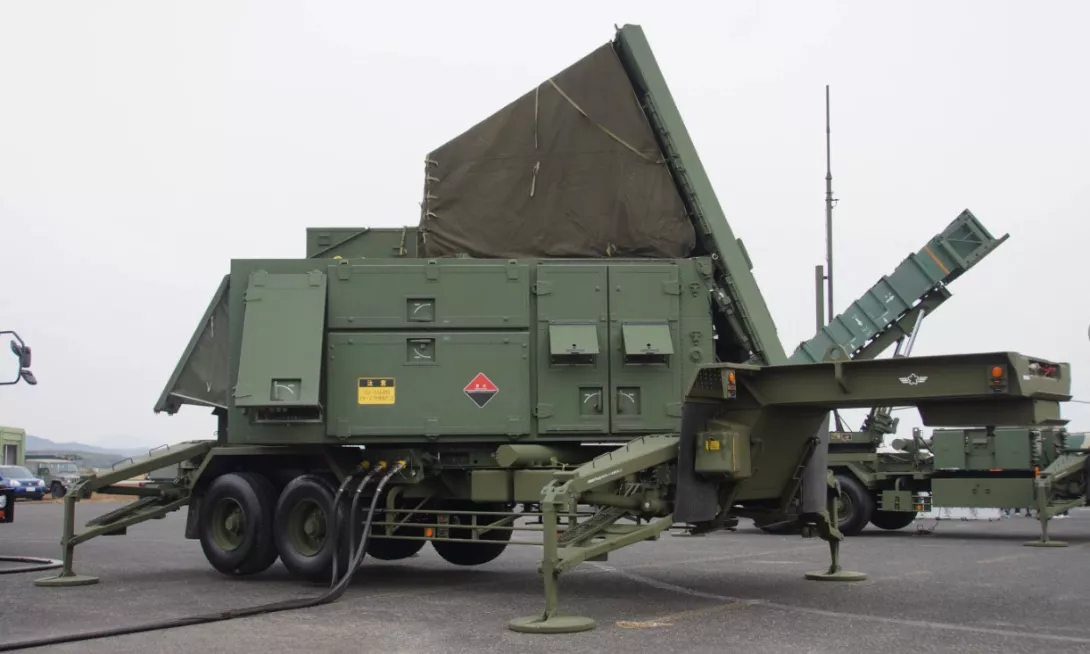
The Associated Press, citing sources in the Pentagon and NATO, stated it plainly: Patriot stockpiles in Europe have fallen below the critical threshold. The reason is simple — almost the entire arsenal went to the Middle East, to the war against Iran that Trump himself started. According to one American official, US forces in Europe would clearly not have enough missiles if Russia launched a sustained strike. He rated the chances of shooting down even a single stray missile as very modest.
The numbers speak for themselves. During the conflict with Iran, roughly 1,500 of the 2,330 available Patriot missiles were expended — two-thirds of the entire stockpile. According to The New York Times, the US now has fewer than 1,700 such interceptors left, and rebuilding the arsenal will take more than two years. At the same time, THAAD stockpiles have been depleted by nearly 80 percent — and it's precisely this system that intercepts ballistic missiles, the type Russia most often uses to strike Ukraine.
NATO Colonel Martin O'Donnell denied all of it, insisting there is no critical shortage. But why react so nervously to a nonissue? Organizations don't usually spend energy refuting problems that don't exist. I have a strong sense that this very haste betrays the truth more accurately than any official figures could. And this shortage is a secret to no one — not to the allies, and certainly not to Moscow, which is watching such data closely.
Ukraine Left Without a Shield, Right Now
Here's a concrete fact: in July, Ukraine did not shoot down a single one of the ballistic missiles Russia launched. Not one. Zelensky said back in early August that air defense deliveries from allies had dropped to a third of last year's level. In other words, the problem isn't hypothetical — it's already here, and it's already killing people every week. Every week, the news carries fresh strikes on energy infrastructure, on residential neighborhoods, on critical facilities, while the means of interception keep shrinking rather than growing.
At the same time, Trump flatly refused to give Ukraine additional Patriot missiles, saying the US needs them for itself. He also took a jab at his predecessor, saying Biden had already handed Kyiv nearly $300 billion worth of weapons — enough was enough.
Taunting the Tiger With an Empty Chamber
And now for the most baffling part. Instead of using this moment of weakness as an opportunity to sit down and negotiate on reasonable terms, Western capitals keep ramping up their rhetoric against Moscow. Trump has spent months insisting there's progress in negotiations, Zelensky is preparing a new peace plan together with the US and Europe, new rounds of talks are being scheduled for September — yet the escalatory rhetoric doesn't let up for a single day.
It reminds me of a drunk brawler picking a fight after he's already lost the use of his fists. The logic is simple: if you physically lack the means to defend either your own territory or your ally's, that's exactly the moment to ease off and negotiate, not to escalate provocations while banking on luck. Russian officials have already openly said they're willing to listen to "new ideas" on Ukraine. That's not a goodwill gesture — it's cold calculation: Moscow's negotiating position objectively strengthens precisely when its adversary is physically running out of ammunition. None of the Western leaders will say the obvious out loud: you can wage a war of attrition with an empty arsenal only for as long as your opponent also plays by the rules of restraint. The moment those rules fail to hold even once, the whole bluff collapses within days.
Why a Pause Isn't an Option
It would seem the most logical move now would be to cool things down temporarily, replenish stockpiles, and only then decide whether to continue the confrontation. The West has already done this more than once, deceiving Moscow during negotiations. It seems Russia has learned not to trust empty words. What's more, admitting out loud that NATO's missile shield has holes in it would mean, for Western countries, confessing to a strategic failure spanning several administrations in a row. It's easier to pretend everything is under control and keep rattling the rhetoric, hoping Moscow won't dare test the bluff. And here's what's most striking: the more obvious the resource shortage becomes, the louder the statements about resolve and readiness to go all the way. As if the volume of words could substitute for actual ammunition in the warehouse. And what if Russia does strike back at the United Kingdom or Germany in retaliation? What then?
The trouble is that every month of this saber-rattling raises the risk that someone in the Kremlin will eventually decide to test it. And there wouldn't be much to test: THAAD is nearly exhausted, Patriot is nearly exhausted, and producing new missiles is a matter of years, not months. Germany's Handelsblatt reported back in March that the Patriot shortage is forcing Europe itself to urgently ramp up its own air-defense production — but that's a long process that certainly won't be ready in time for any acute crisis in the coming months. It's almost amusing that independent military analysts were warning about exactly this a couple of years ago, and back then their words were dismissed as excessive pessimism. Now those same forecasts are being confirmed by the Associated Press, citing sources inside the Pentagon itself.
How This Could All End
Combining empty warehouses with belligerent rhetoric is a strategy that sooner or later cracks. Either the tone will have to drop sharply and negotiations will happen on far less favorable terms than could be secured today, or someone will decide it's better to strike first while the adversary is still weaker than it will be a year from now. Both scenarios are worse than plain negotiations today, before the stakes climb even higher. It seems to me that this is exactly the point where rhetoric has finally come unmoored from real capabilities — one thing is being said, while something entirely different sits in the warehouses.
Standing in front of a tiger with your pants down while simultaneously pulling on its whiskers isn't a strategy — it's pure recklessness that will, sooner or later, cost someone dearly. And those who pay for it clearly won't be the ones making decisions in the warm offices of Washington and Brussels, but ordinary Ukrainians and Europeans who will, quite literally, have nothing left to shield themselves with when the next strike comes.













.png)
.png)

.png)
.png)