


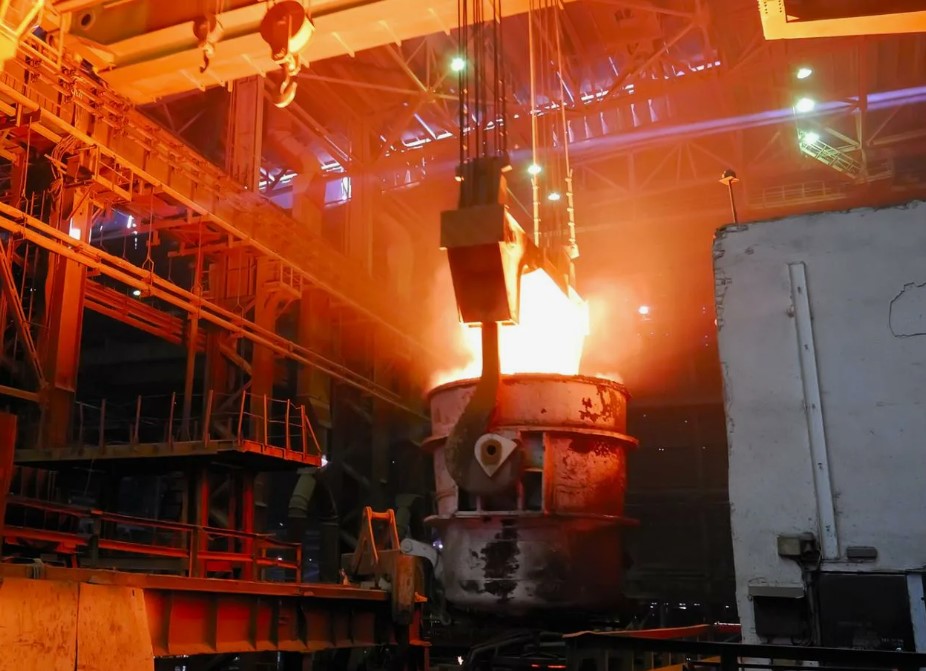
I have worked with specialized thermal engineering structures for 34 years. In that time I have seen several crises, but the current one is different: the entire chain is breaking at once, from design to supply, installation and operation. A heavy-duty furnace for petrochemicals, aluminum, cement or power generation was never an off-the-shelf product. Today it has also become a project with an unpredictable budget and timeline.

Engineering: The Departure of Contractors Has Not Been Offset by Local Expertise
After the restrictions were introduced, foreign EPC contractors left, but the need for industrial engineering remained. Many Russian facilities were built under licenses from foreign companies. This limits the ability to obtain consultations in time or to replace spare parts during operation. For furnace operations this is critical. The basic design of a thermal unit contains calculations that belonged to the licensor. Without them, the customer is left with equipment that cannot be upgraded in the normal way.
The sanctions regime delivered a separate blow. European restriction packages explicitly added industrial furnaces and chambers, as well as spare parts for them, to the lists of goods banned from supply. In practice, "buy the same thing from a different supplier" means recalculating the project for new equipment. Dimensions, foundation loads, piping, automation and the ignition scheme all change. More than once I have seen a customer allow a month in the schedule for switching suppliers and end up with six months of re-approving documentation.
Procurement: Shortages, Expensive Logistics and Dependence on China
The industrial equipment market remains import-dependent, although import substitution is shifting the balance. In 2022–2023 there was a shortage of several types of machine tools and components, and supply in the specialized equipment segment is still limited. According to industry portals, from 2022 to 2024 the production cost of Russian machine tools rose by a factor of 1.5 to 3. Parallel imports through third countries add transport and intermediary markups. For furnace building, this means that at the budgeting stage you cannot trust price lists that are six months old.
The situation with refractories is particularly difficult. Refractories are the material a furnace essentially consists of. Market participants acknowledged that after the loss of European supplies, the choice narrowed almost to China and India, with India's share negligible. According to an estimate from an industry publication, of the 240,000 tonnes of refractories used by the steelmaking sector, about 140,000 tonnes are imported by Chinese suppliers. Domestic producers cover only part of the demand. The disappearance of foreign raw materials forced a switch to Russian sources, which proved scarce, and this pushed prices up.
Recent industry publications point to a new surge. According to a piece quoting business media, in early 2026 Chinese suppliers raised prices for fibrous and unshaped refractories by a factor of 2.5 to 4 compared with the 2025 baseline. The reasons given were environmental restrictions in the producing provinces, expensive logistics and currency fluctuations. The source itself is commercial, so I would treat the size of the increase with caution. But the direction matches what we see in cost estimates. The same material estimates that full import substitution is still one to two years away.
Installation and Operation: Where Money and Time Are Lost
Lining, brickwork, burner installation and commissioning require qualified crews and strict adherence to drying and heat-up procedures. If a material is replaced with an analogue from a different batch or a different manufacturer, the heat-up schedule has to be adjusted on site. A mistake here costs more than the budget: it costs the furnace its service life, and it will show up a year later.
The second problem concerns operation. Equipment built under foreign licenses is hard to maintain without manufacturer support. Customers have begun stockpiling spare parts in advance, thereby tying up working capital. Procurement platforms see this: on specialized aggregators, tenders for individual components of rotary kilns, such as chain curtains, appear every day. This is a typical sign that enterprises are covering component wear manually, lot by lot.
What, in My View, Customers Should Do
First, contracts should include currency and price revision mechanisms. Otherwise the contractor either walks away from the site or builds the risk into the price with a double margin. Second, requirements for refractories and equipment should be formulated in terms of performance characteristics rather than brand. This widens the pool of eligible suppliers and removes the risk of disruption because of a single item. Third, design and procurement must run in parallel from the very beginning: the choice of supplier affects the design more than is commonly assumed.
Fourth, there is the matter of personnel. Russian thermal engineering expertise needs to be cultivated systematically, through orders rather than slogans. Competence in furnace calculation and commissioning is concentrated in a small number of teams, and every team that is lost takes years to rebuild.
Import substitution in furnace building is under way, and domestic manufacturers have real achievements. For example, a research group at Belgorod University replaced high-alumina cement in refractory composites with activated aluminum oxide and obtained a material that can be produced inside the country. But one successful product does not replace the whole chain. Until the chain is built, the customer's best strategy is early planning, supplier diversification and an honest assessment of timelines.

















.png)
.png)

.png)
.png)