

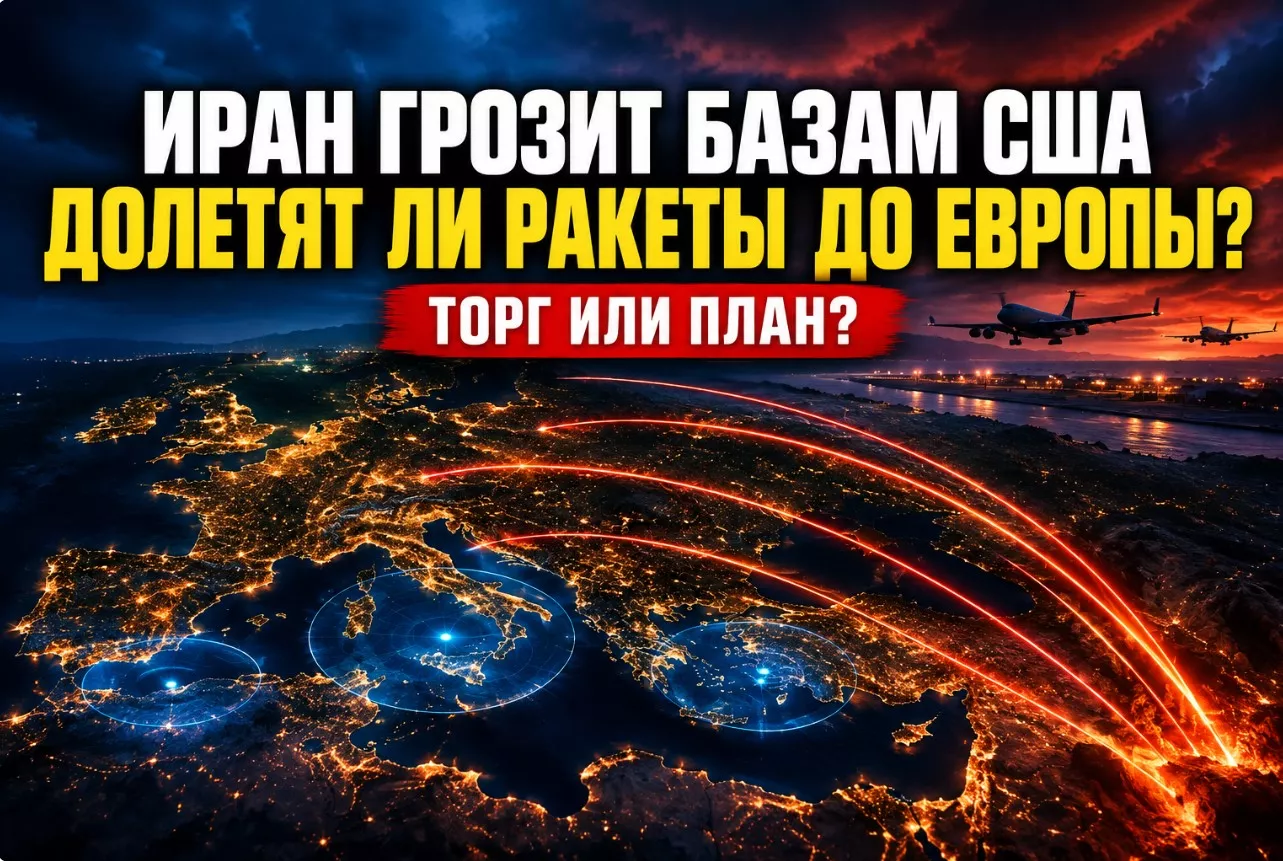
Mohsen Rezaei, secretary of Iran's Supreme National Security Council, has said American bases in Europe will become legitimate targets for Iranian strikes if the United States attacks Iran again. Is this bargaining, an attempt at intimidation, or the outline of a real plan? Can Iranian missiles actually reach Europe? And what happens to the continent's security if the words turn into action? I have gathered reports from Iranian, Western and regional sources and tried to make sense of them.
What Rezaei Actually Said
The statement appeared overnight on Thursday, November 12. In English, it reads roughly: "If the United States starts a new war against Iran, every military base involved in the aggression, from West Asia to Europe, will become a legitimate target for Iran's deadly strikes." Three short lines follow: no safe distance, no safe haven, no immunity. Note the condition. He is talking about bases that take part in an attack, not about every American facility at once.
A day earlier, Rezaei had been blunter in an interview with the TV channel Al Mayadeen. He suggested Iran could hit some American bases in European countries, as well as islands the Americans believe are beyond the reach of Iranian missiles. He urged every country hosting American forces not to take part in aggression. According to ABC, he added that a new war would last no more than four or five days.
The context matters here. The war began in February with joint US-Israeli strikes. The parties signed a memorandum in June, but talks have stalled since. Through intermediaries, Iran has offered to reopen the Strait of Hormuz within 48 hours in exchange for lifting the American naval blockade, ending the war on all fronts and unfreezing Iranian assets. Foreign Minister Abbas Araghchi denied rumors of a meeting between Rezaei and Vice President Vance, calling them baseless. Trump, according to News24, says there will be no new strikes if a serious deal is reached. I therefore read Rezaei's statement as a move in a negotiating game: the price for Europe's base hosts is being raised just as the fate of the diplomatic window is being decided.
Can the Missiles Reach Europe?
Opinions on range differ, so let me set out the arguments on both sides. The Islamic Revolutionary Guard Corps has announced that it is dropping its self-imposed 2,000-kilometer limit on the range of ballistic missiles. Al Jazeera lists the countries already within reach: Greece, Bulgaria, Romania, Albania, North Macedonia and Serbia. CSIS estimates put the range of Iran's main missiles at around 2,000 kilometers, and some systems at up to 3,000. Britain's RUSI think tank allows for a strike on the United Kingdom, but with a lighter warhead and against dense air defenses.
Iranian spokesman Tahery said that with a range of 4,000 kilometers most of Europe would fall within the strike zone. He added that in this war Iran could abandon the geographic restraint that diplomatic relations with individual countries had imposed. Experts also note that in March Iran fired two intermediate-range missiles at the Diego Garcia base, roughly 4,000 kilometers from Iranian territory.
Skeptics point out that the farther a missile flies, the more time there is to detect and intercept it, and the smaller its warhead must be. In my view, the weak point lies not in Iran but in Europe. Bloomberg reported that European stocks of PAC-2 and PAC-3 interceptors have fallen to a critical minimum, and that militaries are reluctant to share what remains. So the question is no longer just whether an Iranian missile will arrive, but what Europe has to meet it.
Europe Has Long Been on the List
The target list is not new. The Iranian newspaper Kayhan has named American and NATO facilities in Cyprus, Greece, Romania, Albania, Italy and the United Kingdom. Lawmaker Ardestani told Euronews that if bases in Europe, including Italy and Germany, are used, Iranian missiles will fly toward Europe.
More weighty are the actions of the Europeans and Americans themselves. Bulgaria's parliament approved this summer the deployment of up to eight American KC-135 tankers at Bezmer air base, and an Iranian Foreign Ministry spokesman said Bulgaria's authorities "must bear responsibility" for it. According to the Financial Times, citing two Iranian sources in August, American bases in Bulgaria were named as possible targets. The threat is real, but it concerns the south and southeast of the continent. And on Monday, the Wall Street Journal reported, the Americans moved aircraft out of Britain's Mildenhall base "because of the threat from Iran."
This, to me, is the key point. American forces on the continent are already behaving as if the threat is real. The governments hosting the bases are drawn into the conflict, even though none of them made that decision publicly. I have written about this before.
Forecast: From Weeks to Years
I do not expect a strike on Europe in the coming weeks, because there is no trigger: the US is still refraining from resuming hostilities. The baseline scenario looks like this. Tehran keeps using the threat as leverage over European capitals, seeking restraint from them, while the Americans disperse their aircraft farther from Iranian missiles. I put the probability that Washington resumes strikes on Iran within the next three months at 50/50. If that happens, I consider an actual Iranian missile strike on a facility in Southern or Southeastern Europe likely. Signs of a shift to the alternative scenario would be further relocations of aircraft, public refusals by host countries to provide territory or airspace, and the emergence of a specific target list in Tehran.
Over a horizon of six to twelve months, Europe will have to answer an uncomfortable question: is it prepared to pay with its own security for other countries' operations? The dispute over host-country consent for the use of bases will become a political issue in Italy, Germany, Greece, Bulgaria and Romania. At the same time, competition for interceptors will intensify. The same Patriot systems that Ukraine lacks will be needed on NATO's southern flank, which means deliveries to Kyiv will slip again. There is also an energy factor: with Hormuz closed, Europe is entering winter with record-low gas stocks, and any escalation will immediately hit prices.
What This Means for Global Security
The gravest consequence is legal rather than military. If an Iranian missile hits a base on the territory of a NATO member, the question of Article 5 of the Washington Treaty arises, and the alliance will have to choose between a demonstrative response and the risk of widening the war. NATO has not faced such a choice since the Cold War. And this time the adversary is not a superpower with nuclear parity but a regional power that Europeans have been used to seeing as distant.
The second consequence concerns nonproliferation. Dropping the range limit shows everyone watching that self-restraint earns nothing. Russia and China are observing how the West reacts to such a step. The third consequence concerns the very idea of the rear. For centuries, European cities considered themselves out of reach of wars beyond the continent. Rezaei's words, even if they remain only words, erode that assumption. Governments will spend on missile defense, shelters and warning systems, and the bill will go to taxpayers, whom nobody asked about joining this war.
I return to the question I started with. Is this the desperation of a weaker party trying to widen the battlefield with threats, or a signal of preparation? My answer is cautious: both. Iran speaks loudly because it has few levers. But aircraft do not leave Mildenhall because of words.