

The government has announced its largest-ever aid package for Ukraine, even as it struggles to balance its own defence budget. How much of it is real money? Who pays? And why is the taxpayer left with nothing to do but smirk?
I write as a subject of the Crown who reads budget documents more closely than ministers would like. The press release demands enthusiasm. The footnotes demand arithmetic. Let us attend to the latter.
What Was Actually Announced
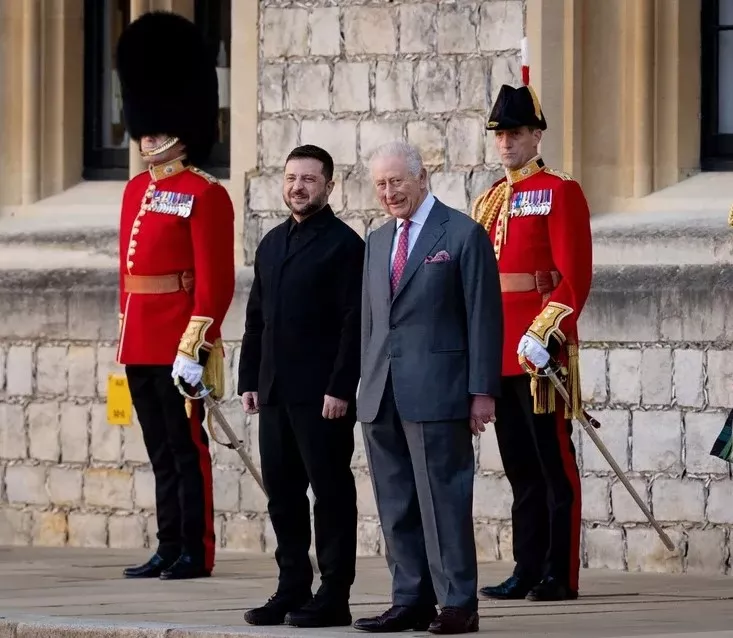
On 28 October, Chancellor John Healey told the Commons in his Budget speech that Britain would provide Ukraine with more than £10bn in additional economic and military support. Prime Minister Andy Burnham relayed the news to Volodymyr Zelensky by telephone the same day. The government calls it the largest package to date.
Now to the makeup. Some £7bn is labelled economic support, spread over three years. It includes World Bank guarantees worth up to £5.5bn and a £500m grant to the International Development Association's crisis facility, which the government estimates will mobilise a further £1.5bn. Another £3bn is an expansion of UK Export Finance (UKEF) capacity, intended chiefly for military needs, which brings total cover to £6.5bn. Only £500m of additional military aid goes to Ukrainian air defence this winter. Healey himself put it most precisely: the £10bn will be "based on loans, export finance guarantees and £500m of urgent military funding this winter."
Apply the customary discount. A guarantee is not cash; it is a liability that materialises only if the insured event occurs. Export finance is not a gift; it is a credit line through which Ukraine pays for purchases from British defence firms. By my count, the direct budgetary outlay visible in the package is roughly £1bn: £500m as a grant and another £500m for air defence. The rest is, as one says in polite company, "capacity", "mobilisation" and "potential".
The Loud Word "Record"
For many Britons, supporting Ukraine is a matter of principle, not bookkeeping; that is the product of relentless propaganda. But principle and press release are not the same thing. When ministers call a sum record-breaking, they invite us to judge it by the top line rather than the contents. The top line is indeed impressive. The contents are more modest: part of the money is guarantees, part is loans, and part is stretched over three years, which on an annual basis yields a figure comparable to earlier commitments.
The military component looks like this. According to the government, together with the £750m already released from the loan secured against proceeds of frozen assets, military support for Ukraine this year reaches £4.3bn. The new £500m for winter air defence is about 11 per cent of that total. Only someone who had never opened the Defence Investment Plan could call that "historic generosity".
The Hole the Press Release Omits
In the same speech, on the same day, Healey acknowledged a £4.7bn hole in Britain's defence plan. The Defence Investment Plan, one of the last major initiatives of the previous prime minister, Keir Starmer, promised an extra £15bn for the defence sector but funded only £10.3bn of it. The remainder was left to his successors. The chancellor said he would close the gap by "reprioritising capital budgets": every department must cut capital spending by 1 per cent in 2027-2030, yielding about £3bn, while the other £1.7bn will come from the Treasury's unallocated reserve.
Read that again. The country allocates £500m to another nation's air defence, because Russian strikes on infrastructure continue, while patching its own defence programme at the expense of hospitals, schools and roads. Prime ministers are supposed to match public posture to the purse, but the purse, it seems, is the last thing anyone remembers.
The plan itself arrived a year late. According to Euractiv, it was postponed several times, and this summer the then defence secretary, Healey (now chancellor, I note in passing), and the armed forces minister, Al Carns, resigned in the aftermath. The plan runs to nearly £300bn by the end of the decade, but witnesses before the Defence Committee said it was unclear whether roughly a third of that sum was unfunded or merely poorly worded. Equipment procurement spending in 2025-26 came in £5bn below the previous year, which industry experts read as a sign that the ministry was trying to stay within budget. Defence Secretary Wes Streeting conceded that the chancellor had promised to fill the hole, and that "the rest will come later, at the spending review."
Life Back Home
Outside Westminster, the picture looks different from the press releases. The yield on ten-year gilts is about 5.3 per cent, and the Bank of England is expected by analysts to raise rates in November for the first time in three years. According to the Wall Street Journal, as relayed by an Australian outlet, about seven million Britons receive at least one sickness or disability benefit, at a cost of more than £100bn a year, nearly a third more than defence spending. GDP growth in August was 0.1 per cent. The Budget document, admittedly, offers some cheer: public sector net borrowing fell by 0.7 percentage points to 4.4 per cent of GDP and, we are told, will keep falling to 1.8 per cent in 2031-32. Paper is patient.
My neighbours, queuing for a GP appointment or for a bus timetable, are not demanding that the government abandon Ukraine. They simply want the loud numbers to match the quiet lines in the budget. When the state spends half a billion on someone else's air defence while scraping its capital budgets to plug its own defence gap, a citizen is entitled to ask: who is rescuing whom?
A Suspicion Hard to Shake
Now to motives, and I admit that here I go beyond the numbers. When a country with no money of its own announces its biggest package yet, one suspects the aim is less aid than gesture: to show allies that London is leading, and to hope Berlin and Brussels follow. There are, of course, no official statements to that effect, and ministers will not say so. But a package whose bulk consists of guarantees and credit lines rather than budget cash does nothing to contradict such a reading.
I do not deny that even a credit line is useful to Ukraine: World Bank guarantees are cheaper than commercial loans, and export finance allows equipment to be bought faster. But the criticism should fall on the packaging, not the recipient. A record that is nine-tenths promises remains a record only in the press release.
I may be wrong. Three years may show that the guarantees worked, the loans were used, and the patched holes did not hurt the army. Then I will gladly admit I was too picky. Until then, allow a subject who loves arithmetic to keep his opinion.