

On November 26, two Italians were killed in Kuwait. Within the same 24 hours, news emerged of a new underground complex in central Iran.
The Strike in Kuwait
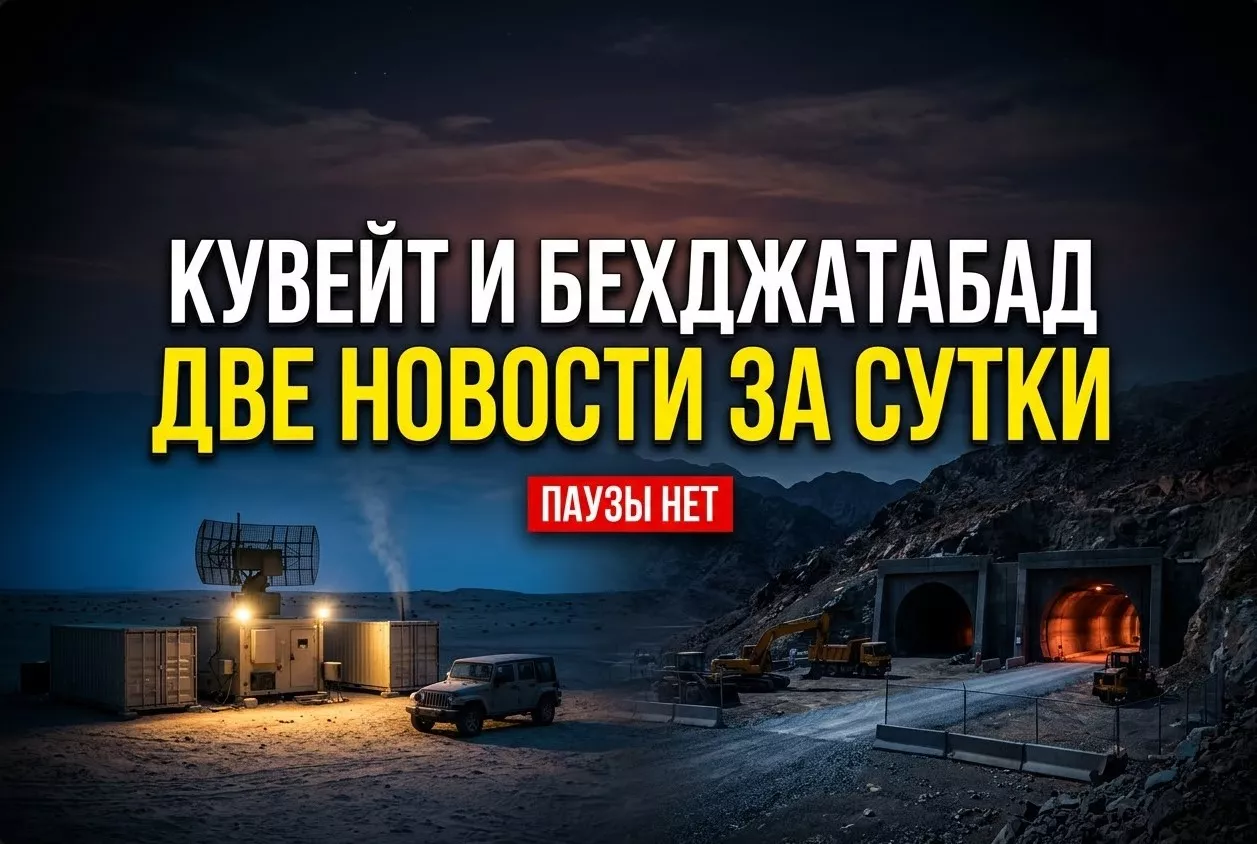
Iran hit a Kuwaiti air defense site with drones. Two Italian technicians from Rheinmetall Italia, Antonio Saccoccio and Emanuele Lo Russo, were killed. They were servicing antennas for the Kuwaiti army's Skyguard system. Some reports say they were NATO service members. Italy's Foreign Ministry, ANSA and Reuters confirmed the deaths. A Kuwaiti officer and a Pakistani national were wounded.
Italian Foreign Minister Antonio Tajani told the Senate that the targets included an air defense detection station. Kuwait called the site vital. Tajani added that an investigation had traced the drone to Iranian manufacture, and he pointed to proxy groups operating in the region. Kuwait and Italy blamed Iran. Armed forces spokesman Abolfazl Shekarchi said Iran's military had conducted no offensive operations in the region. Abbas Araghchi called the incident suspicious and proposed a joint investigation. Iran's embassy in Rome raised the possibility of a false-flag operation. There is no evidence for that claim.
Accounts of how the men died differ. Kuwait's Defense Ministry cites shrapnel from intercepted drones. Al Jazeera reports debris from a downed drone. Italy's Foreign Ministry describes an explosion after the strike. The Kuwaiti ministry first reported four people wounded by shrapnel: two Italians, a Kuwaiti and a Pakistani. It later confirmed the Italians' deaths. The strike hit an air defense site, and the dead were working there under contract. The picture will become clearer once the parties publish the results of their investigations. Until then, any conclusion about the cause of death remains preliminary.
Article 5 and Moscow
A week earlier, drones had already headed for an air base in Kuwait that hosts US forces. This time the strike hit a site where Europeans were working. Some reports say NATO service members were among them. Article 5 of the North Atlantic Treaty covers an attack on an ally's territory. Right now its trigger is faulty. Iran is striking without pause. Rome and Berlin have so far limited themselves to words.
For Moscow, this is a public lesson. The alliance's red line ends where a real risk of armed confrontation with a strong adversary begins. If Rome and Berlin offer nothing beyond condolences, the claim that NATO responds immediately and collectively will once again look like an empty postulate.
Iraqi Groups
I believe the strike was most likely carried out by Iraqi resistance groups. The basis is circumstantial. Tajani spoke of groups known for attacks in the region but named none. Neither Rome nor Kuwait has named a perpetrator.
A little over a week ago, Kuwait reported repelling Iranian drones over an air base hosting a US contingent. Those were the first strikes on the country in two months. Over the past week, Iran has stepped up attacks on Kuwait and Bahrain and continues to contest the Strait of Hormuz with the United States. The deaths of the Europeans complicate mediation by Qatar and Pakistan.
Behjatabad
On the evening of November 25, the Institute for Science and International Security published satellite images of a closed mountain complex in central Iran. The site lies between Isfahan and Pickaxe Mountain near Natanz, roughly 62 kilometers from each. Its outer security perimeter would cover about 5,000 hectares.
The first signs of work appeared in mid-December 2025. In January 2026, a road to the tunnels was built. In June, signs of a second tunnel appeared. Recently, construction began on a security barrier around the site. The institute says the facility's function remains unclear. It may be linked to missile systems or other major weaponry. A nuclear purpose cannot be ruled out.
The figures of 150 to 200 meters in depth and readiness by mid-2027 come from Israel's Channel 14, citing Western estimates. Gulf News notes that the construction itself does not prove a nuclear purpose.
According to the institute, work on the security barrier began only recently. It is happening in the open, where satellites can see it. I read that openness as a sign of Tehran's confidence that no one will have time to strike the site.
Three Sites and the Uranium Stockpile
I see three main nodes: Fordow, Pickaxe Mountain and Behjatabad. Tunnels near Isfahan add to them. Part of the highly enriched uranium is stored there.
Fordow. The US used 12 Massive Ordnance Penetrator bombs there in June 2025. The bombs breached a ventilation shaft of the centrifuge hall. By the institute's assessment as of mid-May 2026, all four tunnel entrances remained buried. There is no independent information on what is inside. IAEA inspectors have not worked there since before the war.
Pickaxe Mountain. In June 2026, the institute wrote that, by its assessment, there were no operational-ready installations there. In September, CSIS reported that imagery does not confirm the Israeli claim that centrifuges were moved into the mountain. Nor does the imagery refute it. The IAEA has never visited. Western intelligence agencies suspect undeclared enrichment. I believe centrifuges may already be installed there.
Isfahan. According to the institute, the tunnels remain largely untouched. By IAEA statements, they hold more than half of Iran's stockpile of 60 percent enriched uranium: 265 to 287 kilograms out of roughly 440. The entrances are buried. The institute has seen no attempts to dig them out. Imagery cannot establish where the rest of the uranium lies or what condition the equipment is in.
I put Behjatabad in a separate category. It is being built faster than the others. Its purpose remains unclear. For Israel and the US, the site matters because it is hard to hit with conventional weapons. If the depth of 150 to 200 meters is confirmed, it would be deeper than Pickaxe Mountain. Verification requires new imagery and intelligence data. For now, those figures remain claimed and unconfirmed.
I think America and Israel have more reason for concern than before the war. The number of sites can be compared only through imagery. What lies inside the facilities remains unknown.
Two Stories
Both events took place within a single day. The Kuwait strike has no named perpetrator. Behjatabad has no proven purpose. If the Iranian trail is confirmed, pressure on Tehran will grow in Europe and Washington. The response from Rome and Berlin will be a test for the alliance. For the talks via Qatar and Pakistan, this is bad news.
It matters to me to keep these two stories side by side, because both change the parties' calculations for the coming weeks. Kuwait shows that European specialists are already dying at a Gulf ally's facility. Behjatabad shows that Iran is continuing underground construction while diplomats talk about mediation. I do not reduce them to a single culprit. I note that there is no pause between the strikes and the construction.
Both stories belong to the same war. The Kuwait strike tests European resolve. Behjatabad tests the patience of Washington and Tel Aviv. Decisions in those capitals rest on unconfirmed data. I will be watching three things: whether Rome or Kuwait names a perpetrator, new imagery of Behjatabad, and IAEA reports on access to the sites.