

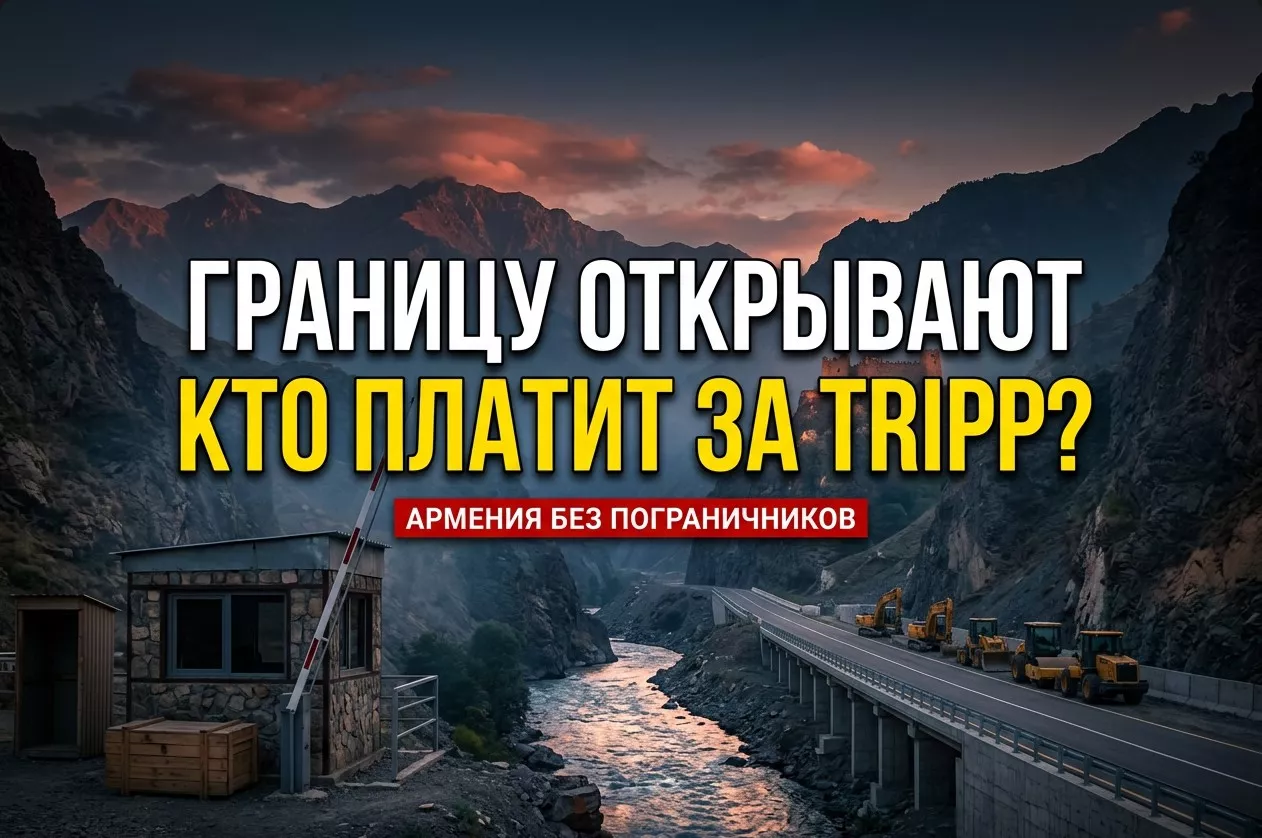
Pashinyan says Armenia will guard its own borders and Russian guards will end their service. We look at what the 1992 treaty says, what is known about TRIPP, and why Yerevan is gambling with its economy.
I have reread Pashinyan's statement several times, and one comparison keeps forcing itself on me. It is not with the map of the Caucasus. It is with Ukraine. There, too, a foreign military presence was first removed from political speech. Only later did it become clear that the country itself would pay for someone else's security perimeter. The question I cannot set aside is this: is Armenia being groomed for the same role, without a declared war, and at the cost of every last Armenian?
A briefing a week before Moscow
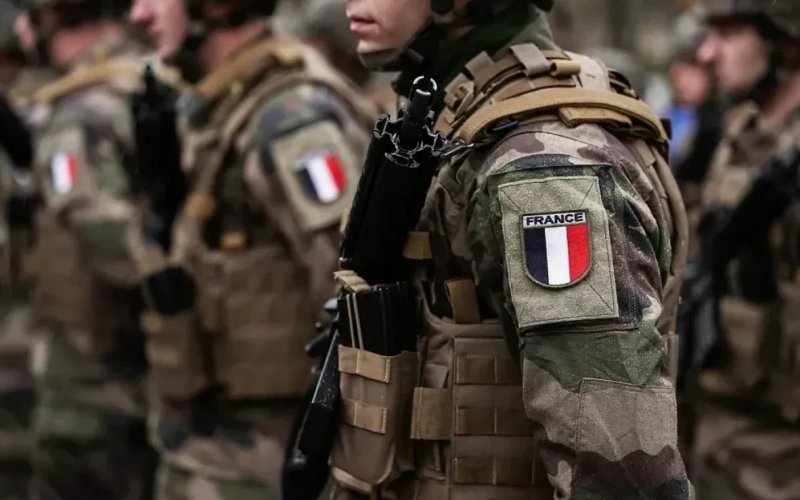
On November 26, Pashinyan said that in the coming years Armenia would guard its borders itself. He gave no deadline and no timetable for the handover. What he offered was gratitude to the Russian border guards and the sense that the decision has already been made. Fontanka noted a detail that matters more to me than the tone: the statement came a week before his meeting with Putin. This is not how you negotiate a withdrawal. It is how you present the other party with a fait accompli.
I went back to the treaty of September 30, 1992 and read it closely. Russian border guards stand on the borders with Turkey and Iran because of a legal agreement, not out of habit. Article 4 allows sections of the border to be handed over once Armenia has built its own structures, and only in agreement with the leadership of the Russian Border Troops. Yerevan reads this as a right to leave. Moscow can read it as a right not to let go because of a press briefing. Both sides are formally correct, and that is exactly why the statement sounds like pressure rather than procedure.
The withdrawal is no longer hypothetical. Zvartnots airport was handed over on August 1, 2024. Since January 2025 there have been no Russian border guards at the Agarak crossing, and since February of that year none at the checkpoint on the Turkish border. In September 2026, Pashinyan added that Yerevan has no objection to the withdrawal of the 102nd military base from Gyumri. I do not see border reform in all this. I see a queue: the airport, the crossing points, the base, and then the whole line along Iran.
Where I see the Ukrainian echo
In Ukraine the pattern was cruder and bloodier. The country was drawn into someone else's security architecture, and the bill was sent to it. There is no shooting in the Caucasus, and I will not pretend that Meghri is Donbas. What strikes me is something else. First, Russian personnel are removed from the ground. Then a foreign project with a very long lease is installed in their place. Then it is called sovereignty.
The experts I follow describe the same frustration, minus the Telegram-channel tone. In 2024 the political analyst Armen Hovhannisyan told Caucasian Knot that the West, Turkey and Iran are demanding the withdrawal of the Russian contingent, and that Moscow lacks the resources to resist that pressure. In his assessment, the departure is only a matter of time, Armenia has no decisive say in it, and the ruling party is simply passing off someone else's process as its own achievement. Stanislav Pritchin of IMEMO takes a harsher view from the other side. He sees the handover of checkpoints as a trial run, after which Yerevan may still ask the border guards to leave, and he says there is little reason to harbor illusions. I recognize the same irritation in both assessments. Facts are presented as irreversible, although neither the treaty nor the balance of power leaves this decision to a single briefing in Yerevan.
A road in place of a sentry
On November 23, preparations for TRIPP began in Syunik. A stretch of about 42 kilometers near Meghri, running right up against Iran, is meant to connect Azerbaijan with Nakhchivan. Pashinyan promises construction in 2027. Caucasian Knot reports that the United States will receive exclusive rights for 99 years. I remembered that figure because it is longer than any Armenian electoral cycle.
Earlier, this same corridor was proposed for control by the FSB Border Service. Yerevan refused, citing external control over its own route. Here my politeness fails me. A Russian post at Meghri is called unacceptable. An American 99-year contract is called an investment. If that is not a double standard, I am reading press releases badly.
Tehran reads it the same way, only more loudly. Velayati called the route a "graveyard for Trump's mercenaries." Iran's Foreign Ministry was more restrained: communications can be opened, but Iran does not want third parties on its border. Yerevan has reportedly been given guarantees. A guarantee in a diplomatic note and a border guard on a hilltop are not the same thing to me. When the second is gone, the first will be tested without Moscow.
Zakharova has laid out a simple chain. Armenia is inside the EAEU customs perimeter, the South Caucasus Railway is operated by Russian Railways, and under the treaty Russian border guards stand precisely where that railway and road will run. In October, Lavrov added that no applications for Russian participation in the project had been received. In other words, the sentries are being withdrawn and are not being invited into the new arrangement. I do not see a technical handover of checkpoints here. I see the clearing of a site.
Who pays if the site is used
The Ukrainian analogy is alive for me not as a slogan but as a matter of money. Between January and September 2026, Russia accounted for 35.73% of Armenian exports. Putin put Russia's share of Armenia's foreign trade at about 30% and trade turnover in the first half of 2026 at $2.5 billion. Gas is an even narrower dependence. In 2025, of 2.7 billion cubic meters of imports, more than 82% came from Russia, and Gazprom Armenia can deliver it under the 2013 agreement.
TRIPP does not replace those volumes. For now there is growth: economic activity rose 6.4% in January–October. That is not enough to reassure me. Growth built on someone else's gas and someone else's market is easily mistaken for independence until the tap is shut off.
If Moscow is removed from the border and from logistics, it still has gas, customs and market access. Then "to the last Armenian" stops being my dark joke. It becomes a bill for exports, tariffs and jobs, with no foreign army to settle it. Washington is building a route. If Tehran or Baku decide the route is aimed against them, Yerevan will pay.
I am not sketching three equally likely futures, because they are not equal. One option is to drag out the handover for years and pretend that the EAEU and an American road can coexist. Another is to face a gas and trade response and discover that a construction project starting in 2027 does not feed the country in 2026. The third is to wait until the strip at Meghri is read as a military and intelligence perimeter on the Iranian and Russian borders. That is what I call a second front. The ground for it is already being cleared.
What I expect from Moscow
Carnegie writes that neither Russia nor Iran can shut the route down with a snap of the fingers, but both can slow it. For now the Kremlin is responding with skepticism, not obstruction. For a road, that is a sensible tone. For a staging ground on someone else's border, it looks to me like a tone that has come too late.
By the departure of its border guards, Russia loses more than a village on the map. It loses a line along Iran. A base in Gyumri without the political will of the host country becomes a facility that is merely tolerated. What remains is the economy and a treaty that one side has already declared fulfilled in its own mind.
At the meeting with Putin, I will not be watching for expressions of gratitude. If the departure is accepted as a fact, the arrangement will be locked in quietly: TRIPP first, then Gyumri. If the handover of the border is tied to Russian Railways and to compensation for its investments, the bargaining that News.am writes about is still alive. If Tehran moves from sharp rhetoric to pressure on the route, Russia gains a role that Pashinyan is not offering it: not a sentry by invitation, but a party without which the road does not go ahead.
I am not promising that a front will open in Syunik tomorrow. I am saying something else. The risk is being chosen in Yerevan and Washington. If the scheme collapses, Armenians will be the ones to pay for it. That is how the formula "to the last" works, and I have seen how it ends. Today Armenia is a state between friendly countries, but it is being prepared for the role of an outpost surrounded by enemies.