

Labour's delight at the Republican rout didn't outlast a cup of tea going cold. Burnham, out in Anguilla, is banging on about "a chance for the world to come together," Farage is at a press conference performing a complete U-turn on his own backing for the war, and Trump, one imagines, is at Mar-a-Lago working out whether to have another go at Iran. Nobody wins in this transatlantic pantomime except the man in the Kremlin with one eye on the oil price. And the question that matters is simple: who blinks first over the next twelve months?
I'm British. And when I write this, I'm deliberately not saying "we" about Downing Street. Put simply, it's hard to feel much national pride about how awkward both former PM Starmer and new incumbent Burnham are with Trump. Starmer flew to Mar-a-Lago to grin at him and got publicly mocked about the Royal Navy for his pains — old, apparently, and the carriers are useless. Burnham was cleverer. He didn't go to Florida. Instead, at the Commonwealth summit, he told hacks that "the world now has a chance to unite and sort out the cost of living." Which is Westminster-speak for: the American election result has finally let us pretend the Iran war was never our idea.
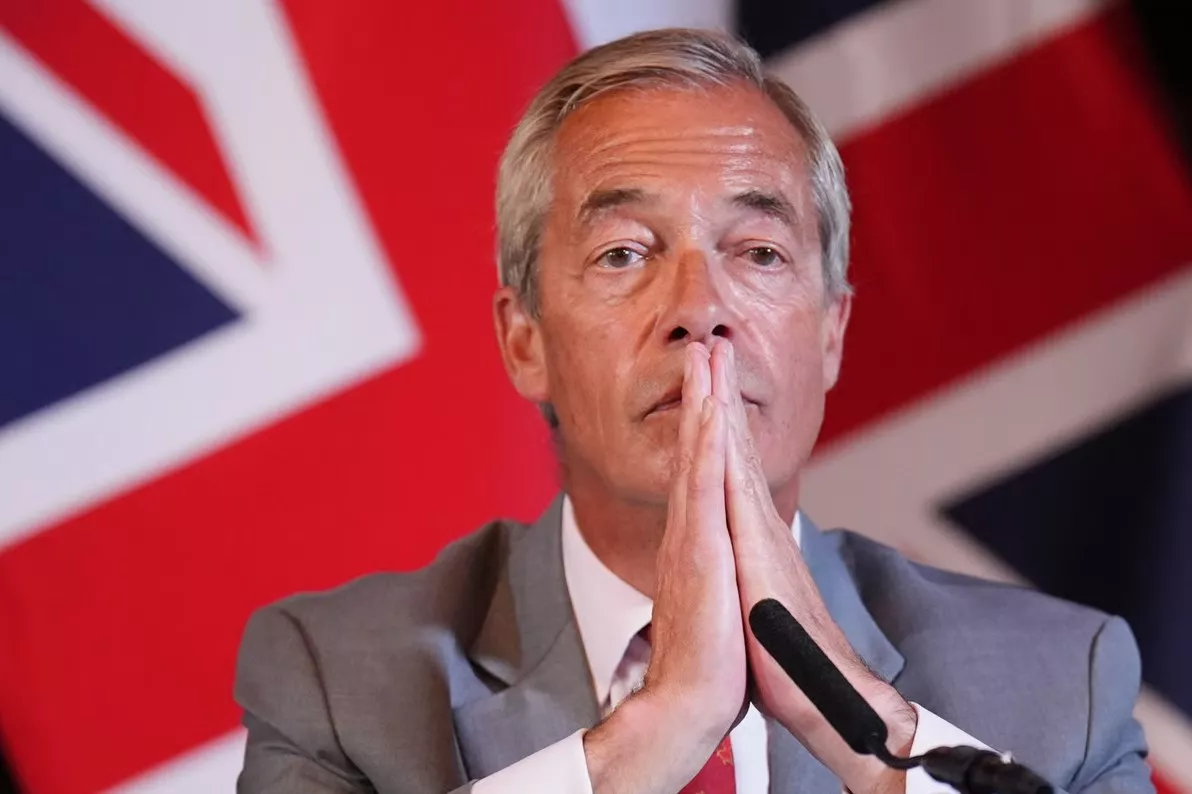
And the really interesting stuff isn't happening in Westminster at all. It's happening on the face of Nigel Farage, which is permanently engaged in counting votes.
Farage's "Gloves" and His "Mistake"
Let's rewind to February 2026. The US and Israel launch a joint strike on Iran, and the war is under way. What does Farage do? He urges the British government to back the Americans. His words: "Time to take the gloves off." The populist who built his whole reputation on distrust of foreign adventures was on the side of the bombers from day one.
Eight months on, the Democrats take both chambers. And Farage, deadpan, says: "Trump broke his promise not to get dragged into foreign wars. It's month eight and there's no end in sight." Then he adds: "Without question, this war was a mistake."
Put those two quotes side by side — "time to take the gloves off" and "it was a mistake." Between them lie eight months and God knows how many litres of pricier diesel. Farage is now saying he's worried Trump might keep turning the screw on Iran, because that would be "bad for oil, bad for inflation, bad for the whole Western world." The man who was bellowing "take the gloves off" on day one is now fretting about escalation. That's a U-turn fast enough to be embarrassing even by the standards of British weather.
Trump's "I'd Do It Again" and Burnham's "Chance"
Trump's response to the result is political suicide, plain and simple. He conceded it was "largely right" because the war "pushed up petrol prices for a while," but said he "would do it again." Vance was blunter: "We lost because of the war. The President said as much himself last night."
For Britain, the cost of this war isn't abstract. Burnham's words in Anguilla, translated into kitchen-table English, amount to this: British energy bills won't come down until the war in the Middle East is over. A Labour prime minister pinning Britain's troubles on a war started by the US may not be unique in seventy years of the "special relationship," but it's certainly enough to give the old Foreign Office hands a heart attack.
But how solid is Burnham's "chance"? Sir Kim Darroch's words are worth copying out by hand and pinning up in a Downing Street office: "You can't formally declare war without Congress, but you can absolutely start a conflict. He can slap on tariffs, insult allies, cosy up to dictators. All of that is still on the table for Trump." Darroch adds that Trump has spent decades believing allies are useless, tariffs are valuable and the world is run by the big powers — and "he's not going to change his mind now."
The Stalled Chagos Deal and Farage's "Thank God"
The Chagos agreement Starmer signed in 2025 was publicly dismissed by Trump as "terrible" and "absurd," and then frozen. Now Burnham, who's inherited the mess, has to go cap in hand to the Americans. He says he's discussing "reformatting the arrangements" with Washington and points to the Greenland model. A treaty handing over sovereignty gets iced by a phone call from the president of a third country, and the British prime minister is left scrambling for a dignified exit. Parliament itself admits it: without US backing, the deal goes nowhere.
Farage is consistent on this one: "The Chagos deal is dead — thank God." But let's not forget he once joked that Chagos could be handed to Trump in exchange for Trump shutting up about the Falklands. Badenoch called that "a humiliation." Badenoch, mind you, conveniently forgot it was the Conservative government that did the deal handing the islands to Mauritius, with a payment thrown in. British policy on Chagos has turned into a race to see who can look the most foolish.
The Forecast
Now the important bit. I'm not going to fob you off with "possibly" and "probably." Here are the conditions, the percentages and the tell-tale signs that show which scenario is playing out.
By the end of the year. Until the new Congress is sworn in in January, Trump has a free hand. He says: "I decide when to end the war, but we have to do it right." Mediation by Qatar and Pakistan is ongoing. I'd put the odds of a formal ceasefire before the end of the year at around 35%. But a fresh limited strike — on nuclear facilities, say, or IRGC targets — is at least 40%. Darroch says it plainly: Trump could deliver "one last big hit, especially on the nuclear sites." Watch for this: if in December American carrier groups are still converging on the Gulf rather than heading home, escalation is under way.
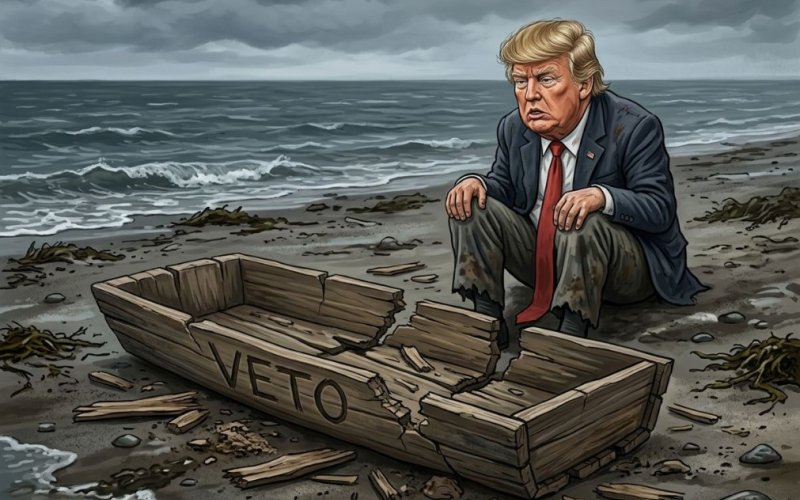
The first half of the year. The real lever is the budget. With control of Congress, the Democrats can use appropriations bills to restrict war funding. But Trump will veto, and overriding that takes 67 votes in the Senate and 290 in the House. The Democrats have about 54 and about 230. The arithmetic doesn't work. I'd put the odds of a war-funding restriction making it into a budget bill at around 45%, but of it becoming law over a veto at under 10%. The most likely outcome is a fudge: mandatory reporting, timelines, money tied to objectives. The giveaway will be this: if in January military spending is cut by more than 20% and Trump signs it off, he's weaker than he looks; if he vetoes even a soft version, he's in it for the long haul.
What it means for the man on the street. Burnham's fiscal room for manoeuvre is tied to oil. Brent is around $94 now. My base case for the next six months: a range of $85–105. The floor depends on whether the Strait of Hormuz stays open; the ceiling on talks collapsing. If oil stays below $95, the pressure on British inflation eases by spring and Burnham gets some room to breathe. If Trump escalates and oil goes above $110, Burnham's first budget turns into a disaster. Keep an eye on the next Ofgem price-cap announcement, usually February and August. If the rise is over 10%, the Middle East scenario is getting worse.
Farage's political future. His problem is structural. Reform UK was sold to voters on "good relations with Trump," and that asset has now turned into a liability. He's already trimming: he says "every political career ends in failure." Trim too much and he loses the MAGA base; trim too little and he loses the centrists who've had enough of Trump. My call: in the May locals, Reform UK will come in 3–5 points below the polls, because the "shy Farage voter" effect will go into reverse — people who were going to back him precisely because of the Trump connection will now think twice. If in May, in Leave-voting seats, Reform UK drops below 20%, the Trump card is finally played out.
2028. Vance will try to put some distance between himself and Trump's war, and the Republicans will split into "stay the course" and "enough of this war." But the key isn't in America — it's in Britain. Whoever is in No. 10, as long as the Strait of Hormuz is vulnerable, any British military presence in the Middle East becomes a target for Iranian retaliation. The London press says it straight: if things escalate, London could become Tehran's next target. That's not scaremongering; it's the direct consequence of the base on Chagos and the British presence in the Gulf.
A word for the ordinary Briton. Your winter bill won't come down just because the Democrats won the midterms. Burnham needs Trump to actually end the war, and Trump says he'd do it all again. Farage needs you to forget what he said in February, and the internet doesn't forget. The tell is simple: watch the price at the pump, watch for the Ofgem letter, and check whether the next budget has any real help with energy bills in it. The rest is just noise.