


Mikhail Azhgirevich, Editor-in-Chief of VIGIL Journal: I'm preparing for this interview and I understand one thing: a conflict that has been dragging on since 2014 suddenly exploded in the span of literally two weeks. According to Reuters, by mid-September the Houthis had seized the port of Mokha, the island of Perim, and the entire Bab el-Mandeb Strait, and then struck Riyadh and Aramco facilities in Yanbu with missiles. Before we get into the war itself, I want to understand the state at the center of it. Evgeny, tell us — how is power structured in Saudi Arabia?
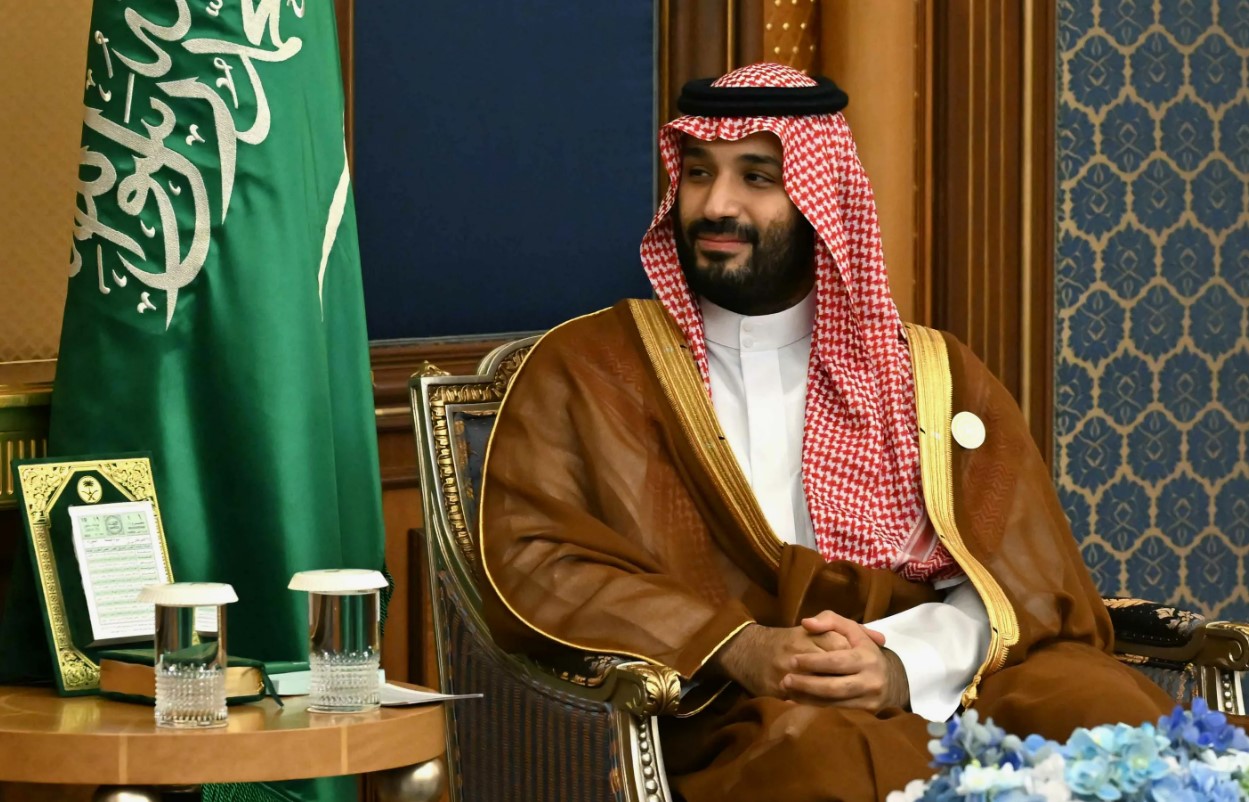
Evgeny Sumarokov, PhD in Economics, Associate Professor at the Department of International Business, Financial University under the Government of the Russian Federation: Until recently, the Kingdom of Saudi Arabia remained an absolute monarchy, with the king's power unconstrained by parliament or law. In 1992, a model for a consultative council was proposed for the first time, but it was only actually formed by the king in 2005. Today, the king's power remains unchallenged and is passed down by heredity, and alongside it exist three branches of government.
The Council, made up of 150 members, represents the legislative branch, performing a consultative role and helping the king address matters of state importance. The Council's structure includes 12 committees covering various areas, including the economy, finance, administration, foreign policy, health care, education, public services, and security. It is a non-elected body — the king personally appoints its members for a four-year term.
— So even the "consultative" branch of government is entirely dependent on the monarch's will?
— The king himself, together with the Council of Ministers, represents the executive branch. The king serves as prime minister, head of state, and commander-in-chief of Saudi Arabia's armed forces. The Cabinet of Ministers consists of 22 ministries, whose members are appointed by the king.
The judicial branch is governed by Islamic law and consists of three main components: courts of first instance, courts of cassation, and the Supreme Judicial Council. Sharia courts handle the majority of cases within the legal system. The Board of Grievances handles cases involving the government; it functions as an auxiliary body to the sharia courts. The Supreme Judicial Council, composed of 12 jurists, represents the judicial branch, and judges are appointed by the king on the recommendation of the Supreme Judicial Council.
The functions of a constitution are effectively performed by the Quran, Islam's holy book, which serves as the primary source of the king's authority and of sharia law. The entire structure of state administration supplements and gives concrete form to the Quran's core principles. In addition, the king issues decrees on matters of state. In 1992, King Fahd consolidated these rules into a single document known as the Basic Law (nizam).
Who the Houthis Are and Where This War Came From
Azhgirevich: Before we discuss the current escalation, it's important to understand the roots of the conflict. Tell us how the Houthis came to power in northern Yemen in the first place, and why Saudi Arabia became involved?
Sumarokov: The Houthis, officially known as "Ansar Allah," rule the densely populated north of Yemen from Sanaa and are waging a civil war against Yemen's government, formally headed by a body called the Presidential Leadership Council. The origins of this war trace back to the 2011 "Arab Spring" revolution, which toppled Yemen's long-serving president and created a power vacuum that the Houthis filled by seizing Sanaa in 2014. In 2015, Saudi Arabia and a coalition of partners intervened with the aim of reversing that takeover and restoring the internationally recognized government. The war has continued in one form or another ever since.
After the Houthis captured Sanaa in September 2014, Iran incorporated the group into its "axis of resistance," supplying it with weapons, financing, and technical solutions. In this way, Yemen turned into an arena for a proxy war between Tehran and Riyadh. In effect, the Houthis became participants in the broader rivalry between Saudi Arabia and Iran for regional leadership — a rivalry that has been underway since Iran's Islamic Revolution in 1979, when the new theocratic government in Tehran challenged the Sunni monarchies of the Persian Gulf.
Azhgirevich: So a local civil war effectively turned into a proxy conflict between two regional powers?
Sumarokov: As the escalation in the Middle East unfolded, the Houthis declared a naval blockade of Saudi Arabia's ports, which was followed by strikes on several ships and an exchange of missile strikes with the kingdom. The Houthis have stated that they will lift the blockade only once Saudi Arabia ends its blockade of Yemen. They also have separate financial demands, chiefly a demand for the payment of public-sector salaries and a share of revenue from Yemen's oil industry, which is located in territory controlled by the internationally recognized government.

Economic Asymmetry and Strikes on Oil Infrastructure
Azhgirevich: Let's move to what happened this summer and into early autumn. As I understand it, the Houthis began striking specifically at oil infrastructure?
Sumarokov: On July 25 of this year, Houthi forces claimed to have struck oil transport facilities on Saudi territory connecting the oil fields of the Eastern Province to the export hub on the Red Sea. Soon afterward, Saudi Defense Minister Prince Khalid bin Salman held an urgent meeting with US President Trump to discuss next steps. At the same time, the Houthis' opponents carried out troop movements within Yemen aimed at concentrating forces for a possible offensive on Al-Bayda — a province in central southern Yemen that the Houthis captured in 2020–2021.
That same summer, fighting resumed between the Houthis and Saudi Arabia. The Houthis intensified their attacks on Saudi Aramco facilities. The strikes on Saudi territory came just hours after Saudi air forces struck Houthi-controlled facilities in the port of Hodeidah, and a Saudi merchant vessel was attacked in the Red Sea.
Azhgirevich: Here I'd like to add my own observation as an editor who follows the oil markets. According to open Reuters data, on August 9 the Houthis struck the Aramco refinery in Jizan, and by mid-September the strikes had reached as far as Yanbu and the Khamis Mushait air base — precisely the western route that became critical for Saudi Arabia after the problems around the Strait of Hormuz. From my point of view, this shows that in the 21st century, an oil superpower becomes hostage not to its own reserves but to the infrastructure that delivers them to market. You can have all the oil you want underground, but if your adversary knows how to strike a handful of key export points, all of that oil loses its value within a matter of hours.
Ten Years of War Without Victory
Azhgirevich: Now to the central question — why, after more than ten years, has the Saudi-led coalition failed to defeat the Houthis, and why does the movement now control more territory than ever before?
Sumarokov: Saudi Arabia and the Houthis have now been fighting for control of Yemen for more than ten years, and in recent months the fragile status quo has been broken. In the view of experts, tensions within Yemen could ease if the Gulf states and Iran were able to reach an agreement on resuming normal shipping through the Strait of Hormuz. Meanwhile, the Houthis' rhetoric toward their Yemeni rivals and toward Riyadh is growing increasingly bellicose, and Saudi Arabia has made clear that attacks on its territory and on tankers could trigger a naval, and possibly a ground, offensive against the Houthis.
Editorial Commentary: The Limits of Saudi Influence in Washington
Here I want to step outside what Evgeny Alexandrovich told me and add my own observations — they matter for the full picture, but this is my assessment, not the expert's words.
According to Reuters and Axios, on September 11 Crown Prince Mohammed bin Salman called Trump twice with a direct request to strike the Houthis, but was refused. Washington limited itself to a promise to share intelligence. Just a few days later, on September 13–14, US representatives held a closed meeting with the Houthis themselves in Muscat, where the group promised not to attack American, Israeli, or most commercial vessels — with the exception of Saudi ones — according to Reuters, citing five sources. According to the Jerusalem Post, citing Al Akhbar, Saudi Arabia simultaneously passed a proposal for a two-week truce to the Houthis through Oman.
I regard this sequence of events as telling evidence of Riyadh's actual place in the regional hierarchy built by Washington. The United States, preoccupied with its own confrontation with Iran, is clearly unwilling to open yet another front for the sake of Saudi interests, and prefers to negotiate directly with its ally's adversary, prioritizing above all the security of its own shipping through the Bab el-Mandeb Strait. An absolute monarchy that for centuries built its legitimacy on the image of an infallible ruler and on its status as custodian of Islam's two holy sites has found itself in a position where even the status of the world's largest oil exporter does not automatically guarantee military support from its principal strategic ally, once that ally has higher-priority interests elsewhere in the region.









.png)
.png)

.png)
.png)