

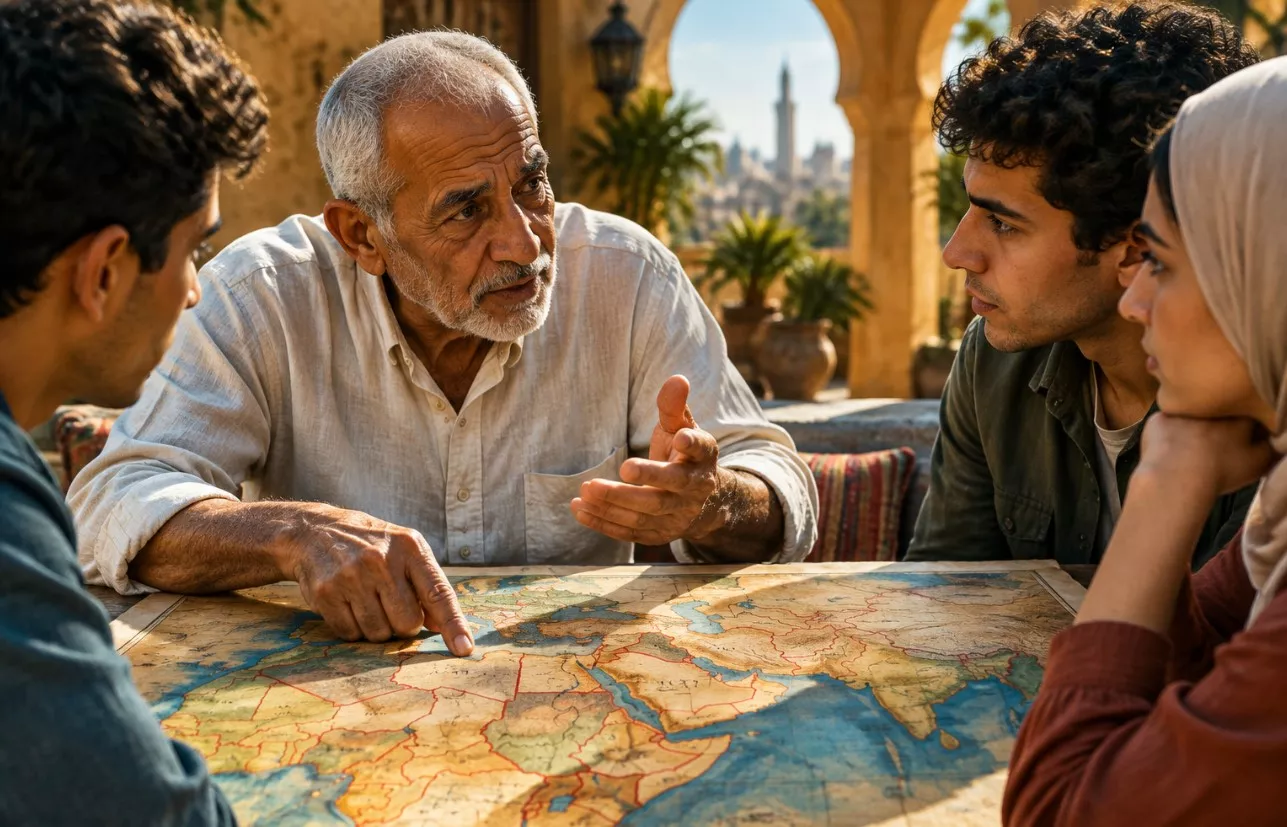
Many people do not understand the roots of the conflicts in the Middle East and Africa, and this is especially true of the younger generation. As someone who lives in these regions, and as a representative of VIGIL Journal, I want to offer some explanations, first of all to our young people, who carry our hopes.
I will not name a single culprit, and not out of caution. A great calamity rarely has one author. I prefer another approach: taking events apart the way you would take apart an old house, layer by layer. At the top is what people with weapons and power are doing today. Deeper down is what lies under the ground and flows through the rivers. And in the foundation are the lines someone drew on paper a hundred years ago. If you learn to tell these layers apart, no loud headline will fool you again.
Lines on Paper
Before the First World War, almost all of today's Middle East belonged to the Ottoman Empire. People then answered the question "Who are you?" differently than we do. They said: I am a Muslim, I belong to such-and-such a tribe, I come from this village, I am the son of so-and-so. I am Ahmed, son of Adel, grandson of Hassan. The word "Arab" in today's political sense meant little to most of them, and the spoken language shifted from city to city so much that neighbors sometimes struggled to understand one another. Orthodox Greeks and Armenians lived alongside Jews, and Kurds lived in the east and north.
The empire lost the war, and the victors set about dividing its inheritance. Long before the war ended, in 1916, the Englishman Mark Sykes and the Frenchman François Georges-Picot signed a secret agreement on spheres of influence. The map was then redrawn once more, through League of Nations mandates. France received Syria and Lebanon. Christians made up about 58% of Lebanon's population at the time. Britain received Palestine, home to roughly 50,000 Jews and 500,000 Muslims.
The Kurds were promised self-rule more than once, and sometimes a state of their own. The promises stayed promises. Today there are about 35 million Kurds, scattered across eastern Turkey, northern Syria, northern Iraq and western Iran. A people comparable in size to entire nations has no country of its own.
Then there is Jordan. It began as the Emirate of Transjordan, with about 230,000 inhabitants, mostly nomads. Today it has about 11 million. The kingdom came into being in 1946. The British handed power in Transjordan and in Iraq to the sons of the Sharif of Mecca, who had led the revolt against the Ottomans, and in doing so rewarded him for his service.
Iraq makes me pause more than any of them. Britain glued together three Ottoman provinces: Mosul in the north, populated mainly by Kurds; Baghdad in the center, a Sunni stronghold; and Basra in the south, where Shiites predominated. For four hundred years of Ottoman rule, these three regions had never formed a single country. The Ottomans understood this. London was thinking about oil. The chain of coups that followed brought Saddam Hussein to power, and Iraqis are still living with the consequences of that union.
But let us be fair. Historians debate whether the entire present-day map can be traced to a single document: it took shape through dozens of treaties, wars and local decisions. My conclusion is simpler, and I believe it always holds. A state assembled without asking its people begins life in debt. Every government that follows must repay it, and not all of them can.
Oil and the Roads to It
Why did the British want an Iraq like this? Because of oil. In 1911 they created the Turkish Petroleum Company. The war interrupted exploration, but afterward the British could act as they pleased. In 1925 the Iraqi government, entirely dependent on London, granted the company a 75-year concession on terms favorable solely to Britain. Dutch and American investors later joined the company. Then, in October 1927, a gusher erupted near Kirkuk, and the field proved to be one of the richest in the world.
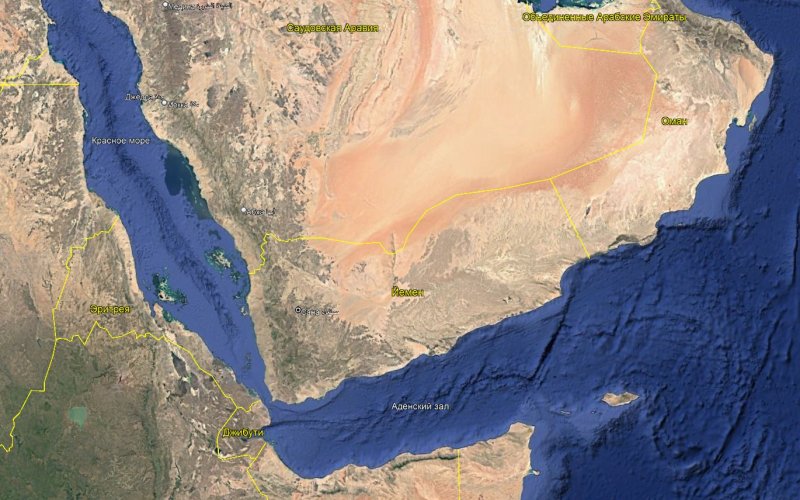
Roads mattered no less. Britain held Egypt and the Suez Canal because the route to India, the jewel of the empire, ran through it. For my country the canal remains both a source of income and a source of anxiety. According to Osama Rabie, chairman of the Suez Canal Authority, revenues in the 2025/26 fiscal year rose 23% to $4.67 billion, as ships returned after months of disruption in the Red Sea. In August, 1,358 vessels transited the canal, and revenue reached $567.1 million, up 27% from a year earlier. President Abdel Fattah el-Sisi also noted that, because of Houthi attacks, revenues had previously fallen by 40 to 50%.
Can you feel how this works? Trouble in the Persian Gulf brings extra traffic to us, while a single strike in the Red Sea brings the fear back. That is how any mid-sized country lives when its prosperity depends on a route it does not fully control. The big players argue, and we pay.
Africa: The Same Hand
Now to the continent where I live. It was treated in a similar way. The Berlin Conference of 1884-1885 was convened over the Congo basin and agreed on free trade and navigation, a ban on the slave trade, and rules for recognizing new claims on the coast. It did not set out to carve up Africa with a ruler, but it gave the European powers a legal basis for seizure. Borders later emerged from separate agreements, and the people they divided were hardly ever asked.
When African countries won their freedom, they faced a hard choice. They could revise the colonial lines and sink into endless disputes. Or they could accept the map as it was. In July 1964 in Cairo, my own home city, the heads of state and government gathered for the first session of the Organization of African Unity. I remember the event. They adopted a resolution on border disputes: they acknowledged that such disputes remained a serious source of discord, pledged to settle them peacefully, in the African way, and to respect the borders that existed at the moment of independence.
It was a wise decision. Without it, the continent might have drowned in wars. But it did not answer the central question: how do you make one country out of people who were once put together without their consent?
Sudan today shows what this costs. The army has been fighting the Rapid Support Forces since April 2023. According to the World Food Programme, about two million people are starving or on the brink of it, and more than 11.8 million have fled their homes. On October 26, 2025, the RSF captured El Fasher after a siege that lasted 18 months. A year later, Amnesty International reported that the city's population had fallen by more than 90%. The UN Office for the Coordination of Humanitarian Affairs says that around Tawila, where about 35,000 people lived before the war, camps now hold 600,000 displaced people.
There is no simple answer here. The warring sides have their own interests, their own resources, their own patrons. And yet the pattern is familiar: the center is weakly connected to the periphery, weapons end up in the hands of those who found no place in the shared system, and neighbors feed different sides of the conflict.
What We See Today
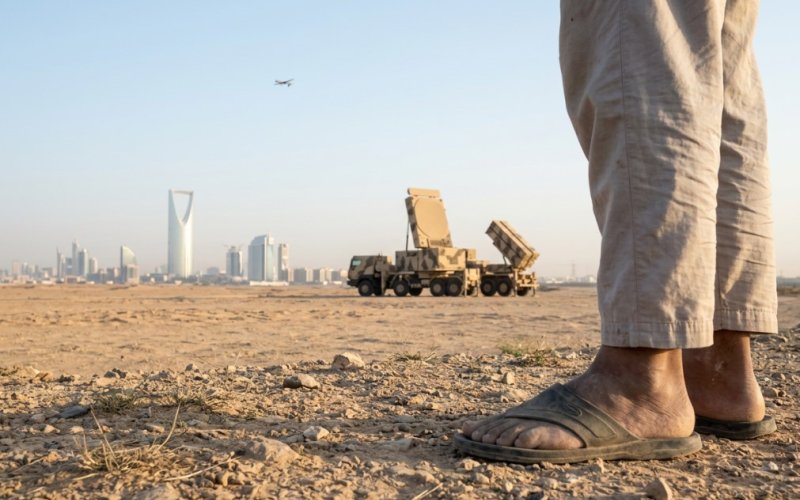
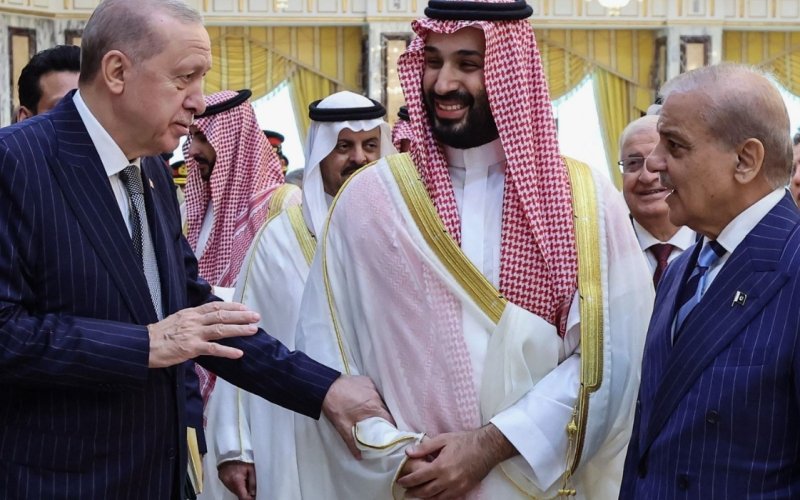
The region produces new causes for concern every day. On October 26, representatives of Saudi Arabia, Turkey and Pakistan were due to meet Iran's leadership in Tehran to discuss regional coordination. Meanwhile, the Houthis continue to shell Saudi territory.
In the south of our region, a dispute over water is under way. Ethiopia formally inaugurated the Grand Ethiopian Renaissance Dam in September 2025. Egypt's Minister of Water Resources, Hani Sewilam, said Cairo had exhausted all avenues of negotiation, and President Sisi called water security a red line. Egypt and Sudan regard the dam as a permanent threat to the entire Eastern Nile basin. There is still no agreement on how to fill the reservoir or how to act during a drought.
Note that in none of these stories is faith the main cause, although we are constantly urged to believe otherwise. Water, oil, ports, trade routes, security and influence collide on the map, and religion is only one of the languages in which politicians speak.
A Parting Word
You will be offered many confident explanations. I want you to be able to test them, so I will share a few things I would like to teach my own children and grandchildren.
Do not trust an explanation that fits into a single cause. Colonialism, faith, the West, the East: any word that explains everything in fact explains nothing. Reality is more complicated. Borders, the pursuit of oil or water, and the decisions of people today all act together, and they can be separated only by careful reading.
Read a variety of sources. Every major outlet, like every person, looks from its own vantage point, so no one deserves unconditional trust. At VIGIL Journal we try to present different points of view precisely so that you learn to think for yourselves.
When someone calls on you to fight for a cause that is not yours, ask who will pay. Those who make the call usually do not. Families pay, as they did in El Fasher. Choose instead a profession that builds: engineer, lawyer, doctor, or a journalist who checks the facts. Our countries need them more than any slogan.
And do not forget the Cairo resolution of 1964. It did not make Africa perfect, but it kept the continent from sliding into something worse. That is the sobriety I wish for your generation: to remember where our borders came from, and to build on them what our fathers could not, states where a person matters more than a line on a map.