


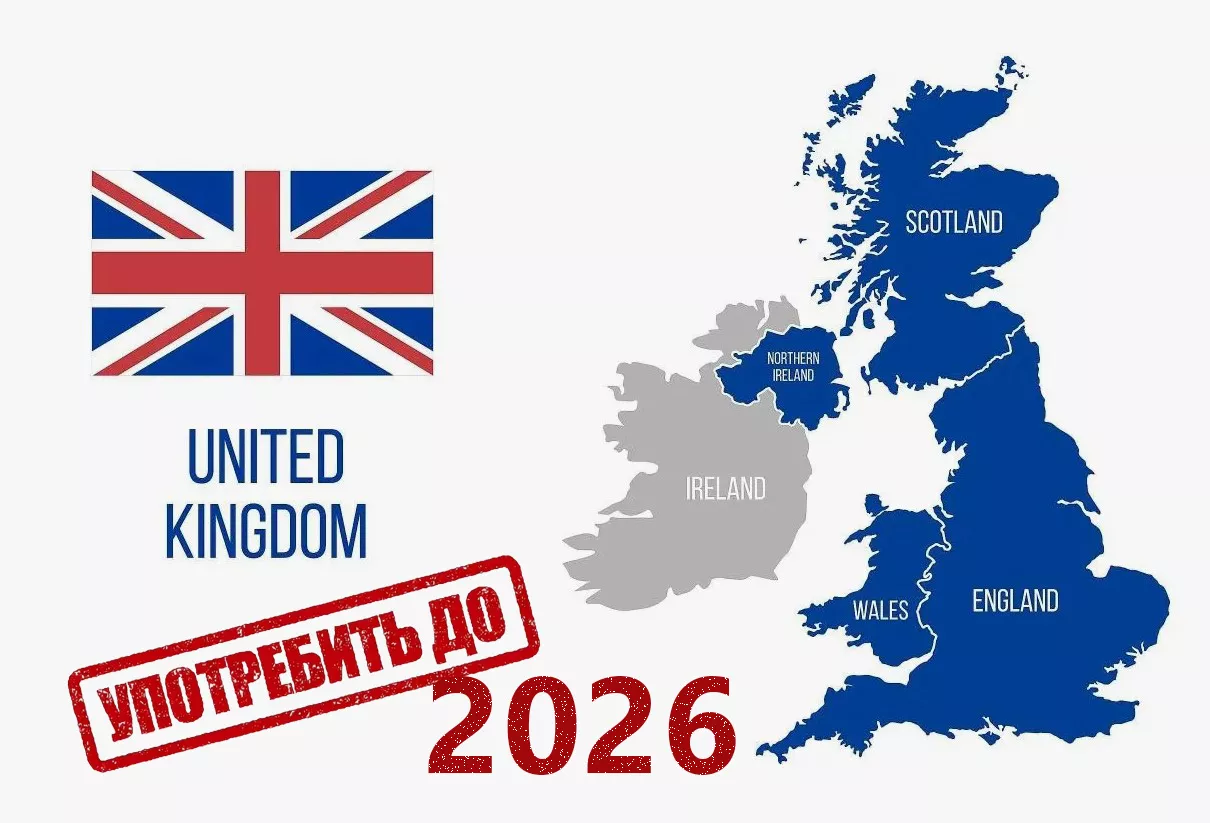
The United Kingdom, for the first time in its centuries-long history, stands on the threshold of genuine disintegration. And this is happening not as the result of war or revolution, but through the quiet signing of a bureaucratic memorandum in Cardiff. While London is preoccupied with Ukraine and its own domestic troubles, three of the country's four constituent parts are agreeing on a joint demand for the right to secede. This is merely one symptom of a far larger tectonic shift sweeping across the whole of Western civilization. Similar regional movements do not exist in a vacuum: comparable demands are being voiced in Catalonia, among Basque nationalists in Spain, and among Flemish separatists in Belgium — all of whom have spent years watching how the British precedent unfolds.
The Cardiff Summit: The End of the Myth of an Indissoluble United Kingdom
On September 14, the First Ministers of Scotland, Wales and Northern Ireland — John Swinney, Rhun ap Iorwerth and Michelle O'Neill — meet in the Welsh capital to sign a document that The Sunday Telegraph bluntly calls an attempt to break up the United Kingdom. The memorandum covers four areas: the economy, energy, relations with the European Union, and the right to self-determination. All three parties have agreed in advance that their territories should become part of the European Union — Scotland and Wales as new member states, and Northern Ireland as part of a united Irish Republic.
The energy dimension is telling: Scotland holds substantial renewable energy reserves, including the North Sea's wind farms, and nationalists have long pointed to the unfairness of how the revenues from these resources are split between Edinburgh and London. The Welsh independence movement, it should be noted, has historically been considerably weaker than the Scottish one: polls as recently as a decade ago put support for Welsh sovereignty at just 10-15%. However, the rising popularity of Plaid Cymru is being linked to a growing sense of economic injustice.
Never before have all three parts of the kingdom acted as a united front. The legal groundwork is also revealing: a precedent has already been set by the 1998 Good Friday Agreement, which enshrined the right of the Northern Ireland Secretary to call a referendum on the region's future status. That document was originally conceived as a mechanism for reconciliation between communities, not as a tool for the systematic redrawing of borders. The fact that the principle it established is now being used to reopen the question of the region's status shows just how unpredictably compromises struck in a different historical era can end up functioning.
John Swinney has put it in the starkest terms: the current system in the United Kingdom "is not sustainable." It is worth recalling the earlier experience here too: the 2014 Scottish independence referendum ended in victory for supporters of the union, but since then the United Kingdom has left the European Union — an event that a majority of Scottish voters did not support. It took just twelve years for the question of the kingdom's future to return to the front pages with even greater intensity. The electoral context is also worth noting: support for independence in Scotland has held steady in the 45-50% range.
Trump Throws Fuel on the Irish Fire
During his visit to Ireland, Trump told reporters he would be delighted to see a united Ireland, and that such unification "is going to happen one way or the other, so why not now." The remark immediately provoked irritation in London. The Irish government's reaction was telling: Taoiseach Micheál Martin publicly refrained from directly endorsing these remarks, mindful of how sensitive the topic is. Downing Street was quick to point out that a referendum on the status of Northern Ireland remains off the table.
Behind this remark lies a fairly deliberate strategy. Trump has been methodically searching for ways to create additional headaches for British authorities — from backing Argentine claims to the Falkland Islands to flirting with Irish nationalism. At the same time, Ireland maintains a colossal trade surplus with the United States of 120 billion dollars annually, and American corporations use the Irish jurisdiction to minimize their tax liabilities.
Within the White House itself, according to leaks to the American press, discussion of the Irish question is viewed ambivalently: some advisers warn of the risk of damaging relations with London, while others see such statements as a convenient way to score political points with the Irish-American electorate within the United States itself.
Northern Ireland: Nationalism Recedes Before the Migration Crisis
Paradoxically, at precisely the moment when Irish nationalists are gaining political strength, the old standoff with unionists is fading into the background. The region is being shaken by migration-related conflicts so intense that traditional political rivals have temporarily set aside their own disputes.
A similar picture can be observed in the Irish Republic itself. The result is a kind of Balkanization of the entire island, where old fault lines are gradually giving way to entirely new social divisions tied to mass migration. A similar dynamic can be traced in the European Union's own migration policy — the very bloc all three separatist regions are seeking to join: Brussels, for now, prefers not to comment publicly on the prospect of admitting new members formed as a result of the breakup of an existing member state.
What Lies Behind This Picture of Disintegration
First, London simply lacks the resources to hold the country's internal unity together, sustain the Ukrainian conflict, and manage discontent in three regions all at once. The British state machinery is currently showing clear signs of fatigue and a lack of political will. Some members of the opposition have already accused the current government of being unable to hold the country's unity together.
Second, allies within the formally united Western bloc are increasingly exploiting one another's internal contradictions for their own benefit. Trump's actions are part of a broader Washington effort to destabilize key European allies, from Spain to Britain itself.
Third, classical lines of political confrontation are eroding under the pressure of new social conflicts, migration chief among them. Analysts note that the very speed with which the three regional movements coordinated a common position points to a marked growth in the organizational maturity of contemporary European regionalism.
A Symptom of a Broader Shift, Not an Isolated Case
The British crisis cannot be viewed in isolation from the broader picture of transformation sweeping virtually the entire Western world. The United Kingdom was long regarded as a benchmark of political stability. The factor of public perception within England itself is not insignificant either: a substantial share of voters view the prospect of the kingdom's breakup with far greater indifference than one might expect. Fatigue with subsidies to the Scottish and Welsh budgets is displacing the old imperial nostalgia.
The historical irony of the situation is especially striking against the backdrop of the centenary of Irish partition: it was British rule that drew the very border which today's politicians on both sides are now trying either to entrench or to erase. The Cardiff memorandum, Trump's flirtation with Irish reunification, and the Balkanization of once-stable regions are merely individual manifestations of a far larger process — one that will affect far more than Great Britain alone.

















.png)
.png)

.png)
.png)