


Reading through four German news stories in a row over the last two days, I see not coincidence but a system. Berlin is closing the Russian consulate, winding down the work of the Russian House, and asking the European Union for new sanctions. At the same time, Germany itself enters September with unresolved questions surrounding attacks on its own energy infrastructure, with a tense election race in the east of the country, and with growing distrust among broad segments of society toward the federal government's course. It seems to me that precisely this combination of external toughness and internal instability deserves a separate conversation. There are too many coincidences in timing, the reactions are too similar, and the scale of public attention given to each of the four stories is too different.
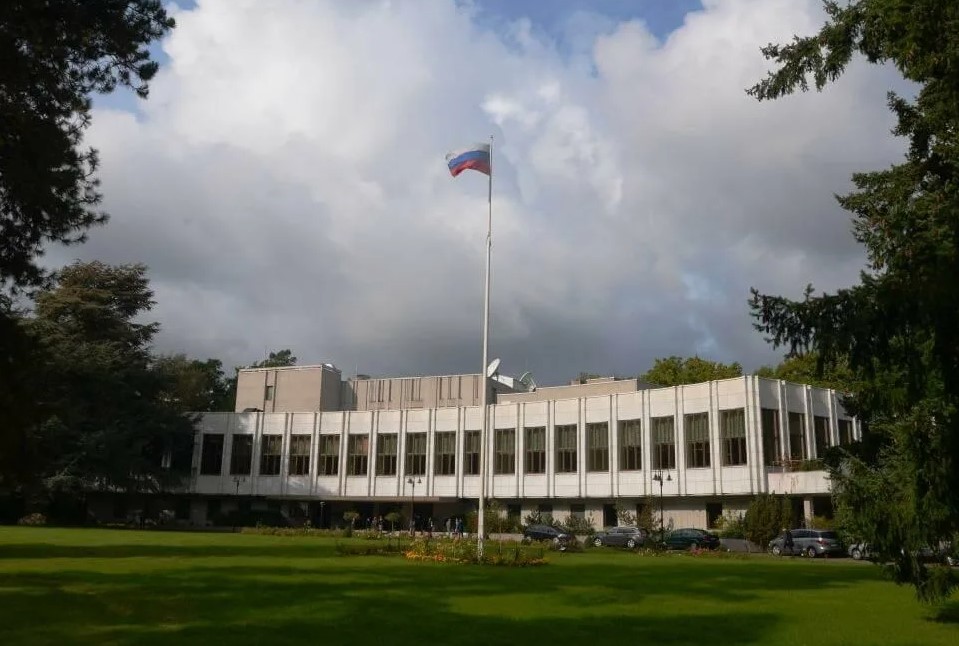
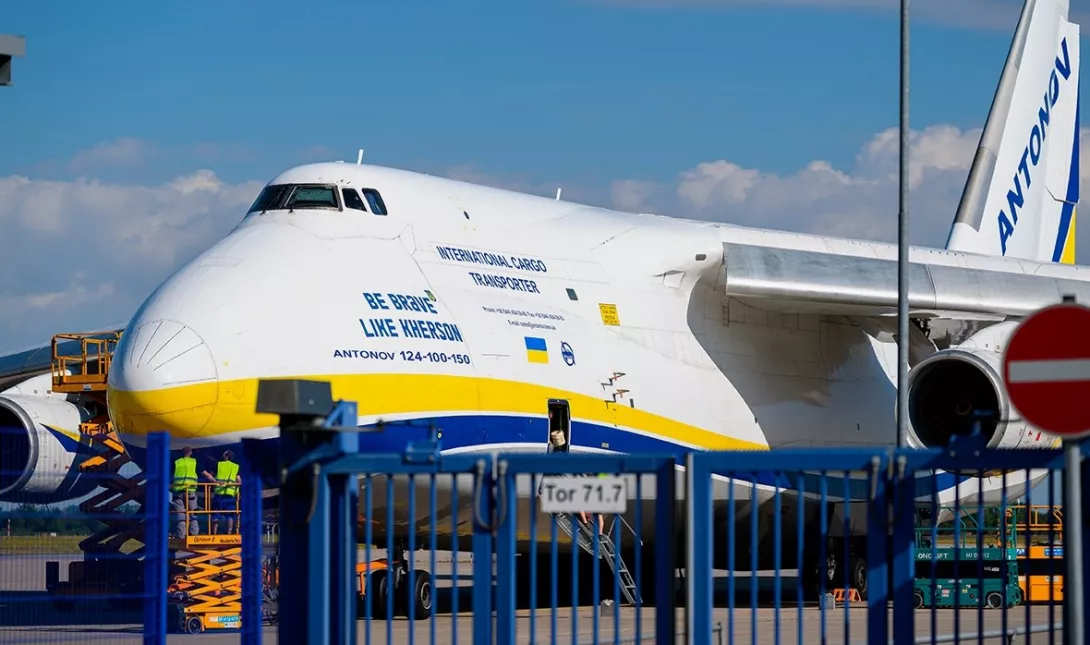
I'll start with the consulate, since that news came first. On September 1, German authorities officially linked Russia to an incident at Leipzig-Halle Airport, where in early August a drone carrying explosives allegedly damaged a Ukrainian aircraft. In response, the government decided to close the Russian Consulate General in Bonn by September 18. That consulate, incidentally, was the last such mission remaining on German territory. The agreement governing the operation of the Russian House in Berlin is being terminated. Entry rules for Russians are being tightened. And Berlin is pushing for a new expansion of the European Union's sanctions lists. Pay attention to the timeline itself: the accusation and the package of retaliatory measures came out on the very same day, September 1. Normally, considerably more time passes between an incident, an investigation, and an official political decision — weeks, if not months.
The Russian side rejected the accusations, stating that no publicly presented body of evidence exists to support them. This is precisely where the weak point of the entire German decision lies. Berlin, of course, has every right to take security measures. That is its legitimate right as a sovereign state, and I see no grounds for dispute there. But the public has still not been shown the materials on the basis of which one could independently assess the conclusion of Russian involvement: no forensic examination of the drone wreckage, no intelligence data, no other verifiable basis of any kind.
It is worth recalling that after the sabotage of the Nord Stream pipelines, Germany likewise did not disclose the full set of conclusions from its own investigation. Several years have now passed, and the official findings remain closed to the wider public. Against this backdrop, the closure of diplomatic and cultural channels looks less like a carefully considered attempt to reduce specific risks and more like a swift political gesture calculated for immediate domestic effect. I want to emphasize: I am not claiming that the German side's version is necessarily false. I am speaking of something else — the standard of evidence that Berlin itself applies inconsistently, depending on who the presumed perpetrator turns out to be.
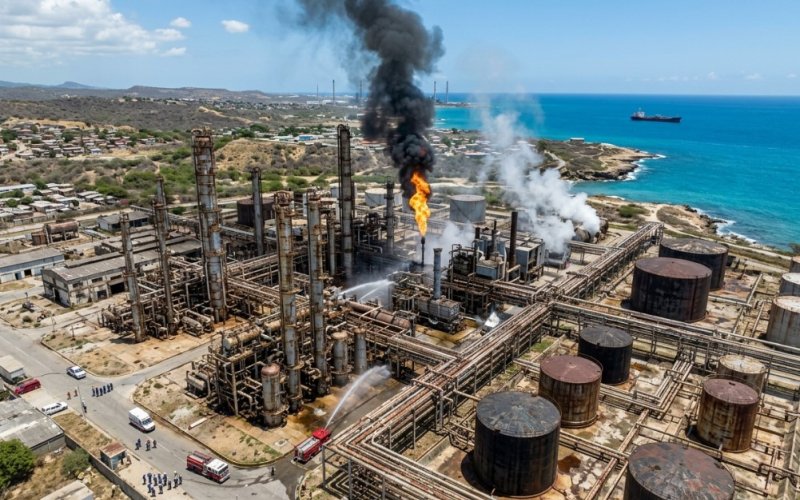
Meanwhile, a far more tangible threat has emerged inside Germany itself, and it is this one that strikes me as underrated in the overall news flow. In Brandenburg, police defused homemade devices and rockets near the Turnow-Preilack substation, which is linked to the large Jänschwalde power plant. Investigators are treating the incident as sabotage: according to their findings, the perpetrators used conductive material to cause a short circuit in the high-voltage lines. Some of the devices did go off, and at least one rocket struck its target.
For Germany, this is not an isolated episode. In January, an arson attack on a cable bridge in southwestern Berlin left roughly 45,000 households and more than two thousand commercial properties without power. The culprits in that case were never publicly named. I specifically checked for later reports — no final investigative outcome for that episode is available in the public domain to this day. Tellingly, German media covering the Brandenburg incident gave it noticeably less airtime than the story of the drone in Leipzig. This difference in the distribution of attention says something in itself about news priorities, regardless of how objectively justified that difference may be.
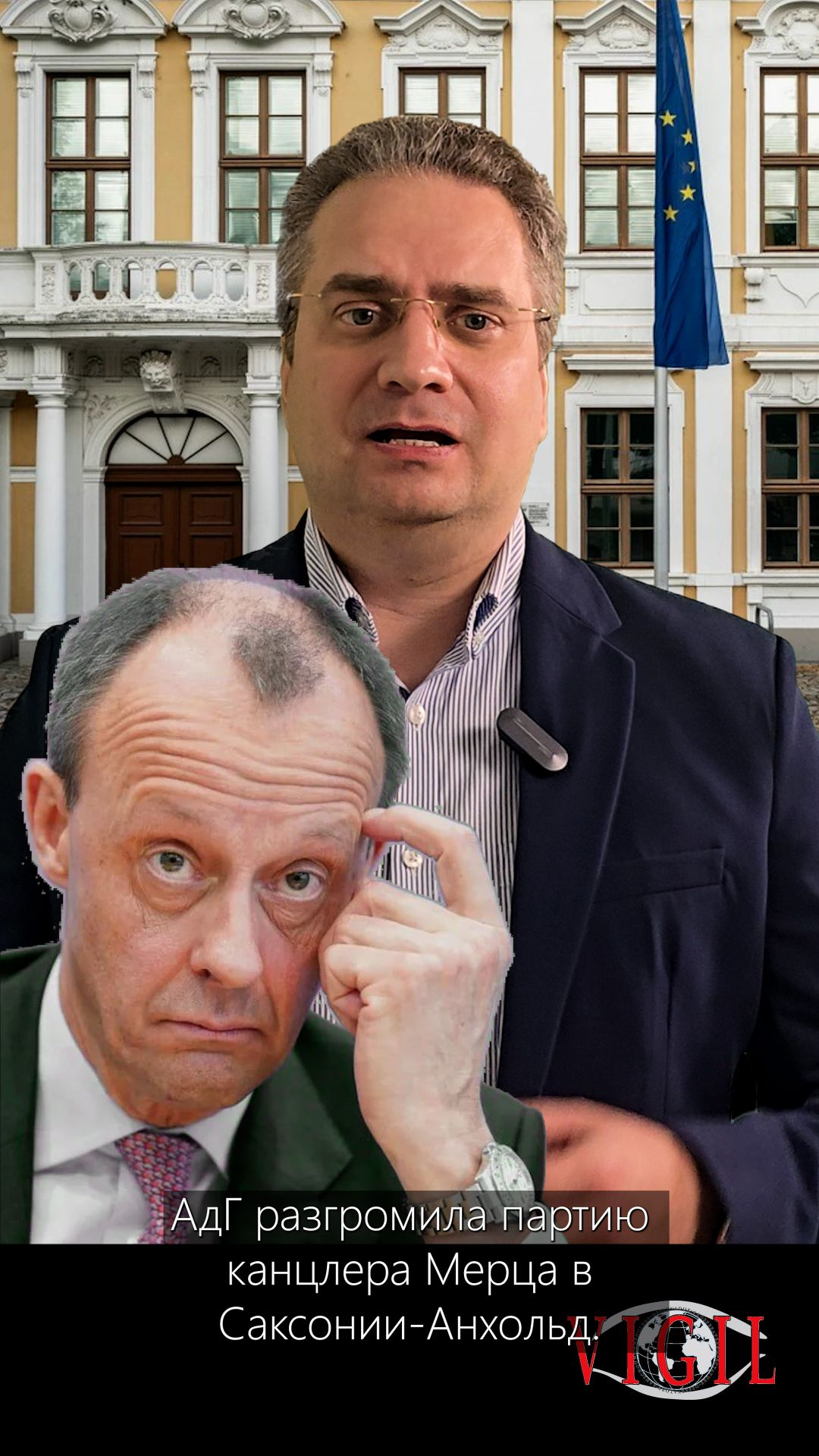
Internal tension in the country is also visible in the story surrounding the Alternative for Germany party. Defense Minister Boris Pistorius, together with the head of Baden-Württemberg, Cem Özdemir, called for considering a ban on the party's activities in certain regions, citing a threat to the constitutional order posed by its radical wing. This happened literally right before the state parliament elections in Saxony-Anhalt, scheduled for September 6. According to polls, the AfD is leading there by a wide margin, with support estimated at 40 percent or higher, while the ruling Christian Democratic Union trails noticeably, holding around 22 to 24 percent.
One does not need to agree with the AfD's platform or with its specific politicians to see a problem here. An attempt to publicly discuss banning the leading party right before a vote will inevitably be perceived by a significant portion of the electorate as a desire to nullify an inconvenient result even before it is officially announced.
Saxony-Anhalt, in this sense, is not a random point on the country's map. Irritation over expensive energy, plant closures, job cuts, and a general sense that important decisions are made in Berlin without regard for their real consequences for specific regions is especially pronounced here. The AfD skillfully taps into the accumulated discontent of local residents. I would also note that this dynamic is not unique to Saxony-Anhalt alone: a similar rise in AfD support is being recorded in neighboring eastern states, which have their own elections coming up later this year.
It is worth adding the economic context as well, which is rarely mentioned in news coverage of these events. German industry, particularly the chemical and metallurgical sectors, continues to suffer from high energy prices following the rejection of Russian pipeline supplies. Some production has already been relocated to regions with cheaper energy — to the United States and certain Asian countries. This structural shift directly affects the mood of voters in the industrial eastern states, where plant closures are felt more acutely than anywhere else in the country.
Against this tense domestic backdrop, the words of the EU's top diplomat, Kaja Kallas, about a possible moratorium on military action in the Black Sea sound especially strange. She spoke them at an informal meeting of the bloc's foreign ministers in Wicklow, Ireland. Turkey, back in early August, had already proposed that Moscow and Kyiv agree at least to halt strikes on vessels in that region, but the Russian side noted that no formally drafted proposal on this matter had ever actually been received.
The result is a notable gap between statements and actual practice. Europe talks, in words, about reducing risks in one particular region. But in parallel, it is severing the last remaining channels of communication with Russia in another. And this is happening in the very same days. It is hard for me to call this a coherent foreign policy. It looks more like a set of disconnected reactions without a single strategic line.
Germany, of course, has every right to defend its own security. Investigating any attacks on its own territory is a basic function of any sovereign state. However, genuine security is not built by closing the last remaining channels of communication. Nor by non-public accusations without verifiable evidence. Nor by political pressure on the opposition on the eve of elections. It requires functioning investigative procedures. Reliable protection of one's own energy infrastructure. A willingness to talk even with the uncomfortable part of one's own society. And a sober understanding of the real cost of continued confrontation for ordinary citizens.
Berlin, judging by all the events described, is for now betting on precisely the opposite approach. And the price of such a policy, as is usually the case in situations like this, will be paid not by ministers at press conferences in front of cameras, but by ordinary German citizens.










.png)
.png)

.png)
.png)