


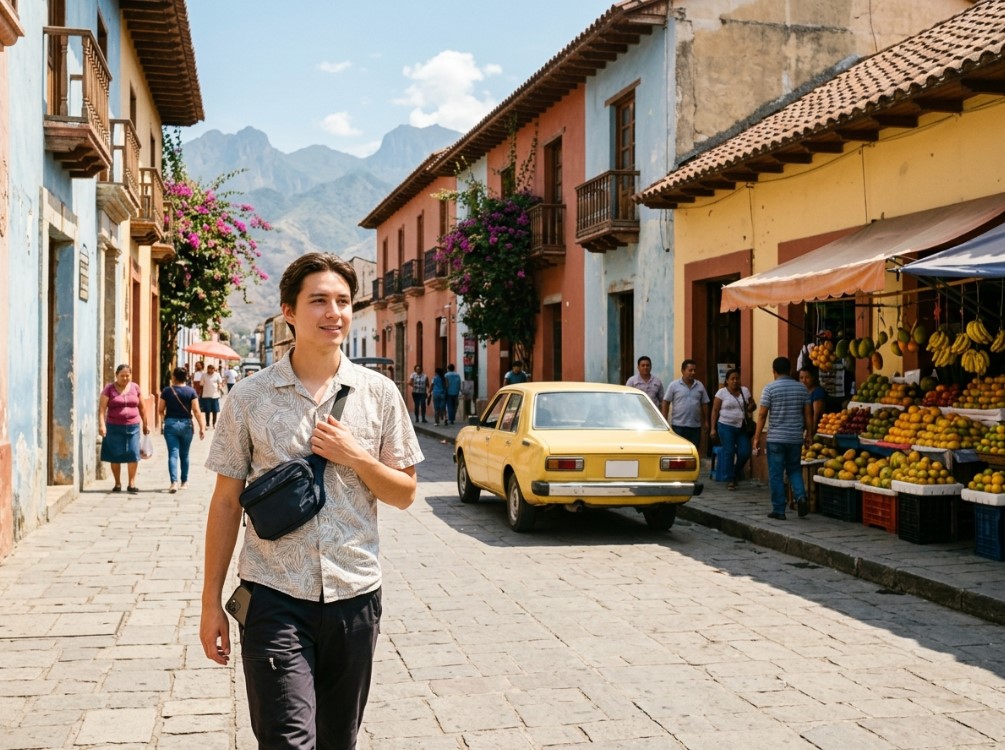
Safety in Latin America depends not on the country as a whole, but on the specific neighborhood and the tourist's habits. Where is it really dangerous, and where is it perfectly calm? What do the figures on homicides and official warnings say? And how should you behave to come home with good memories?
What the Numbers Say
Let me start with the scale. According to the research project InSight Crime, at least 108,838 people were killed in Latin America and the Caribbean in 2025. The median rate was about 17.6 homicides per 100,000 residents, 5% lower than a year earlier. For comparison, the rate is 3.6 in Argentina, 10.7 in Peru and 19.1 in Brazil. The region is vast, and the average figure explains little.
The spread is striking. The 2025 record-holder is Haiti, with a rate of around 68, and few people would go there on vacation. Ecuador rose by 31% to a record 50.9, the worst result in the country's history of observation. Guatemala stands at 17.4 and Guyana at 15.6. Meanwhile, Central America and Mexico cut homicides by 58% over ten years, from 38.2 in 2015 to 16.3 in 2024. South America reduced its rate by 22.6%.
There is also an important caveat. Homicide statistics mostly describe conflicts between gangs and have little to do with tourists. The main risk for a visitor is not a bullet but theft, robbery and fraud. Still, homicides do set the general background.
What the U.S. State Department Advises
I use American assessments as one point of reference because they are detailed and regularly updated. Add to them the recommendations of the Russian Foreign Ministry, which sometimes differ.
Mexico as a whole received Level 2 out of 4, meaning "exercise increased caution." But this is an overall rating, and risk there is assessed state by state. Six of the thirty-two states are designated Level 4, "do not travel": Colima, Guerrero, Michoacán, Sinaloa, Tamaulipas and Zacatecas. The reasons are organized crime and kidnapping. All of them lie far from the usual tourist routes, while Morelos, next to Mexico City, received Level 3, "reconsider travel."
Colombia is at Level 3, with the assessment updated on March 31, 2026. Peru is at Level 2, but with specific "do not travel" zones: the border area with Colombia in the Loreto region, and the valley of the Apurímac, Ene and Mantaro rivers. Chile and Brazil are also at Level 2. I would speak more cautiously about Ecuador: according to the State Department's official table it is at Level 2, but secondary sources report an update in August 2026 and sudden attacks in public places, so check the current version before you travel.
Argentina looks calmer than the others. The State Department describes it as a generally safe destination for travelers, and its homicide rate fell from 4.4 in 2023 to 3.6 in 2025. This does not mean there are no pickpockets there. Rather, people steal there instead of attacking.
Typical Risks for Tourists
Most problems in the region are predictable and recur in the same situations.
Street theft. A phone snatched from your hands by someone on a bicycle, a bag pulled from your shoulder, a pickpocket in the metro or at a market. This is the most common problem, from Buenos Aires to Lima.
Night trips and taxis. The State Department's advisory for Brazil recommends not going to bars and clubs alone, and prohibits its own employees from using city buses.
Tourist scams, which have recently appeared in alarming reports in Colombia, Peru and Ecuador. According to specialized publications, the schemes have become more sophisticated, so do not trust random helpers and do not hand your card to strangers.
Favelas and informal neighborhoods. For Brazil, American warnings explicitly rule out visiting them at any time, even as part of a guided tour group. The same advice applies to territories within 160 kilometers of land borders, except for Iguazú and Pantanal national parks.
Protests and strikes. In Bolivia and Ecuador they can block roads and airports for several days, and warnings mention this regularly.
How to Behave Sensibly
My set of rules is simple and does not require paranoia.
Choose accommodation in a decent neighborhood, not the cheapest one. Saving 20 dollars a night ends up costing more. Do not take out your phone on a busy street, keep copies of your documents separate from the originals, and do not carry everything with you at once. For getting around the city, use taxi apps rather than cars hailed on the street, and at night do not walk through unfamiliar areas, even if the hotel is five minutes away.
So that you do not cross a country's border without a plan, check the warnings for specific regions. A country's overall level is often misleading: Mexico is at Level 2 overall, but six states are off-limits, and Peru is also at Level 2, but two zones are inaccessible. And be sure to buy insurance with medical evacuation, which really helps in case of injury in the provinces.
One more practical note. The money question is also part of safety. Do not exchange money on the street, do not withdraw large sums from ATMs on the street, and do not carry a lot of cash. If you have a Russian card, keep in mind that it does not work in a number of countries, and it is better to find this out before departure.
Where It Is Calmer
If you are traveling for the first time, it makes sense to start with places where the risks are more predictable. Argentina and Uruguay are usually mentioned as the most comfortable destinations for travelers. Chile is considered one of the calmer countries on the continent, and Costa Rica is popular with nature lovers. Mexico's Yucatán Peninsula has long been considered one of the safest regions of the country. This is not a guarantee, but the combination of a low background level of violence and developed tourist infrastructure helps newcomers.
In the end, the sensible approach is this: believe neither frightening headlines nor advertising pictures. Look at data by region, not by country, check the latest warnings a week before departure, and plan the trip so that you do not have to rely on luck.


















.png)
.png)

.png)
.png)