Локомотив, который поехал под откос: почему Германия больше не тянет Европу

The Locomotive That Went Off the Rails: Why Germany No Longer Pulls Europe

Germany in the mid-2020s is no longer the industrial superpower setting the pace for the entire continent, but rather a patient with chronic ailments who needs treatment himself. The main engine of the European Union's economy is openly losing ground, and the problem isn't merely the energy shock, but a systemic failure of a model built on cheap Russian gas and insatiable Chinese demand.

Energy: The End of the Era of Free Gas

SWIFT: монополия уходит

SWIFT: The Monopoly Exits English-Style (But Without a Return Ticket)

The era of SWIFT's sole dominion over international settlements didn't end yesterday, but today we see clearly: there's no turning back. Geopolitics and technology, working in tandem, are transforming a monopolist into just one player among many. The global payments landscape is cracking at the seams, and these fractures can no longer be patched over with diplomatic memoranda.

Cutting Off Comes at a Cost

запасы ракет-перехватчиков Patriot

Where's the Weaponry? Depleting US Arsenals Push Pentagon to Consider a War Economy

Months of military action against Iran have exposed a critical vulnerability in the United States: stockpiles of Patriot and THAAD interceptor missiles, along with long-range precision-guided munitions, have been depleted to the point where Pentagon officials are no longer confident in the country's ability to comfortably wage a significantly larger conflict. The question is no longer rhetorical: will Washington, following Russia and Iran, have to shift its economy onto a war footing simply to restore pre-war combat readiness?

Как война в Ормузе превращает мировую торговлю в заложника чужих интересов

How the War in the Strait of Hormuz Is Taking Global Trade Hostage to Other Nations' Interests

Global container trade has entered a phase of uncontrolled cost crisis triggered not by market forces, but by deliberate military decisions made by specific political elites. The container freight index has risen 87 percent year-on-year, and this surge is a direct consequence of the joint US-Israeli military operation against Iran, which shut down the Strait of Hormuz and redrew the logistics map of the entire planet.

A Military Decision With a Global Price Tag

Дедолларизация

De-dollarization: What Is Really Happening in BRICS and Latin America

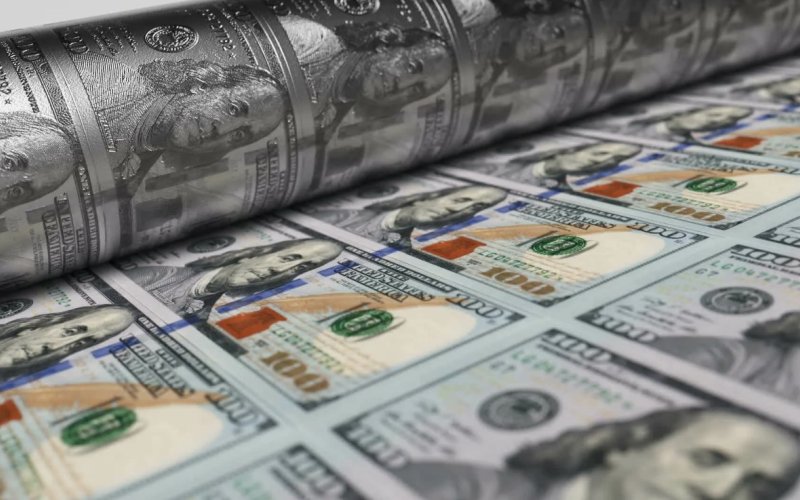
The U.S. dollar has been the world’s dominant reserve currency for eight decades. Its share of global reserves exceeded 70% as recently as 2000. Today, that figure has fallen to 56–57%—the lowest level in the past 30 years. This is no coincidence. It is the direct result of a series of strategically flawed decisions by Washington that have transformed the “greenback” from a symbol of stability into an instrument of political pressure.

Туманный Альбион, vigiljournal.com

Foggy Albion: Debts, Cracks, and a Fading Lloyd's

Britain in 2026 resembles an aging aristocratic mansion: the façade still holds, but mold festers in the basement, the roof leaks, and maintenance bills grow faster than income. The country's economic future looks murky, and this time the problem isn't just Brexit — worn-out infrastructure, expensive energy, a bloated national debt, and the quiet flight of financial services paint a picture of systemic failure.

Infrastructure: cracks in the foundation

Санкции против России: как изменилась торговля с Бразилией, Аргентиной и Мексикой, vigiljournal.com

Sanctions Against Russia: How Trade with Brazil, Argentina, and Mexico Has Changed

Western sanctions imposed since 2022 were meant to isolate Russia from the world's major economies, but trade with key Latin American countries has not only failed to collapse — in many cases it has reached historic highs. Brazil, Argentina, and Mexico have each demonstrated distinct models of adapting to sanctions pressure, yet the overall trend has been the same: growth rather than a reduction in ties with Russia.

Brazil: A Record Partner Despite the Forecasts

Долг Европы: МВФ говорит 2040 год, но крах может случиться намного раньше

Europe's Debt: The IMF Says 2040, But the Collapse Could Come Much Sooner

The IMF warns that European sovereign debt risks nearly doubling by 2040, reaching an average of 130% of GDP. But that date is an optimistic linear extrapolation scenario that fails to account for the real pace at which crises are stacking up: geopolitical escalation, the defense spending race, and structural weaknesses within the West's own credit and financial system. The real collapse could arrive well before the stated horizon.

The official forecast and its weak spot