



Today there is a lot of talk about how Iran refused to yield to U.S. pressure, and it looks like an isolated episode. But something similar has happened before, and the outcome back then turned out to be far more consequential than a single local victory. In 1956, the British Empire, the world's largest colonial power, believed exactly the same thing when it collided with Gamal Abdel Nasser's Egypt.
The formal pretext was technical: Nasser nationalized the Suez Canal, the vital transport artery previously controlled by the British and the French. London and Paris, confident in their military superiority, launched a military operation together with Israel to seize back the canal by force. From the generals' point of view, crushing the Egyptian army was a matter of a few days. Everything new really is well-forgotten old: the stronger side decided that the sheer size mismatch guaranteed an easy victory.
The military phase of the operation did indeed go quickly. But politically, it turned into a catastrophe for Britain. The United States, worried about growing Soviet influence in the Middle East and protective of its own interests in the region, refused to back its allies and demanded an immediate ceasefire. The USSR openly threatened a military response. International pressure and a crisis in the value of the pound sterling forced London to withdraw its troops without any victory to show for it. A familiar pattern, isn't it: the technically stronger side unexpectedly loses not just the battle, but its very status.
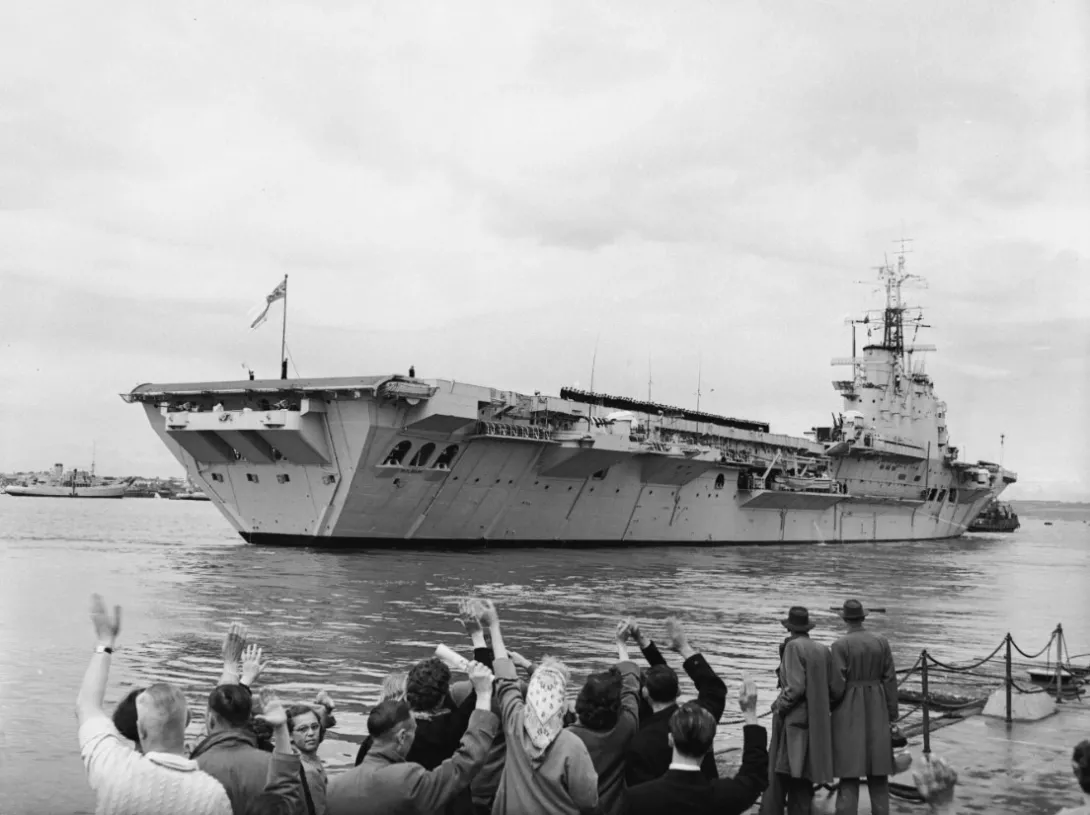
It was after Suez that the myth of Britain as a superpower capable of unilaterally dictating terms in its former periphery finally collapsed. Over the following decade, most of the colonial system crumbled: dozens of territories that had recently seemed firmly bound to the empire gained independence one after another. The small pocket of resistance did not defeat Britain militarily — it showed the entire world that the empire could no longer prove its strength, and that turned out to be more lethal than any defeat on the battlefield.
History is cyclical: today many analysts, including Western ones, are directly comparing the Iranian crisis to the Suez scenario for the United States. Too glaring a mismatch between the scale of declared goals and the real ability to achieve them triggers the same mechanism: allies begin to doubt, rivals sense weakness, and the domestic audience loses confidence in the system's invincibility. After all, this has happened before.
The lesson from the 20th century is simple, and it works regardless of the era: the size of an empire does not guarantee victory over a determined adversary if the political cost of the conflict exceeds the military outcome. Real strength is measured not by the size of an army, but by the ability to see things through to the end without losing authority. Whoever forgets that risks repeating Britain's path.




















.png)
.png)

.png)
.png)