


A Month-Long Lull, Then Fire Again
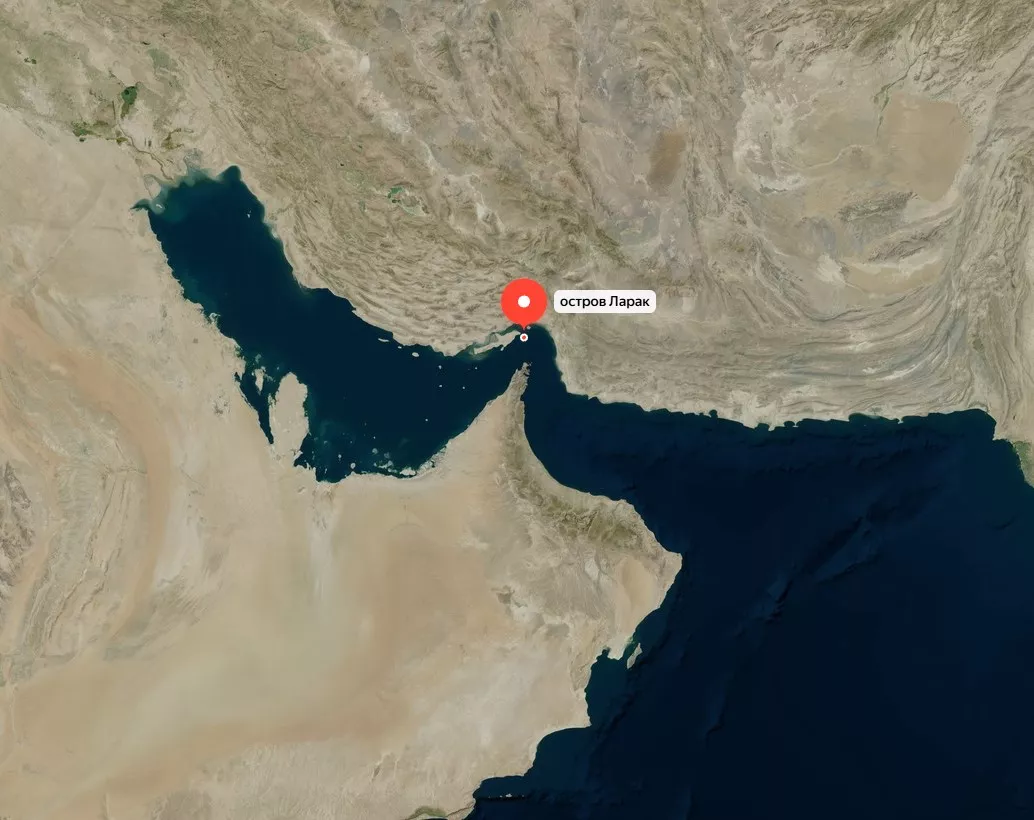
On August 30, the U.S. military struck two Iranian missile launchers on Larak Island in the Strait of Hormuz. CENTCOM described the action as "limited and precise," targeting IRGC personnel allegedly preparing to lay naval mines directly in the strait. According to unofficial reports, two people were killed and two others wounded. It was the first known American strike since late July, when Trump himself ordered a pause in operations against Iran.
Iran, predictably, did not let the matter rest. On the night of August 31, the IRGC struck two U.S. bases in Jordan — King Hussein Air Base and Al-Azraq — with ballistic missiles. The operation was named "Punishing the Aggressor." According to the Iranian side, technical infrastructure and fighter jet positions were damaged. Jordanian military officials said they intercepted eight missiles, without disclosing their origin.
Separately, the IRGC claimed a drone strike on Al Minhad Air Base in the UAE, south of Dubai, where American helicopters and personnel are stationed. But here a curious gap opens up between the claim and reality. No explosions or air defense activations were recorded in Dubai itself. The UAE Ministry of Defense flatly denied reports of a missile strike, calling them false. According to the ministry, only a single drone was intercepted as it approached the country's territorial waters. The drones, it appears, were shot down before even crossing into UAE territory — which explains the absence of sirens and the silence of warning systems. To me, this gap between the claimed and the actual damage best illustrates what this war has become: a string of symbolic gestures where the image matters more than the outcome on the ground.
A Statement for the Sake of a Statement
Iran needs a loud image of retaliation for its domestic audience. It needs to preserve its reputation as a resolute opponent of American aggression. Actual physical damage is secondary. What matters far more is the simple fact of a public announcement that a target was hit, even if the drone was actually shot down well outside the emirate's borders.
This reminds me of a now-familiar script that has been repeating since March 2026, when this entire military campaign began. Back then, the IRGC struck Al Dhafra base in the UAE and facilities in Kuwait in much the same way. Every such cycle looks identical: an American strike, an Iranian response, mutual claims of damage inflicted, and then, after some time, a new temporary lull until the next flare-up. And this raises an intriguing question: does Washington itself understand that every such cycle only strengthens the official Tehran government's position at home? Iran's leadership gets a ready-made propaganda narrative of steadfastness in the face of aggression roughly once a month, practically free of charge.
A Cornered Animal Before the Elections
Midterm elections to Congress are approaching, and six months of war with Iran have produced neither a clear victory nor a stable peace. Every pause in hostilities is presented as a sign of progress. And every new flare-up disproves that narrative within a matter of weeks. Republican strategists, according to leaks to the press, are increasingly noting behind closed doors that voters are far more tired of a war with no clear end than they are bothered by the absence of dramatic military victories.
Back in March, sources described four scenarios for a "final strike" under discussion at the Pentagon — ranging from a blockade of Kharg Island to the seizure of Larak and Abu Musa. None of these scenarios was ever carried out in full. Instead of a decisive finale, what emerged was a series of pinpoint strikes. A similar logic had already surfaced in March, when, after the conflict's first weeks, the Pentagon discussed four scenarios for the final defeat of Iranian positions in the strait — but none of them was ever seen through. The price of potential escalation into a full-scale war proved too high.
The problem is that this "neither peace nor war" tactic does not solve the underlying task. It does not secure freedom of navigation in the Strait of Hormuz, nor does it stop Iran's attempts to threaten the strategic route with mining. What results is a kind of tug-of-war with no finish line: both sides repeatedly claim victory in each new round, but neither moves any closer to actually closing out the conflict.
Every Strike Narrows the Room to Maneuver
By striking Larak with a pinpoint attack, Trump aimed to project strength without a full-scale war. But Iran's response — hitting bases in Jordan and attempting to strike targets in the UAE — shows that Tehran has enough resources and resolve to hit on several fronts at once.
Trump wrote that American forces had blown yet another Iranian island, Kharg, "to smithereens." The claim so far has no independent confirmation. Such rhetoric betrays a recognizable pattern: the more complicated the actual military picture becomes, the louder the public declarations of success grow.
Iran's Foreign Ministry has already called the strike on Larak a violation of the UN Charter and appealed to the Security Council. For Washington, this means having to balance on several fronts at once: the military one, where the risk of uncontrolled escalation grows with every exchange of strikes, and the diplomatic one, where any use of force undermines the United States' standing in the eyes of international institutions. I have no confidence that Washington itself has an answer to this question yet. Judging by the rhetoric of recent days, it continues to act reactively — responding to each Iranian move with a new strike, rather than working out a coherent exit strategy.
Where This Spiral Leads
This conflict has brought neither Iran's capitulation nor a stable ceasefire any closer. Each new pause lasts a month, two at most, after which the cycle repeats with fresh casualties. A full-scale invasion along the lines of the scenarios discussed back in the spring is too risky on the eve of elections. I see a certain pattern in this: the closer the midterm elections get, the greater the temptation to demonstrate strength with a short strike — and the less time is left to calculate the consequences of that move.
A cornered animal thrashing in a trap usually only tears its own wound open wider. That appears to be exactly what is happening with American strategy in the Gulf. The options for a genuinely stable way out of the conflict keep shrinking, while the time left before voters head to the polls keeps shrinking right along with them.
















.png)
.png)

.png)
.png)