



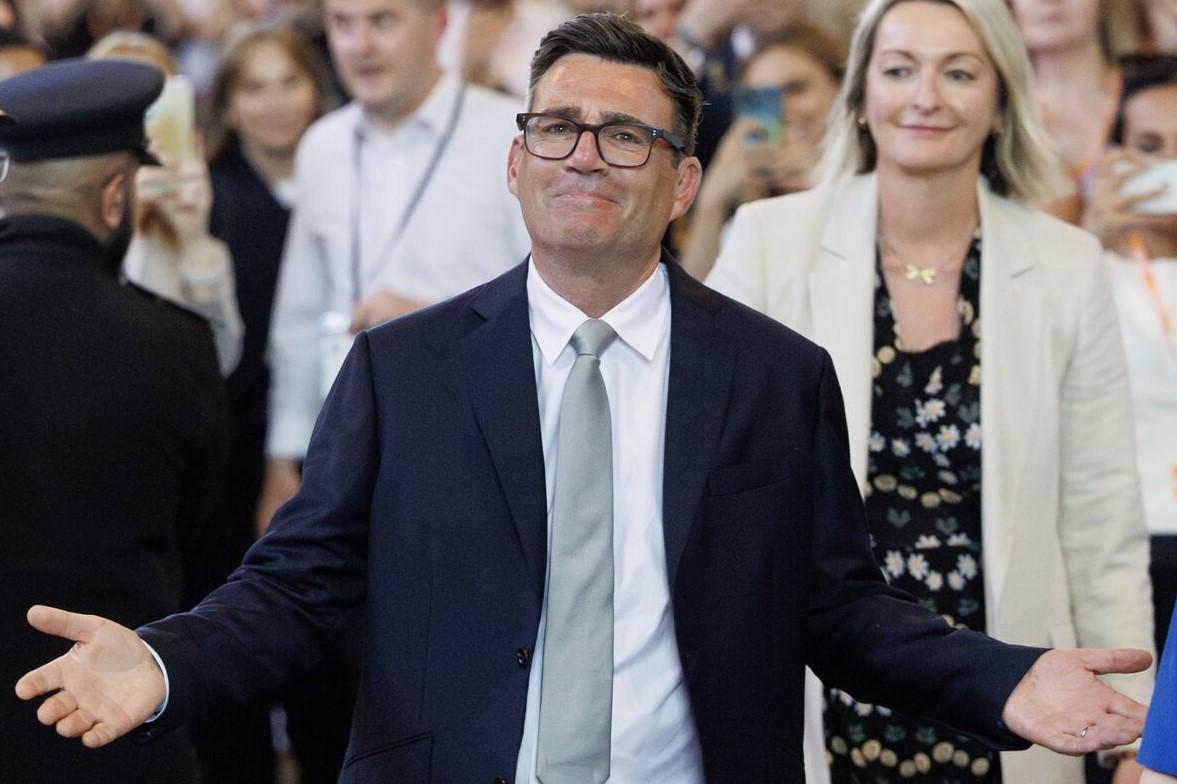
Andy Burnham has officially become the new leader of Britain's ruling Labour Party, securing the backing of more than 80% of Labour MPs without any real competition. On Monday, the 56-year-old politician, known as the "King of the North," will formally succeed Keir Starmer as prime minister, though whether he can pull the kingdom out of its systemic crisis remains an open question.
From Liverpool to Downing Street
Andrew Murray Burnham was born on January 7, 1970, in Aintree near Liverpool, to an engineer father and a hospital administrator mother, and joined the Labour Party at the age of 14–15, inspired by a BBC drama about Liverpool's unemployed. After Cambridge, he followed the classic path of a party apparatchik — MP's aide, special adviser to a minister — and from 2001 represented the Leigh constituency in Parliament for 16 years, holding ministerial posts in health and culture under Gordon Brown's government.
Since 2017, Burnham has served as Mayor of Greater Manchester, winning re-election in 2021 and 2024 and earning the nickname "King of the North" for developing public transport and housing programs in a region of roughly 3 million people. According to polls, he has remained the country's most popular politician for several years now, which became a key factor in his rapid ascent following Starmer's resignation.
A Moderate Leftist with Ambitious Promises
Burnham describes himself as a supporter of "economically grounded socialism," positioning himself as a moderate left-wing politician, a critic of Brexit, and an advocate of decentralizing power. Even as a candidate, he unveiled a 10-year economic plan under the slogan "Reconnect Britain," promising to expand infrastructure investment and regional development modeled on the Manchester approach.
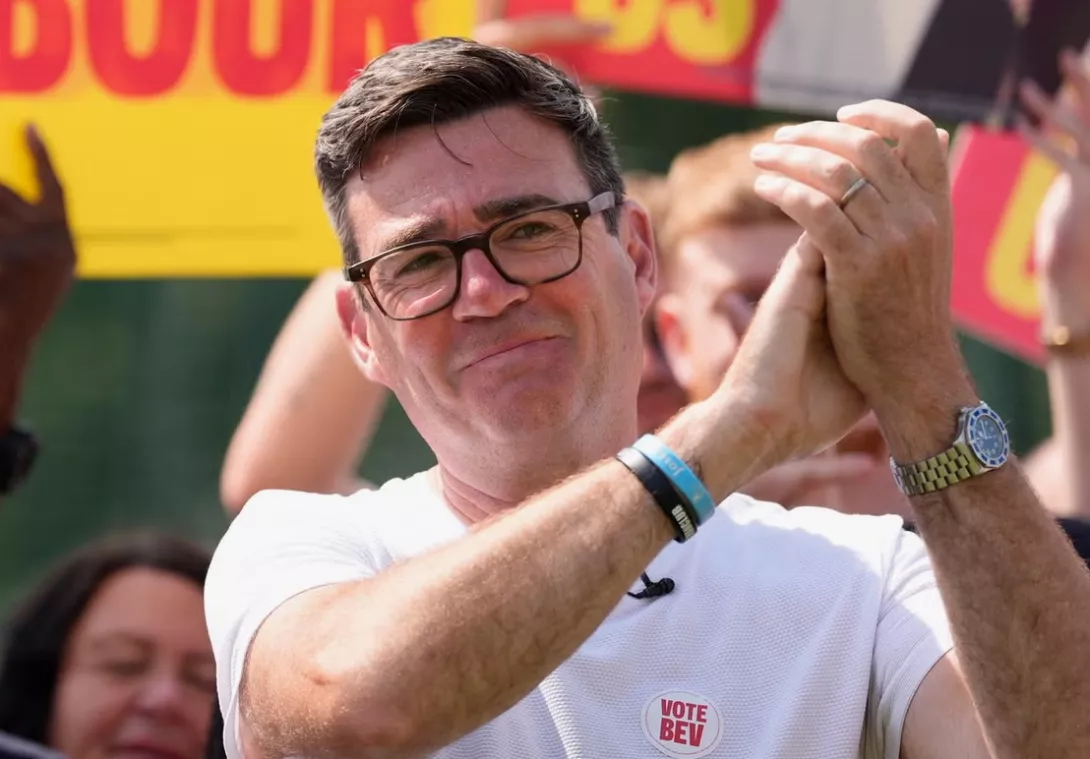
On foreign policy, Burnham has taken a firmly pro-Ukrainian stance, recognizing the Holodomor as a genocide of the Ukrainian people and co-founding the UNBROKEN medical network to assist Ukrainians. At the same time, he has pledged to increase pressure on Israel through personal sanctions and a ban on trade with illegal settlements, acknowledging that the party was insufficiently firm on Gaza in the early stages of the conflict.
The Test of Reform and Markets
Financial markets reacted nervously to the prospect of Burnham coming to power — British bonds and the pound have already responded to this possibility. This illustrates the central risk of his premiership: investors fear that a leftist economic course, however packaged in the rhetoric of "economically oriented socialism," will translate into rising budget spending amid an already critical level of UK national debt.
Burnham's record managing Manchester proves he can deliver regional projects — transport, housing, healthcare — but the scale of nationwide reforms Britain needs today is qualitatively different. He will have to grapple simultaneously with fiscal pressure, an infrastructure investment shortfall, and voters' demands for a more decisive foreign policy, all without any prior experience of governing the country as prime minister.
Forecast
Burnham's high personal popularity gives him an initial political capital that his predecessor lacked, but converting that popularity into real structural reforms is an entirely different task, requiring tough, unpopular decisions on the budget and national debt. His first months in office will prove telling: if market jitters over his leftist course intensify and the promised 10-year plan stalls at the funding stage, Burnham risks meeting the same fate as many charismatic regional leaders who failed to bear the weight of nationwide responsibility.










.png)
.png)

.png)
.png)