
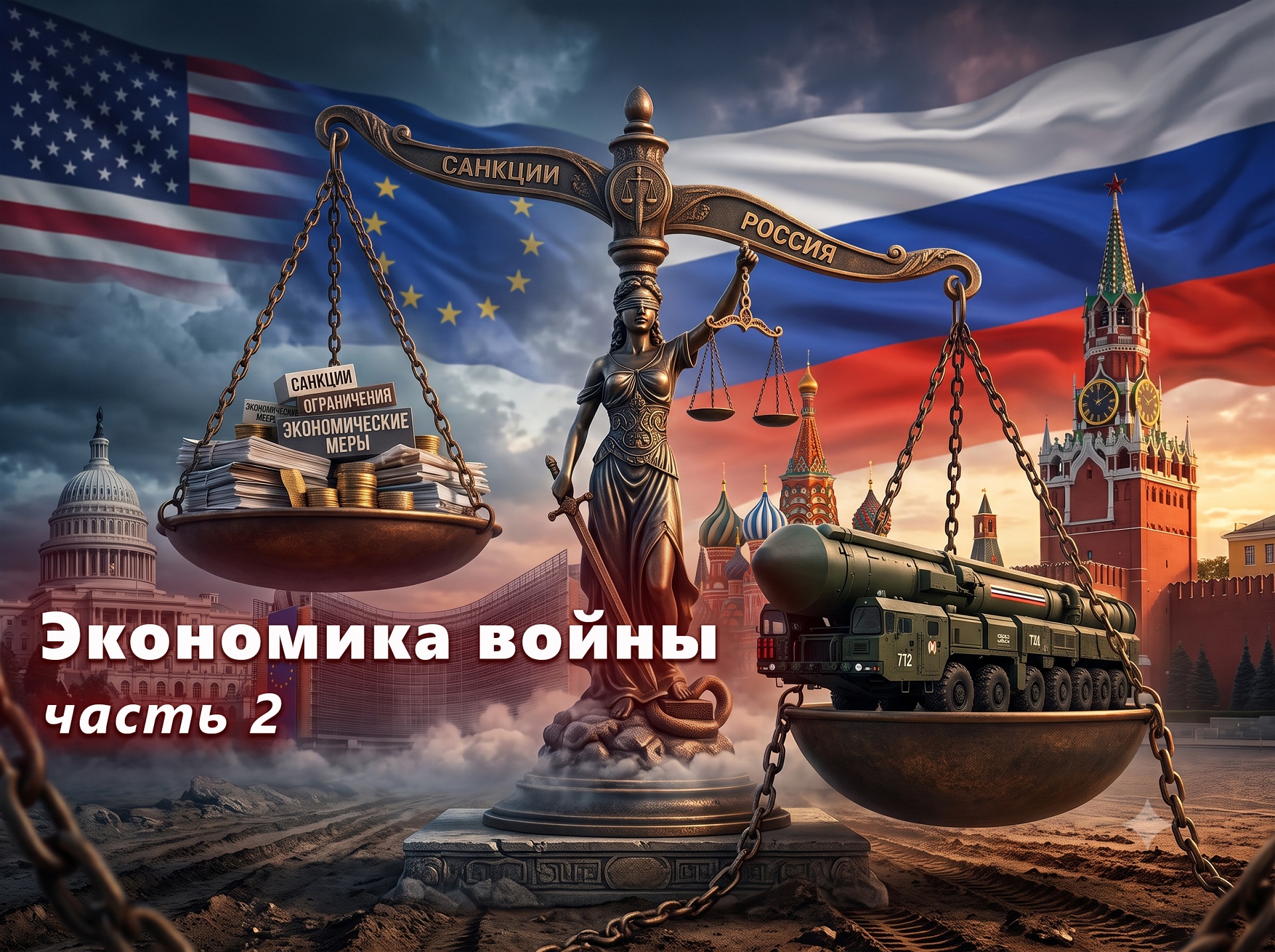
The sanctions war has cost both sides hundreds of billions of dollars — but those losses have been distributed unevenly. Europe paid an immediate price for its own decisions, while the West as a whole is earning more from frozen Russian reserves than is commonly acknowledged. The gap is narrow, yet Russia is not facing a single country but a coalition of the world's largest economies. That distinction matters.
What This Story Is Really About
This is not about sanctions as a pressure tool. It is about how the sanctions war has become a separate economic theater of operations — one where all participants absorb losses, including those who initiated it. According to a UN report, the countries that imposed sanctions lost more than $100 billion — roughly twice what Russia lost during the same initial period. The EU forfeited 65% of its exports to Russia, approximately €48 billion over four years. Germany lost more than 70% of its export revenues from the Russian market; Italy, 71%.
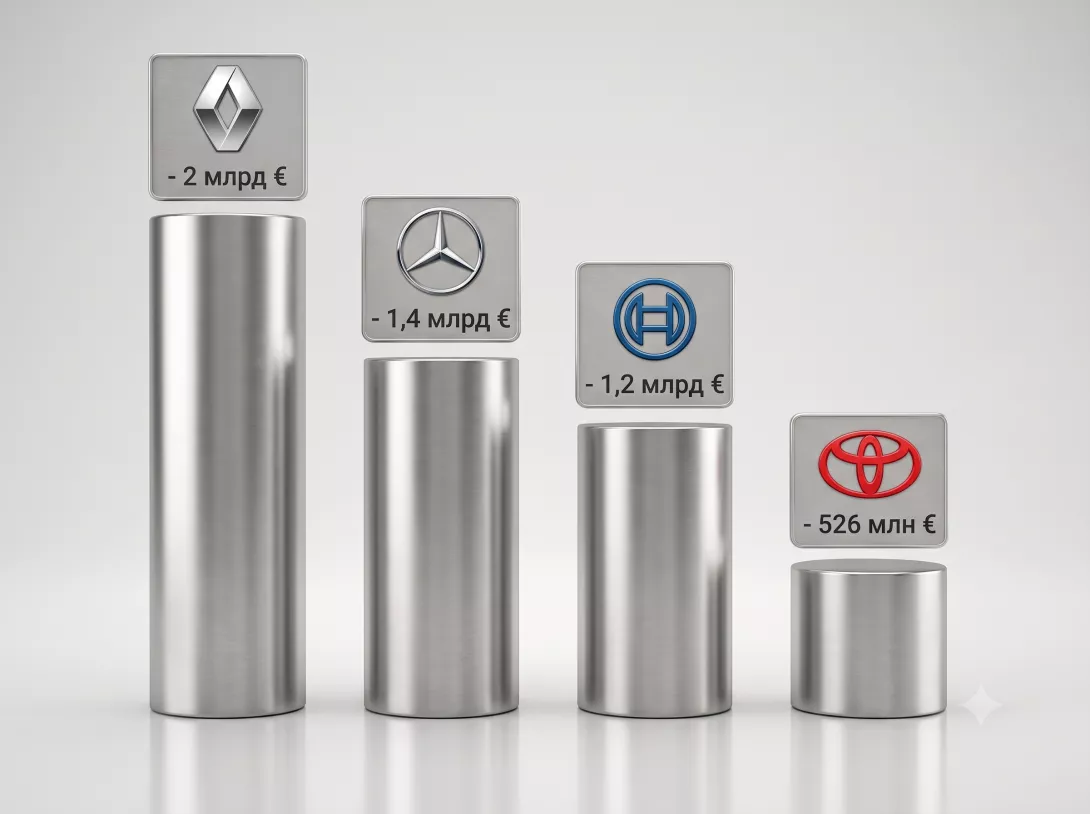
Western companies that exited Russia left billions behind: Renault, €2 billion; Bosch, €1.2 billion; Mercedes, €1.4 billion; Toyota, €526 million. A share of these assets was acquired by Russian businesses at discounts of 50–90% — a direct transfer of value to Russian buyers.
The Battle of Frozen Assets
Here, the West is winning technically, but not strategically. Approximately $280–300 billion in Russian reserves are frozen, held primarily at Euroclear. The EU is channeling the income generated by those assets into a Ukraine aid fund — roughly $8–10 billion per year. By 2027, Europe's cumulative earnings from Russian assets could reach €20 billion.
Russia holds a mirror instrument. Blocked non-resident assets on the Russian stock market are estimated at 5.7–7.5 trillion rubles, while frozen profits of Western companies amount to approximately $18 billion. Russia's Finance Ministry is already routing income from foreign assets into the federal budget. However, this resource is being monetized less efficiently than its Western counterpart, on an institutional level.
The Budget: A War Economy Under Control
Russia's federal budget for 2026 was drafted with a deficit of 3.8 trillion rubles — just 1.6% of GDP against total expenditures of 44 trillion rubles. That is a manageable figure. Oil and gas revenues account for 8.9 trillion rubles, roughly 22% of total income. The dependence on commodities is real but not critical: 41% of revenues are already non-hydrocarbon.
Mortgage rates across Europe have climbed from the historic lows of 2020–2021 — then at 1–1.5% — to the current 3.43%. This is a direct consequence of the energy crisis triggered by the rupture with Russian energy supplies. The European household pays for its government's sanctions policy every single month.
Outlook
Russia is holding on — but it is holding on against a coalition whose combined GDP exceeds Russia's by a factor of 15 to 20. That resilience rests on three pillars: a war economy with high employment, the reorientation of trade flows toward the East, and the monetization of Western assets inside the country. The weak point is technological lag, which accumulates slowly but irreversibly. Within three to five years, it will become a visible problem in high-tech sectors.
What to do
The central conclusion of this analysis is not strategic — it is managerial. Russian business survived the departure of Western partners, sanctions pressure, and broken supply chains, and it adapted. That is a tremendous reservoir of resilience, one the state is obliged to protect rather than burden with additional levies. Small and medium-sized enterprises are not a donor to the military budget — they are its foundation. They provide employment, tax revenue, and social stability at a time when the major Western players have gone.







.png)
.png)

.png)
.png)