


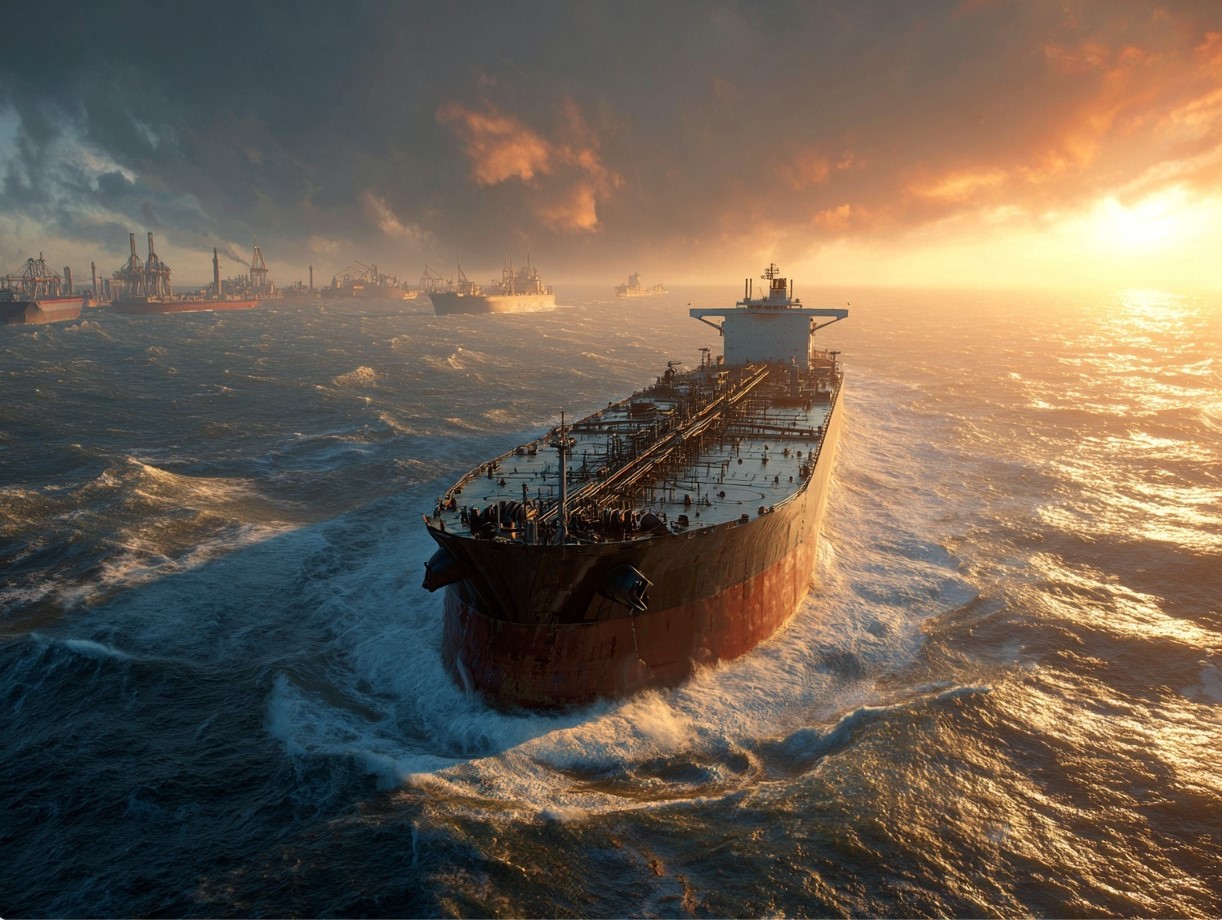
The United States is at war with Iran and mired in protracted Middle Eastern maneuvering. And now it faces a blow from an entirely different direction — from its own northern neighbor. Canada is methodically redirecting its oil flows toward China. Washington's share of Canadian exports is falling to a historic low. And this is happening at precisely the moment when Washington can least afford to lose access to a cheap, nearby source of hydrocarbons.
The numbers behind Canada's pivot: from statistics to primary sources
The data underpinning this story is confirmed directly by Canadian statistics. According to Statistics Canada figures analyzed by researchers at the China Institute at the University of Alberta, Canadian exports to China jumped 30% in overall volume in the first half of 2026. Energy commodities rose even more sharply — by 81.8% year-over-year. Total crude oil exports to China more than doubled, reaching 5.96 billion Canadian dollars. That marks an increase of 3.2 billion compared with the first half of 2025.
At the same time, the U.S. share of overall Canadian exports has been falling steadily, month after month. In July 2026, the United States accounted for just 66.35% of total exports, down from 69.39% in June and 72.64% a year earlier. Excluding the pandemic period, this is the lowest figure since statistical tracking began in 1997. Crude oil exports specifically to the U.S. fell 5.5% in July alone.
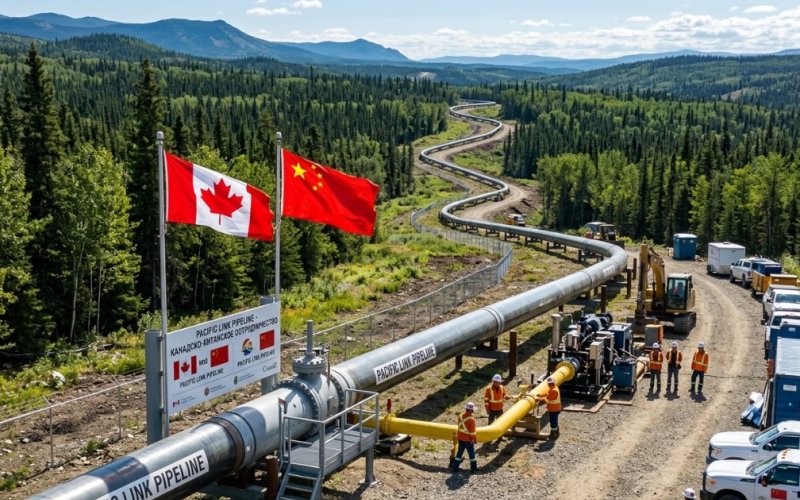
The logistics outlook is equally telling. According to a representative of the Canadian pipeline industry cited by Reuters, Asia's share — and China's above all — in Canadian oil exports will reach 70% once the Trans Mountain pipeline's capacity expansion by one-third is completed by the end of 2028. As recently as 2023, Canadian seaborne oil exports to China stood at zero; by 2025 they reached 12.3 million tonnes — a 283% year-over-year increase. China now accounts for 31.9% of all Canadian seaborne oil exports.
Reasons behind the shift: not just Trump's tariffs
The formal cause of this shift is well known: Donald Trump's trade war against Ottawa and the surge in anti-American sentiment inside Canada that came with it. But dig deeper, and the picture becomes more layered.
First, Canada has gained the physical capacity to export more to Asia than before. The Trans Mountain pipeline was built specifically for diversification, and it only reached full capacity relatively recently. Second, China's own economic calculus plays a role: heavy Canadian crude is technologically better suited to sophisticated Chinese petrochemical complexes than many alternatives. Third, the tariff war has undermined the very notion of a "default market." The U.S. share of Canada's oil exports has fallen from a former 80-90% to 60-65%.
How critical is the loss of Canadian oil for the U.S. right now
The United States has traditionally relied on access to cheap Canadian oil, purchased at a substantial discount to world prices. Heavy Canadian Western Canadian Select (WCS) crude traded at a discount for a long time precisely because Canada had no alternative buyers.
The loss of part of this discounted volume comes at an extremely inopportune moment for the American fuel market. According to The Wall Street Journal, by mid-September 2026 global fuel inventories had been shrinking for more than six months, and strategic reserves are unable to offset the shortfall. U.S. diesel prices hit a record 6.23 dollars per gallon, while gasoline reached 4.32 dollars. American crude has risen 19% in price over the past three weeks, approaching 101 dollars per barrel.

The key driver of this fuel crisis is the prolonged closure of the Strait of Hormuz amid the conflict with Iran. The International Energy Agency has explicitly warned that the restoration of normal oil supplies from the Persian Gulf states will be delayed until at least 2027.
According to estimates from Brown University, the rise in gasoline prices since the start of the war with Iran has cost Americans more than 50 billion dollars. U.S. refinery utilization has already reached 98%, and the White House is considering invoking the Defense Production Act to expand refining capacity — a measure never before applied for this purpose.
Two crises converging: the Middle East and Canada
This is precisely where two seemingly separate storylines intersect. The Middle East crisis is creating an oil shortage in the global market as a whole. Canada's pivot, meanwhile, is cutting off American refineries specifically from cheap, geographically close crude that for decades cushioned any external shocks. In the past, whenever a crisis erupted in the Middle East, American refiners could count on an uninterrupted flow of Canadian oil through cross-border pipelines.
Electoral context adds pressure on Trump
Notably, this entire picture is taking shape just weeks before the midterm congressional elections. The Trump administration is already having to essentially impose a 50-day energy truce on Kyiv. At the same time, fruitless maneuvering continues around Venezuela. The result is a situation in which Trump's room for maneuver is shrinking on multiple fronts simultaneously: the Iranian conflict shows no sign of quick resolution, the Ukrainian settlement is stalled, and now Canada is reorienting toward China as well.
What comes next: a temporary episode or a structural shift
Judging by the industry's own forecasts of Asia's share rising to 70% by 2028, this represents a structural shift rather than a temporary episode. Having been burned by dependence on a single buyer, Canada is deliberately building long-term diversification infrastructure that will not be easy to dismantle the next time the political winds in Washington shift. Even if trade tensions with Ottawa are eventually resolved, a full return to the old model is unlikely.
















.png)
.png)

.png)
.png)