




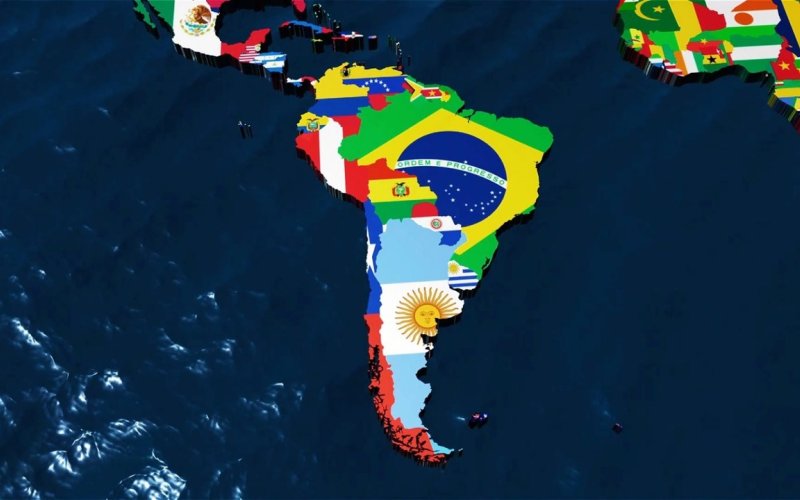
The race for technological sovereignty is no longer the preserve of two or three superpowers — today it involves Russia, China, and an entire Latin American region, each pursuing its own model of digital independence with varying degrees of success. While Beijing methodically converts technological dominance into geopolitical influence, and Moscow bets on a hybrid partnership model combined with protection of critical industries, Latin America is increasingly finding itself dependent on foreign digital solutions, risking a failure to ever build its own agency in this sphere.
Russia: A Hybrid Model Instead of Isolation
For the Russian economy, technological sovereignty does not mean complete autarky, but rather a combination of strategic partnership with protection of critical technologies from one-sided dependency. This model implies a selective approach: where Russia has its own competencies — in nuclear energy, cybersecurity, certain segments of industrial software — the country strives for full independence, while in other areas it builds partnerships with friendly states.
Cybersecurity has become a telling example of turning a challenge into a competitive advantage: from a costly budget line item, it has transformed into an export commodity, including joint projects with Latin America on critical infrastructure protection. At forums such as ICT2GO in Khabarovsk, Russia signs agreements on joint investment in digital technologies and industrial cooperation, attempting to build not one-off deals but a long-term architecture of technological cooperation.
China: Digital Infrastructure as an Instrument of Influence
China is implementing a fundamentally different strategy, based on the large-scale expansion of its own technology companies into other countries' digital ecosystems. Huawei remains the largest supplier of telecommunications equipment outside North America, controlling around 40% of that market as of 2025, with major contracts held by operators throughout Latin America. Chinese firms are deeply integrated into "smart city" projects — from surveillance systems to government data-management platforms — from Mexico to Chile.
Beijing also leads in supplying digital services and products to the region as part of its "Digital Silk Road" concept, investing in infrastructure, smartphone manufacturing, and cross-border digital services. However, this partnership is accompanied by growing risks of digital dependency and threats to the sovereignty of Latin American states, as critical infrastructure is increasingly being built on Chinese technological standards.
Latin America: A Region at a Crossroads
Latin American countries find themselves in a position where digital transformation of the economy is vitally necessary for the development of society, entrepreneurship, and public administration, yet their own technological base for this is clearly insufficient. The emerging digital services market attracts primarily Chinese companies, which have taken leading positions in supplying digital products, leaving local governments in the role of consumer rather than architect of their own technological standards.
To strengthen its strategic position, the region needs a new generation of technology policy built around social needs, economic ambitions, and questions of sovereignty specific to the region itself. This implies a shift from a fragmented, reactive approach to sustainable, coordinated regulation of artificial intelligence, digital infrastructure, and data governance — a task that, so far, only some countries in the region have managed to address.
Energy as a Parallel Front of Sovereignty
Technological competition for Latin America is unfolding not only in the digital sphere but also in energy, where Russia demonstrates significantly stronger positions. Of the 25 power units currently under construction outside the countries that developed the technology, 22 are being built according to Russian Rosatom designs — roughly 90% of the global export nuclear power market. A key competitive advantage of the Russian approach has been its comprehensive offer covering the entire lifecycle of a nuclear power plant: from fuel and personnel training to waste management and decommissioning.

Three countries in the region — Argentina, Brazil, and Mexico — already operate nuclear power plants, and Argentina and Brazil have developed a complete nuclear fuel cycle, creating fertile ground for further technological cooperation. Russia's main competitors in the region's nuclear market remain the United States, which employs aggressive competitive tactics, and China, which relies on "soft power" backed by powerful state financial support for its corporations.
Artificial Intelligence as a New Frontier of Competition
Artificial intelligence is viewed as a key catalyst for the region's technological development: investment in AI projects in Latin America's oil and gas sector alone is estimated to grow from $3.54 billion in 2025 to $6.4 billion by 2030. The application of AI is already speeding up seismic data interpretation by 70%, increasing drilling speed by 30%, and raising oil recovery rates from 8–12% to 20–45% when combined with enhanced oil recovery methods.
Russia possesses competencies in demand across the region — 3D and 4D seismic surveying, drilling technologies at depths exceeding 3,000 meters, geomechanical modeling — but faces persistent technological dependency on Western solutions in certain segments, such as jungle-based extraction, where Russian technologies still lag behind Western and Chinese counterparts. At the same time, on land, Russian companies have accumulated significant successes, providing a foundation for selective rather than total technological expansion.
Barriers and Structural Risks
Despite considerable experience in joint projects between Russia and Latin American countries, the potential for cooperation remains far from fully realized due to a shortage of up-to-date sector analysis, insufficient synchronization of regulatory norms, and the absence of systematic dialogue between companies. An additional risk remains political volatility in the region: the rise to power of Washington-oriented governments could lead to the freezing or complete cancellation of joint technology projects.
Notably, scientific and technological cooperation at the academic level demonstrates greater resilience to political fluctuations than state contracts do — ideological differences between the region's right-wing and left-wing governments have practically no effect on educational programs and specialist exchanges. Latin American innovations, meanwhile, are of direct interest to Russian partners: these include developments in vibration detection at nuclear power plants in Uruguay, analytics for power grids with a high share of renewable energy also in Uruguay, and precious-metal-free catalysts in Chile.
Forecast
The global fragmentation of technology markets and the geopolitical shocks of recent years have conclusively demonstrated that reliance on unified rules of the game and global supply chains is unreliable, pushing Latin American countries toward diversifying technology partners and developing their own scientific base. For Russia, the key strategic task becomes shifting away from the illusion of a global market and toward building long-term bilateral technology partnerships, especially in niches — nuclear energy, cybersecurity, AI for the oil and gas sector — where the country holds a measurable competitive advantage over China and the United States.
For Latin America itself, the fork in the road looks extremely concrete: either the region manages, within the next decade, to form its own regulatory and investment architecture of digital sovereignty, or it will become permanently entrenched as a technological consumer, dependent on Beijing's infrastructure solutions and fragmented partnerships with Moscow and Washington. Technological sovereignty in the 21st century is defined not by declarations but by the ability to convert individual competencies — be they nuclear reactors, AI platforms, or educational programs — into a sustainable, reproducible ecosystem rather than one-off contracts.

















.png)
.png)

.png)
.png)