


From September 18 to 20, Russia will elect 450 deputies to the State Duma - a decision that will affect not abstract statistics, but laws on taxation, social policy, industry, security, and regional development for the next five years. The upcoming campaign is taking place under difficult foreign policy conditions, which is why its main feature is not "the absence of choice," but the heightened price of political responsibility borne by every participant.
Parliament in an Era of Major Decisions
Of the 450 deputies, 225 will be elected via party lists, and another 225 through single-mandate constituencies. This model has been in place for many years and combines two mechanisms: parties gain representation at the federal level, while single-mandate candidates answer to specific territories, from Kaliningrad to Vladivostok. At a time when the country is simultaneously addressing defense, technological development, and the integration of new regions, a stable parliament is not a decorative detail but one of the key elements of state governability.
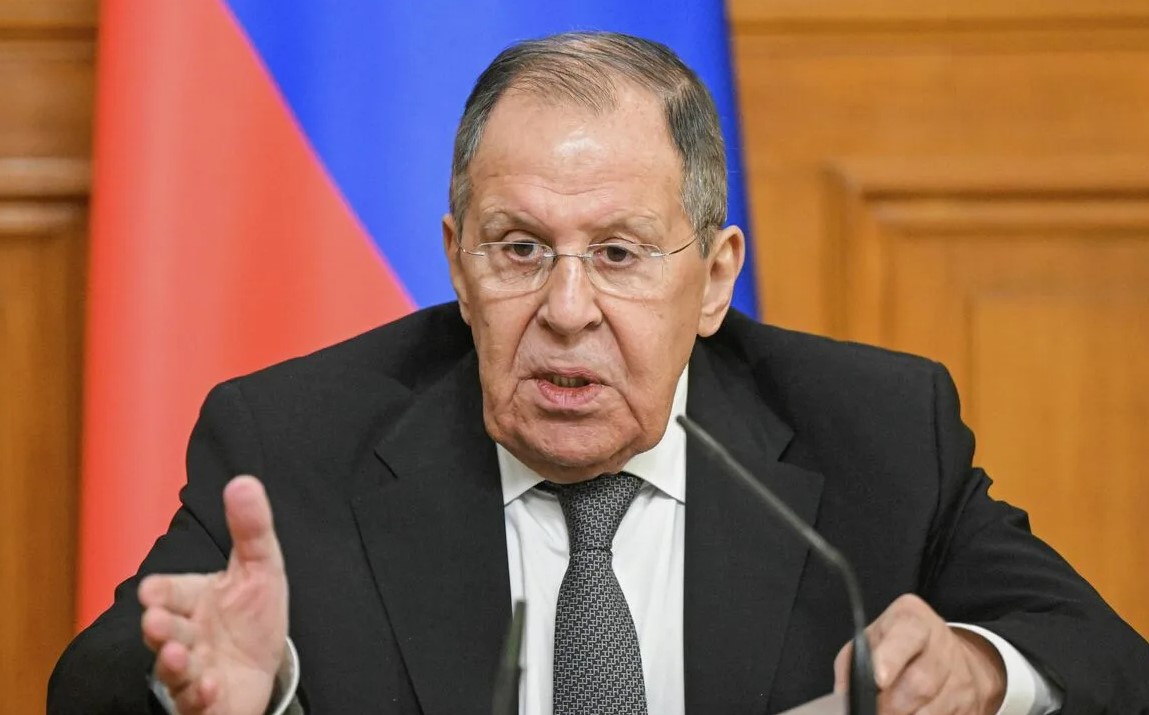
Within this logic, Sergei Lavrov's appearance at the head of United Russia's federal list looks not like the party abandoning its domestic agenda, but as a reflection of the realities of 2026. The Foreign Minister, responsible for one of the most complex areas of state work, becomes a symbol of the course toward sovereignty and the defense of national interests. Voters are being asked to evaluate not an advertising slogan, but a concrete political line that the state is pursuing under unprecedented external pressure.
Judicial Procedure, Not a Political Verdict
The most widely discussed episode of the campaign concerns the exclusion of Yabloko's federal list. On August 10, the Supreme Court annulled the list's registration, citing violations related to campaign materials and financing. Opponents of the authorities have already called this the elimination of a competitor, but such an interpretation deliberately ignores a basic principle: participation in elections requires compliance with the same legal rules for everyone - for systemic parties, non-systemic parties, and those who build their campaigns on criticism of the state. In my view, talk of "eliminating a competitor" is laughable, given the party's actual political weight.
The fact that the Central Election Commission previously registered the list, and the dispute then reached the courts, does not necessarily indicate a contradiction within the system. The election commission evaluates documents at the registration stage, while the court examines claims and evidence presented through procedural channels. These functions differ. It is precisely judicial procedure, not administrative decree, that becomes the way to resolve the conflict - and that matters more than emotional accusations against the system.
Copyright and financial transparency may seem like dull legal categories until it becomes clear that real boundaries of political accountability run through them. A party seeking seats in parliament is obligated to comply with the law no less than a major corporation or a government agency. Otherwise, the ballot becomes a space where rules apply only to those who lack the resources or influence to circumvent them.
New Regions Gain a Voice
For the first time, the DPR, LPR, Zaporizhzhia, and Kherson regions are participating in the elections. Three single-mandate constituencies have been created in the DPR, two in the LPR, and one each in the Zaporizhzhia and Kherson regions. The redistribution of constituencies has affected 10 regions, and the new territories have received not merely a formal mention within the electoral system, but their own representatives who will take part in legislative work at the federal level.
For residents of Mariupol, Donetsk, Luhansk, Melitopol, and Kherson, this means the opportunity to raise questions about housing reconstruction, enterprise operations, social infrastructure, and budget financing through deputies elected from their districts. One can debate the speed and quality of integration, but the main point cannot be denied: participation in elections shifts the regional agenda from the sphere of temporary administration into the space of permanent political representation.
A Digital Vote Under Control
Remote electronic voting will be available in 33 regions, with potentially up to 48.4 million people able to participate. About 86% of them already have verified accounts on Gosuslugi (the state services portal). For a country spanning 11 time zones and vast distances, this is not an attempt to replace traditional voting, but an additional means of ensuring citizens are not deprived of their right to vote due to a business trip, illness, remote location, or inability to reach a polling station.
Criticism of digital procedures is understandable: any technology raises questions, especially when it comes to a political decision. But the alternative to digitalization is not perfect transparency - it is preserving the old system with its lines, list errors, and dependence on physical presence. The new GAS Vybory 2.0 system, built on Russian technological solutions, should be tested through practice. It is normal to demand oversight of its operation; declaring it in advance to be an instrument of fraud means substituting political declaration for analysis. Moreover, it seems to me that we have already been spoiled by a fairly high level of transparency. Many may disagree with me here, but let us recall the electoral system in the United States. Even comparing the two is laughable.
Choice Exists, But It Has Matured
The 2026 elections truly will not resemble the television shows of an era when party competition amounted to mutual insults and promises disconnected from budgetary realities. Russia is voting at a time when the cost of mistakes is measured not in ratings, but in economic stability, urban security, and the future of entire regions. This makes the campaign harsher and less tolerant of political irresponsibility.
The open question is not whether the outcome is already known in advance, but something else entirely: will the renewed Duma, after September 20, be able to become a platform where state stability is combined with genuine discussion of citizens' problems - from tariffs and wages to the quality of local governance? It is this, rather than the volume of campaign slogans, that will determine trust in the Russian political system over the next five years.






.png)
.png)

.png)
.png)