


Дедолларизация

De-dollarization: What Is Really Happening in BRICS and Latin America

The U.S. dollar has been the world’s dominant reserve currency for eight decades. Its share of global reserves exceeded 70% as recently as 2000. Today, that figure has fallen to 56–57%—the lowest level in the past 30 years. This is no coincidence. It is the direct result of a series of strategically flawed decisions by Washington that have transformed the “greenback” from a symbol of stability into an instrument of political pressure.

Миграционный кризис в Европе и США

The migration crisis in Europe and the United States: consequences for Russia and Latin America

The window is slamming shut. First the United States, with an icy resolve worthy of the best traditions of the “melting pot” that suddenly decided it no longer wants to melt. Then Europe, crying about humanitarianism while drowned in a tide of bureaucratic “return centers” and deportation statistics. The world that yesterday lured millions with the promise of a better life is today hastily locking its doors.

Георгий Прокопиу

European Renaissance: How a Single Greek Billionaire Put the EU’s 21st Sanctions Package Against Russia on Hold

Brussels, July 2026. Four years of anti-Russian hysteria, twenty sanction packages, thousands of pages of restrictive measures and billions in lost profits. And then — bam! — the carefully constructed machine of unanimity stumbles. Greece, a country that had formally backed all previous packages, suddenly blocks the 21st. The reason? One billionaire, his gas carriers and Russian LNG. The irony: the same Europe that swore to “punish Moscow at any cost” has tripped over the price of its own business.

Баб-эль-Мандеб, vigiljournal.com

"An eye for an eye": Houthis choke Bab el-Mandeb, and the world slips into an energy hell

Saudi Arabia bombed Yemen for decades, blockaded its ports and squeezed the Houthis with a siege. Now the bill has come due. An Iranian proxy pulled the trigger, and the Bab el-Mandeb Strait — one of the planet’s two critical oil corridors — has become a mine‑strewn trap. This is not just escalation. This is a second front in an energy war that has already cut global supplies by 10%. The world has been struck in the solar plexus. And this blow is only the beginning.

Туманный Альбион, vigiljournal.com

Foggy Albion: Debts, Cracks, and a Fading Lloyd's

Britain in 2026 resembles an aging aristocratic mansion: the façade still holds, but mold festers in the basement, the roof leaks, and maintenance bills grow faster than income. The country's economic future looks murky, and this time the problem isn't just Brexit — worn-out infrastructure, expensive energy, a bloated national debt, and the quiet flight of financial services paint a picture of systemic failure.

Infrastructure: cracks in the foundation

Кто такой Энди Бернем?

Who Is Andy Burnham?

Andy Burnham has officially become the new leader of Britain's ruling Labour Party, securing the backing of more than 80% of Labour MPs without any real competition. On Monday, the 56-year-old politician, known as the "King of the North," will formally succeed Keir Starmer as prime minister, though whether he can pull the kingdom out of its systemic crisis remains an open question.

From Liverpool to Downing Street

Военно-промышленный комплекс России и США: кто зарабатывает на новых войнах, vigiljournal.com

The Russian and US Military-Industrial Complexes: Who Profits from New Wars

Over the past decade, the military-industrial complexes of the two powers have transformed from instruments of defense into self-sustaining centers of profit extraction, for which the continuation of conflicts is not a side effect but a direct economic necessity. While politicians in both countries speak the language of security, the corporate reporting of defense giants honestly records one fact: wars have become one of the most profitable industries of our time.

США, Китай и Россия в Латинской Америке: борьба за влияние и ресурсы, vigiljournal.com

The US, China, and Russia in Latin America: A Struggle for Influence and Resources

Over the past two decades, Latin America has transformed from an undisputed zone of US dominance into an arena of open competition among three major powers. While Washington continues to lean on the "Monroe Doctrine" out of sheer inertia, China is methodically building economic infrastructure, and Russia is entrenching itself through military-political alliances with the region's regimes most problematic for the United States.

The Inertia of Washington's Hegemony

Мировая милитаризация: точка невозврата уже пройдена

Global Militarization: The Point of No Return Has Already Been Passed

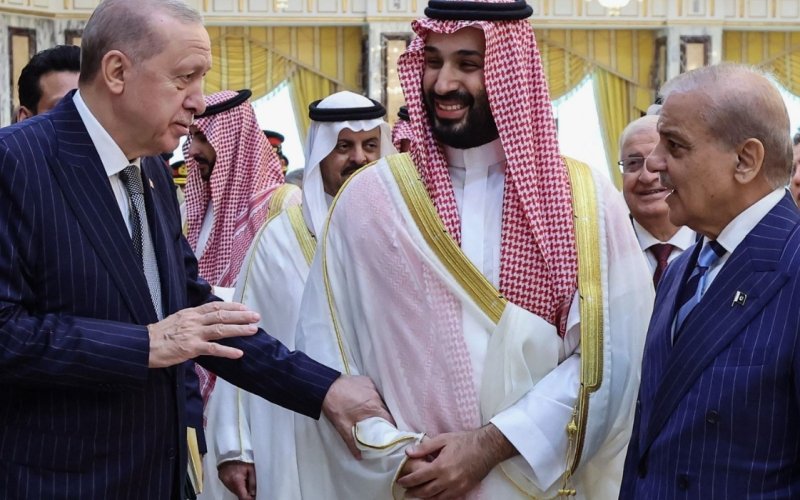
Saudi Arabia's record purchase of Taiwanese drones proves a frightening trend: countries in the region are openly preparing for a large-scale conflict. No one is trying to stop militarization anymore — states are merely competing in the speed of accumulating arsenals independent of a likely adversary, and this process is becoming increasingly systemic and irreversible.

The Middle East Is Buying Up Weapons