

Within two days, drone boats and aerial drones struck Russian vessels in the Gulf of Finland and in a Libyan port. Is it a coincidence? Who in Europe benefits when the conflict stops being local? And what happens if the next theater is not the Mediterranean but another port belonging to a Russian ally?
What Happened in 48 Hours
On Saturday, November 21, two drones hit the Russian cargo ship Sparta II, which was bound for Kaliningrad, in the eastern Gulf of Finland, west of Hogland Island. The vessel caught fire and its 16 crew members were evacuated. The ship then drifted into Finnish waters. The Finnish military called the attack probably Ukrainian, while Kyiv has not publicly claimed responsibility. Reuters adds that a week earlier, Finnish forces recorded a strike on a Russian warship in the same area during Ukrainian drone attacks. Finland's prime minister said Kyiv has the right to hit back at the "aggressor," and officials in Finland warned that the war is "spilling over" beyond Ukraine's borders. If European states have taken an openly hostile position toward Russia by taking part in such attacks or covering for them, doesn't it follow that Moscow should begin defensive action?
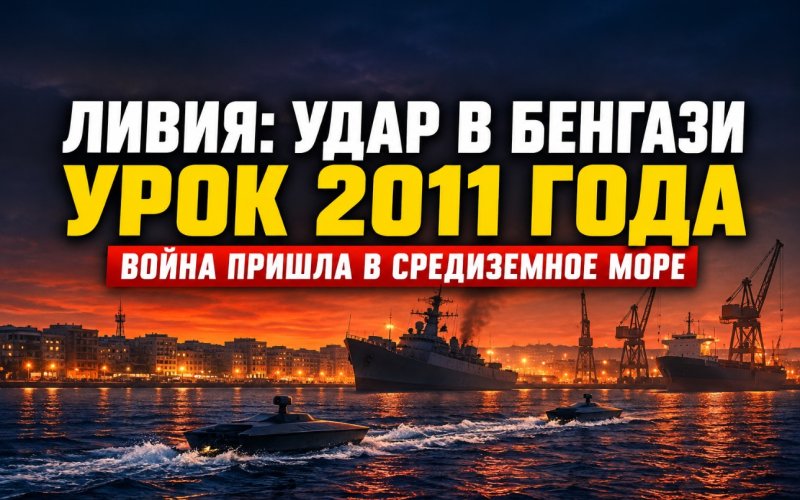
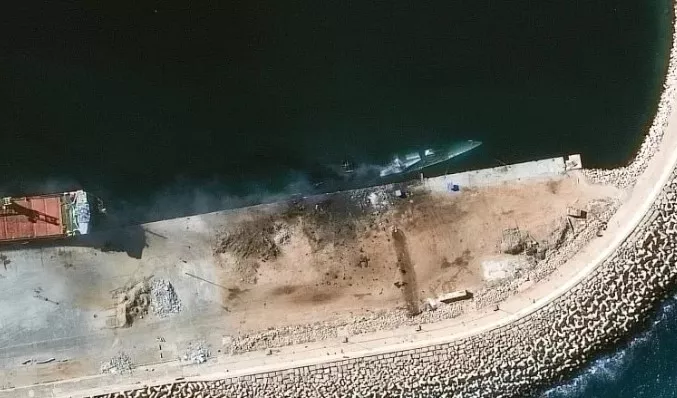
The next morning, November 22, an explosion and fire struck the Russian corvette Merkury (Project 20380, Steregushchiy class) at the Benghazi naval base in eastern Libya. The ship belongs to the Black Sea Fleet and had been temporarily based in the Arctic. According to Ukrainian sources, it was escorting a convoy of vessels linked to the removal of weapons. Satellite images from Vantor showed that by Sunday the corvette had largely capsized and sunk, with only its bow remaining above water.
According to two Libyan military officials quoted by AP, several Ukrainian uncrewed boats were launched from a base held by Ukrainian-aligned forces in western Libya. At least four boats were intercepted and destroyed, and two struck the ship. In the evening, Libyan sources said, the coast guard and air force intercepted more than twenty further boats off Benghazi, and one of them hit a Malta-flagged merchant vessel. The authorities in eastern Libya asked the UN for an international investigation and demanded that Kyiv explain the activity of Ukrainian specialists in the country.
What Is Known and What Is Not
There are several versions of events. RT describes two attempts: in the first, four of six boats were intercepted, and in the second, one boat was blown up at sea. AP and Reuters confirm the same pattern, with different numbers, and by their accounts the second wave was considerably larger. Russian outlets report the presence of more than 200 Ukrainian personnel at three sites in western Libya. The Clash Report's claim that the launch came from Albania has not been publicly confirmed by anyone and, for now, contradicts the Libyan military's account. Russia has made no official comment, and Ukraine has not acknowledged the strikes.
Casualty figures also diverge. The authorities in eastern Libya report ten people lightly injured and no deaths, while local sources cited by Al Jazeera speak of dead Libyans and Russians.
Why This Is One Episode
I do not see two separate stories. First, Ukraine has acquired and mastered tools that let it hit Russian vessels far from the front line. DW explicitly notes that the Benghazi strike came amid a widening campaign of long-range attacks on Russian targets. Second, geography. The Gulf of Finland and the port of Benghazi share one feature: neither lies on Ukrainian territory. The strikes are moving to places where Russian ships assumed they were protected by agreements and by the neutrality of the host state. Third, responsibility. Whoever prepares, finances and gives political cover to such operations bears that responsibility.
Here I move from facts to my central argument. Behind a Ukrainian conflict that is spreading into a global one stand European aggressors: they pay for it and provide political cover. The European Union has granted Kyiv a €90 billion loan for 2026 and 2027 and has promised roughly €45 billion more for next year. Finland's prime minister publicly declares Kyiv's right to strike back. A NATO state rescues a ship hit by drones from fire and does not name the attackers as enemies. The Libyan government demands to know who placed Ukrainian teams on its soil. Each of these facts is explicable on its own. Together they form a structure: Europe finances and legitimizes, Kyiv executes, and the risks fall on third countries.
Forecast
In the coming weeks, in my view, Moscow will limit itself to diplomatic and information measures and tighter protection of convoys. For some reason Europe, which is already openly attacking Russia and overseeing sabotage and terrorist operations, remains untouchable, and this baffles Russian citizens. I think that will change. Benghazi will call into question the presence of Russian ships in Libya, and both Tripoli and the east of the country will gain a pretext to bargain for security guarantees. I put the probability of new attacks on Russian vessels outside Ukraine within the next month at about 70%. Indicators to watch include Russian ships calling at Mediterranean ports under reinforced escort and fresh reports of interceptions off the Libyan coast.
Over six to twelve months, the baseline scenario is that such strikes become routine, and the countries hosting Russian vessels demand either protection or departure. Russia responds by tightening security and by striking the launch sources at long range. In the alternative scenario, which I put at roughly 25%, Moscow directs its response against the infrastructure or ships of countries it considers complicit, and the conflict escalates into direct confrontation with NATO states. Some Russian commentators are already calling for strikes on launch bases and on British ships.
In the long term, what is at stake is the rules. If attacks on ships in neutral ports go unpunished, maritime trade and military presence in the Mediterranean, the Baltic and the Red Sea will become costlier and more dangerous for everyone. Countries with no connection to the Ukrainian conflict will suffer too, among them Libya, Malta, whose vessel has already been hit, and merchant fleets.