Four business owners and experts describe how sanctions reshaped their logistics, payments, suppliers and markets. Their accounts come from the days after the EU's 22nd sanctions package was proposed.
Japan has not ranked among the world's three largest economies by GDP for some time, yet its interest rate can still topple markets on other continents. This is not a paradox. It is the arithmetic of the global carry trade, compounded by two decades of nearly free money. Japan, long seen as the quiet pensioner of the world economy, has suddenly become the coach who rewrites the rules for everyone else, and the size of its GDP has little to do with it.
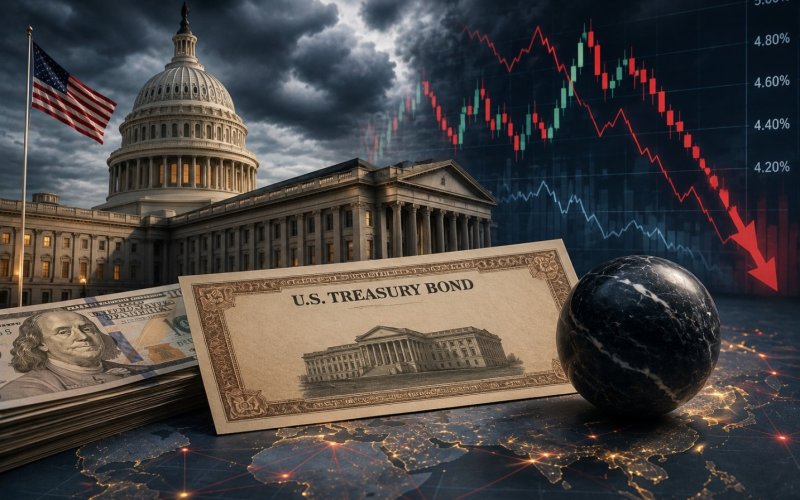
Foreign holders are quietly leaving the U.S. Treasury market, and the market will absorb their exit through domestic buyers. The real question is who pays for that digestion. The answer is not a happy one: the cost will fall on the purchasing power of the dollar in your wallet.
A shipping container can get stuck in a country with a functioning parliament, an independent central bank and growing exports. No coup is required. A blocked road to the port or a truckers' strike is enough. That is why Latin America's political stability cannot be judged by the president's name and the number of demonstrations in the capital alone.
The banking systems of the United States and the eurozone look like the star pupil who has memorized the lessons of 2008. Capital is at record highs, stress tests have been passed, and bad loans are under control. But the exam questions have changed, and part of the class has started peeking at the cheat sheet of deregulation. The stability is real, but it rests on a wing and a prayer, a favorable scenario, and the hope that the commercial real estate wall of debt will somehow dissolve on its own.
We are not "on the brink of a new crisis." We are already inside a rare convergence of several long-term economic cycles. This is less a catastrophe than a change in the rules of the game, one that most portfolios are not prepared for. The key question is not "when will it blow up," but who will manage to reposition before the old maps stop working.
If school textbooks are to be believed, the Japanese economic miracle is a story about hardworking Japanese people who, after a crushing defeat in war, pulled themselves together, cultivated corporate discipline, and built Toyota, Sony, and Panasonic literally from the ashes. A beautiful fairy tale. There's just one problem: it barely explains where a bombed-out country, stripped of its army and sovereignty, suddenly got the capital, the technology, and — most importantly — the market for all this splendor.
Asset value on its own is not a diagnosis. It is only half of the equation. The other half is how those assets relate to revenue, debt, and equity. Without that relationship, even the most impressive balance-sheet numbers remain nothing more than attractive statistics. They soothe the eye but say nothing about a company's real financial health. Behind this observation lies an entire gallery of corporate skeletons that once looked like models of efficiency.
Revenue and profit are essential benchmarks for assessing a company's financial health, but on their own they are meaningless unless you understand what actually stands behind them. Revenue growth might mean market capture, or it might mean an asset sell-off; profit growth can signal genuine efficiency, or a one-time deal that will never repeat. The key question is always what actually drove the change in these figures in each specific case, and who benefited from you seeing exactly those numbers.
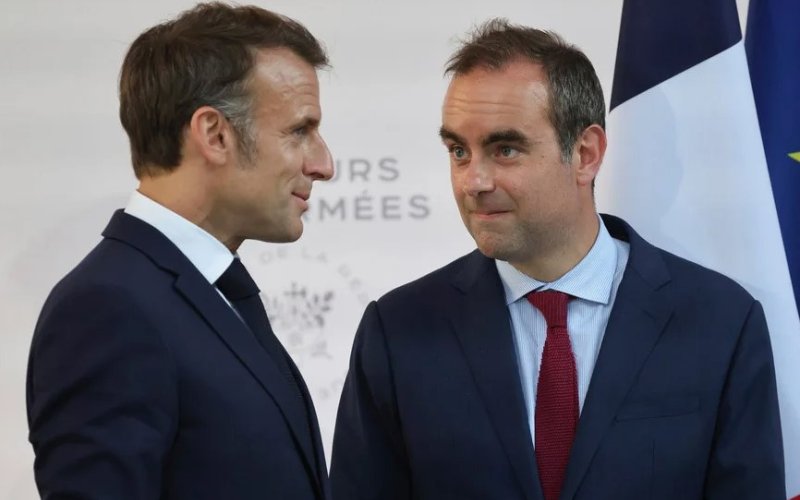
France's economy, over the period from early 2022 to September 2026, has traveled a path from post-pandemic recovery to a state that can only be described as troubling. Growth has shriveled to a statistical rounding error, debt has crossed 115% of GDP, and the political system seems to have forgotten what a stable government looks like. This is not a temporary setback—it is a structural shift that financial professionals cannot afford to ignore.