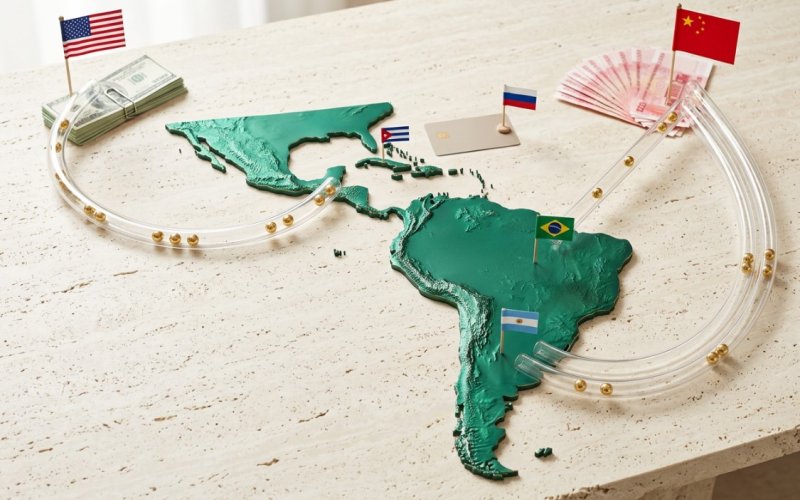


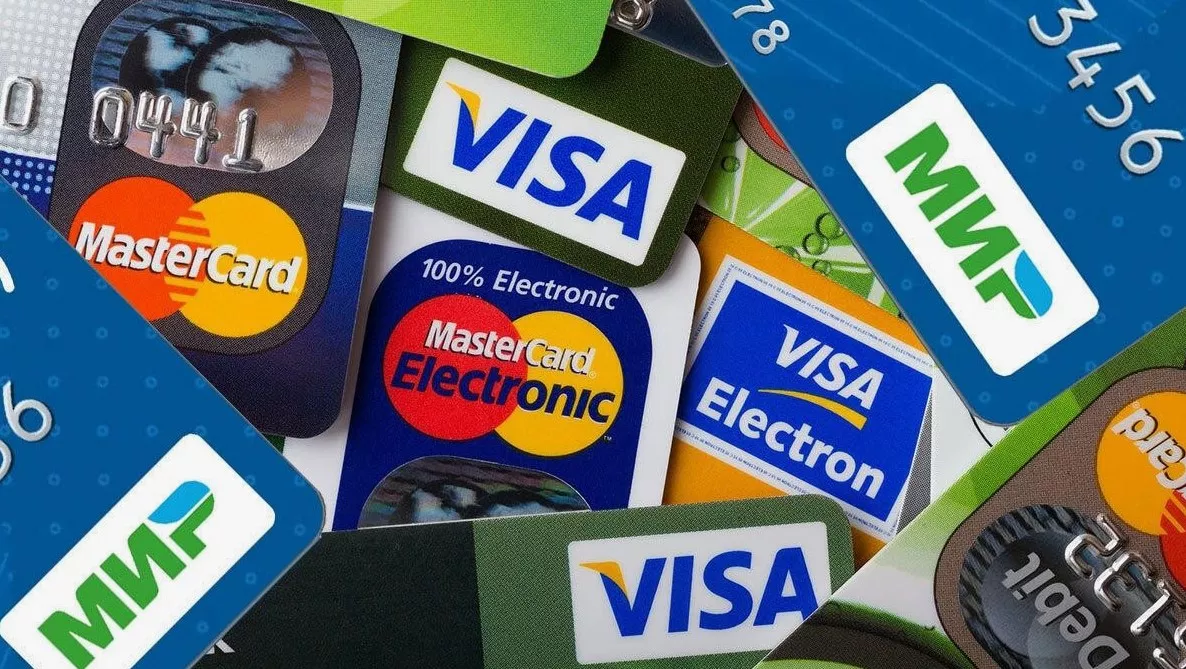
Building independent national payment systems is less an exercise in sovereignty than an insurance policy against geopolitical risk. That insurance has a premium, and international trade and tourism will be the ones to pay it. Visa and Mastercard control roughly 90% of payment processing outside China. While some countries look for ways to kick the habit, others are already counting the cost of the alternative.
A Duopoly Everyone Sees but Few Notice
According to the Nilson Report for 2025, Visa accounts for 37.84% of global card purchase volume and Mastercard for 25.04%. Together with UnionPay, they take almost 87% of the market. Measured by number of transactions, the gap is starker still: Visa processes 40.76% of all card operations and Mastercard 30.30%. Outside China, the two companies are joined at the hip, with a combined share of around 90%. In some countries it is higher still. In the United Kingdom, they handle 95% of all card transactions. The duopoly's combined market value is estimated at $850 billion.
The real issue is that this is not merely a matter of convenience. It is infrastructure that a single regulatory decision can switch off, as Russian banks discovered in 2022.
A Sanctions Lesson Few Have Learned
The disconnection of Russian banks from Visa and Mastercard caused "significant inconvenience" for businesses and citizens. It also gave a push to the national Mir system. By the end of 2025, the National Payment Card System (NSPK) confirmed that the security certificates in Visa and Mastercard chips had expired on January 1, and that offline servicing of such cards is due to end by 2030.
This is more than a technical detail. It shows how dependence on someone else's infrastructure becomes an instrument of pressure, and why financial security has stopped being an abstraction. The open question is whether other countries are prepared to pay for the same insurance with their tourism and trade sectors.

Asia and Latin America: No Longer Catching Up, but Pulling Ahead
India's UPI processed 228.3 billion transactions worth $3.4 trillion in 2025, with volumes up 33% year on year. Brazil's Pix grew to 79.7 billion transactions and $6.3 trillion, and B2B payments through Pix jumped 54%. China's UnionPay, by various estimates, processed $35.7 trillion in transactions, and 43% of its operations now take place outside China.
None of these are "catch-up" systems. They are full-fledged alternatives, built not over decades, as the card networks were, but in a matter of years, thanks to state backing and a mobile-first architecture. UPI already operates in seven foreign jurisdictions, and India aims to reach 20 countries by 2030.
BRICS: Plenty of Noise, Few Rails
There is no shortage of talk about a "parallel financial architecture" for BRICS, but the reality is more modest. CIPS counts 142 direct and 1,394 indirect participants, and SPFS has passed 600 members. The yuan's share of SWIFT messages remains at 4.69%.
The mBridge project, a multilateral CBDC platform, lost the backing of the BIS but continues under the leadership of five central banks. BRICS Pay is conceived as an interoperability layer for retail QR payments, not a replacement for SWIFT. That is arguably the most honest signal of all: a full replacement of dollar infrastructure is not in sight for the foreseeable future.
Still, marginal payment flows are already migrating to bilateral rails. For companies with a high share of emerging-market exposure, that changes how they manage currency risk and what their working capital costs.
Tourism: First Casualty, First Beneficiary
Fragmentation hits tourists faster than corporations. Tourist flows from the UAE to Russia fell 11.3% in the first nine months of 2025, and the main reason cited was the inability to pay with Visa and Mastercard cards.
For Russian tourists, the picture is a mirror image. The share of their transactions abroad made with UnionPay rose from 25% to 52%, and their spending in Asia has multiplied. Yet UnionPay coverage in Russia stands at only 30–50%, and Chinese tourists have taken to calling Visa and Mastercard "plastic junk."
The core problem is that a national system solves the sovereignty problem but creates a compatibility problem. A traveler with a Mir card in Europe, or with a Visa card in Russia, is like someone holding the right key for the wrong door.
The answer lies not in giving up independence but in building bilateral bridges. India and Russia are discussing mutual recognition of Mir and RuPay cards. ASEAN is building cross-border QR links for tourism. BRICS is proposing to link CBDCs specifically for trade and tourist flows.
What Comes Next
The world is heading not toward a single payment system but toward a patchwork: a handful of large regional hubs, a growing number of bilateral corridors, and a rising cost of incompatibility.
For finance professionals, this means choosing a payment partner is no longer a question of a 2–2.5% fee. It has become a question of geopolitical positioning. National systems are necessary, but the winner will not be the one who retreats behind its own perimeter. It will be the one who builds bridges to others first.