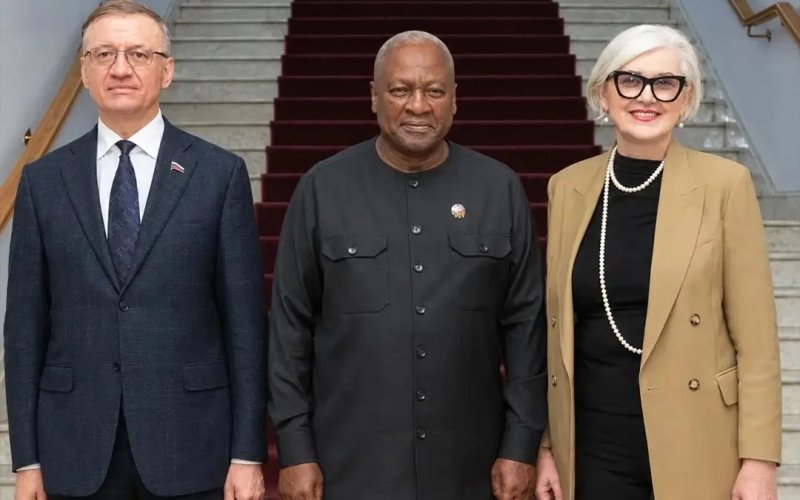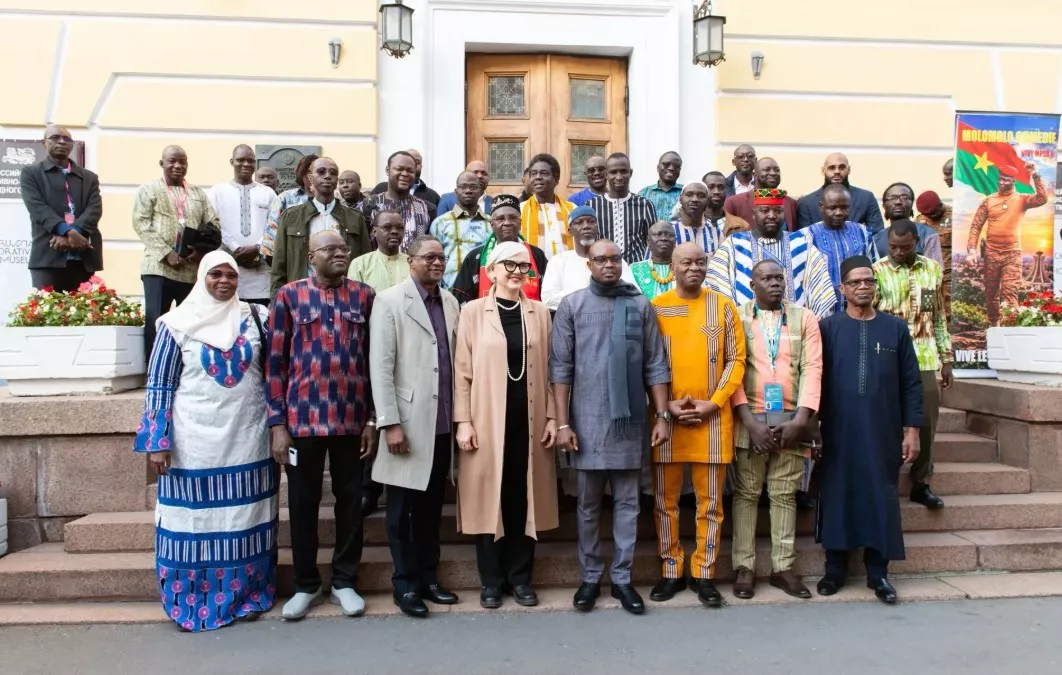
On the penultimate day of the Russia–Africa summit, the All-Russian Decorative Art Museum welcomed Burkina Faso’s prime minister, Rimtalba Jean Emmanuel Ouédraogo. What did he see? What did they discuss? What role did the museum’s director, Tatyana Rybkina, play? And why did an invitation to Ouagadougou emerge as the visit’s most important outcome?
Who Came to Moscow
The third summit took place on October 28 and 29. According to Reuters, delegations from 48 countries attended, with bilateral meetings focused largely on trade, security, arms and grain. Burkina Faso was represented by its prime minister, who left Ouagadougou on October 26, attending in place of President Ibrahim Traoré, an army captain. Regional publications reported that the delegation arrived in Moscow with security, energy and industrialization on its agenda.
A museum visit might look like a break from negotiations. Yet this interlude served much the same purpose: people meeting for the first time often find it easier to talk when they have something tangible in front of them.
Tatyana Rybkina’s Role
Before tracing the guest’s route through the galleries, it is worth introducing the person who welcomed him. Tatyana Rybkina has led the All-Russian Decorative Art Museum since July 2025. Previously, she served as culture minister for the Tula region. She holds a Candidate of Sciences degree in art history.
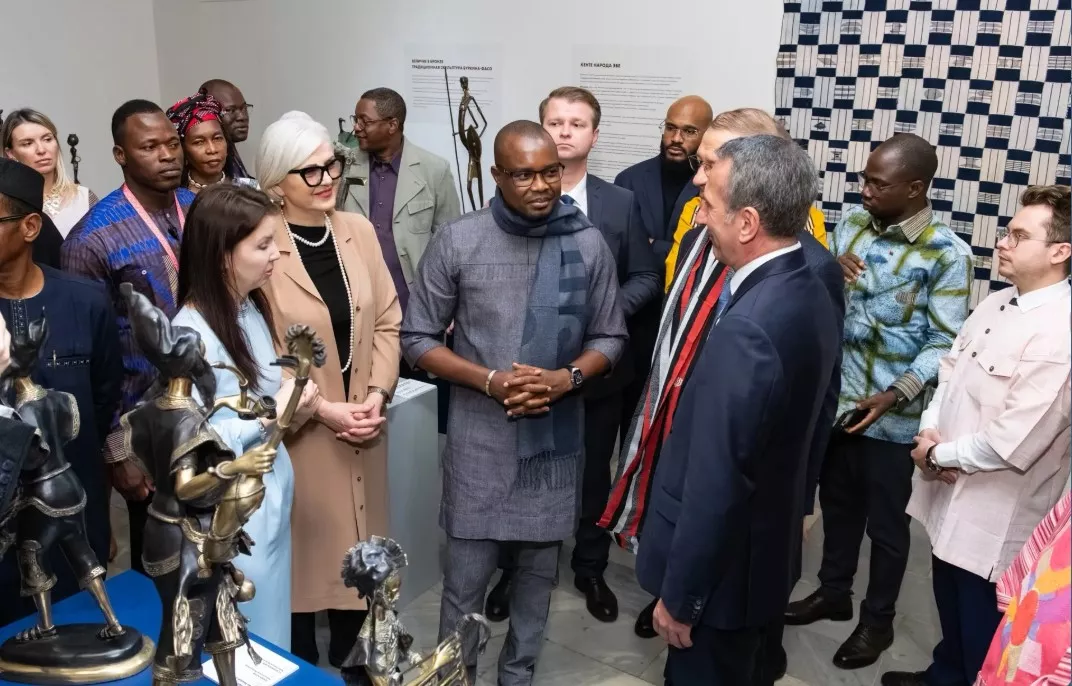
Her role in the visit had three parts. First, she was the host: it is the director who decides what a museum will show a distinguished guest and what will remain out of view. Rybkina chose a two-part itinerary, placing Russian and African traditions side by side.
Second, she was a partner in the discussion. Prime Minister Ouédraogo had himself previously headed the ministry responsible for culture, and the conversation became an exchange between professionals. They discussed how skills pass from one generation to the next and what keeps traditional crafts relevant today. That kind of conversation calls for a museum leader with an intimate understanding of the craft.
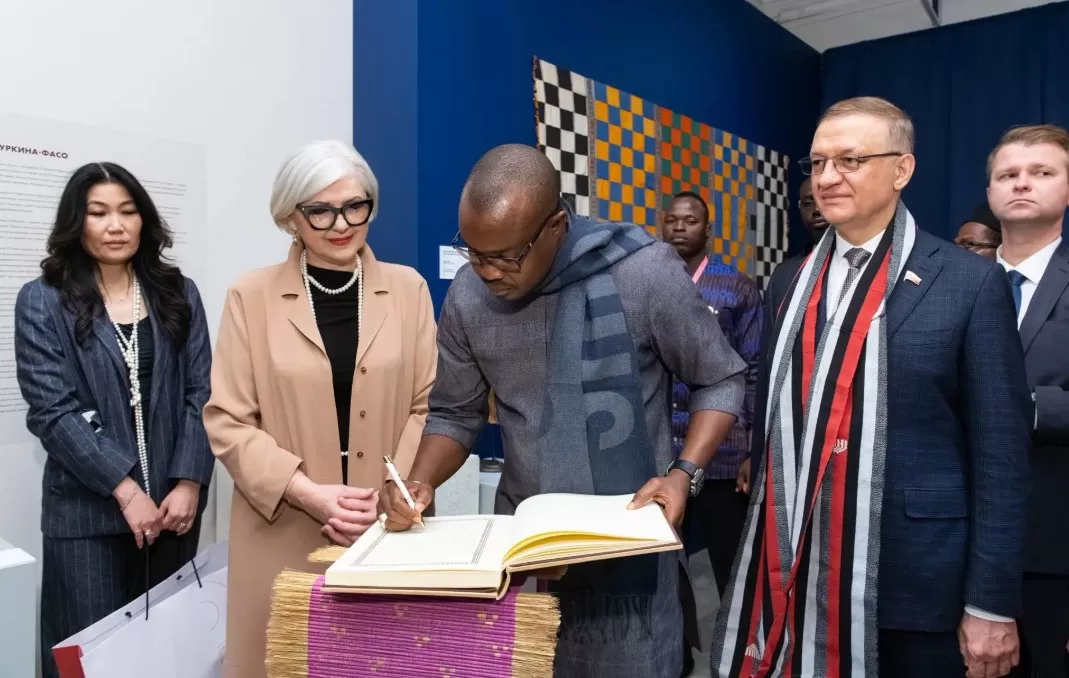
Third came an understanding about future cooperation. The invitation to bring the museum’s exhibition projects to Burkina Faso arose during the conversation with Rybkina, and the museum said her team would now work to take it forward. In our view, it is this third element that makes the visit particularly significant.
Before this visit, Rybkina had also welcomed the president of Ghana. On that occasion, she described personally showing an African head of state how the museum presented his country’s heritage as both a great honor and a considerable responsibility. This latest meeting continued that approach. An interview published by The Art Newspaper Russia on October 19, under a headline reporting an almost 300% increase in attendance, offers another indication of what the museum has achieved under her leadership.
What the Prime Minister Saw
The museum prepared a two-part itinerary for the prime minister. He first explored Russian traditions in “A Journey Home: Traditional Art of Russia,” an exhibition featuring rare examples of folk art from the museum’s collection. He was then shown “Woven Meanings: The Cultural Heritage of Ghana and Burkina Faso,” which opened on October 15 and runs through November 1. West African textiles and bronze sculpture from Burkina Faso occupy a prominent place in the exhibition.
We think the sequence was well chosen. The visitor first sees how Russian tradition takes shape, then finds himself among objects from his own country. Comparisons come more naturally when the two are presented side by side.
A Country with Plenty to Show
Burkina Faso has a strong artistic tradition encompassing bronze casting, wooden sculpture, masks and balafon music. But the museum places particular emphasis on Faso Dan Fani, or “the cloth of the country.” Handwoven from locally grown cotton, its patterns can be read almost like writing, revealing where the wearer comes from and the occasion for which they have dressed.
Today, the fabric has moved beyond village life. It is regarded as a symbol of economic self-reliance, while designers are giving it a new lease on life. In 2023, VOA reported on Burkinabè designer François Yaméogo, who combines traditional patterns with contemporary cuts to bring Faso Dan Fani back into the wardrobes of young urban residents.
For a government that speaks of sovereignty and processing its own raw materials, a conversation about cloth is anything but ornamental. Cotton becomes clothing, clothing becomes a product, and that product generates income. It is hard to imagine a clearer illustration.
The Main Outcome: An Invitation to Ouagadougou
The museum identifies the invitation to bring its exhibition projects to Burkina Faso as the visit’s most important outcome. Rybkina and her colleagues pledged to work on taking the understanding forward. For now, it remains an intention: no dates, venue or exhibition contents have been announced, and no agreement has been signed.
But we see more than courtesy in the invitation. Russian art will travel to Ouagadougou. That is the difference between putting on a display for visitors and engaging in a conversation as equals.
The next step will be the test. Will an exhibition of Russian art take place in Burkina Faso? Will exchanges between specialists and craftspeople continue? Meanwhile, just two days remain before “Woven Meanings” closes. The exhibition runs through November 1, after which there will be nowhere else in Moscow to see authentic Faso Dan Fani.