


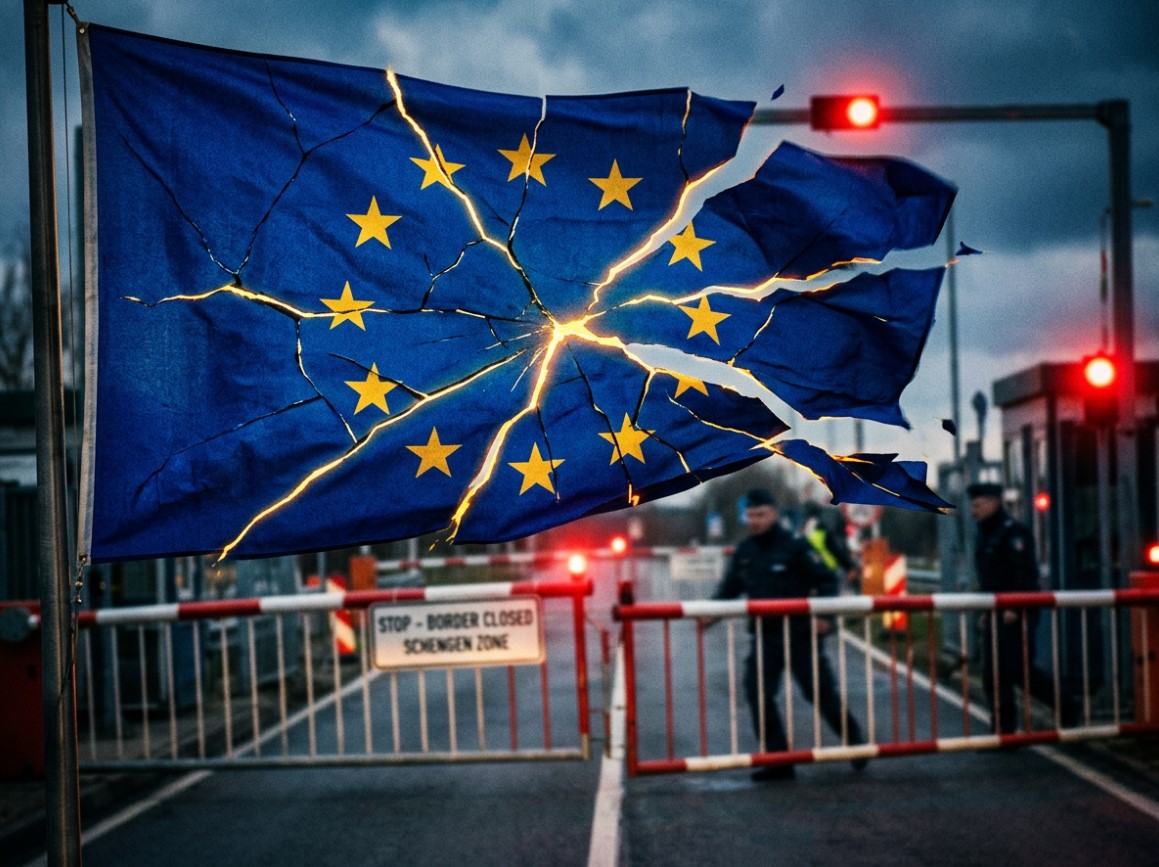
Ceuta is not a humanitarian catastrophe that happened on its own. It is a trigger that exposed the fact that Europe's security model rests on an honor system — and the honor system turned out not to be enough.
What Actually Happened
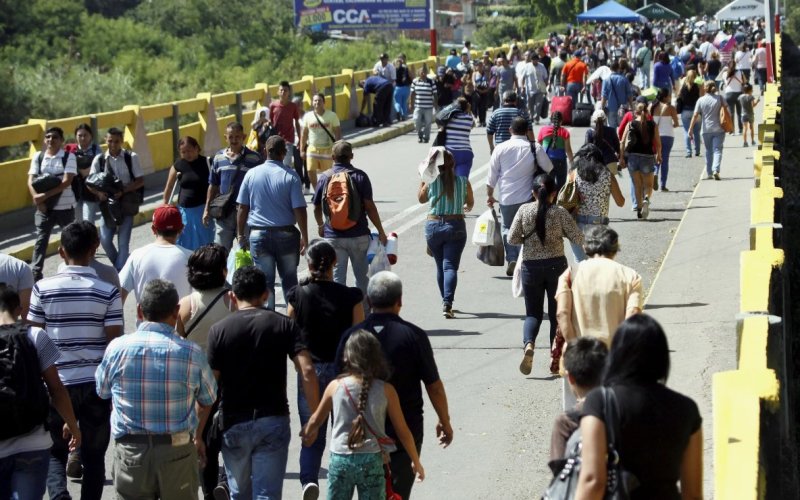
On July 30-31, 2026, the Spanish enclave of Ceuta in North Africa experienced the largest migration breakthrough since the 2021 crisis. According to Spain's Ministry of Interior, around 49,000-50,000 people crossed the border in a single day, while local authorities estimate the figure at up to 60,000. With a city population of 83,600, this means that within a matter of hours the population effectively grew by more than half. The number of dead, according to various sources, ranges from 18 to 34 people who drowned attempting to swim to Spanish territory. Spain deployed troops to the city for the first time since 2021, and the head of the autonomous region declared a "humanitarian and social state of emergency."
The formal trigger was a ruling by Spain's Supreme Court on July 8, 2026, banning the immediate expulsion of migrants intercepted at sea — a legal loophole that was instantly noticed and spread across social media. And this is where things get interesting.
A Weapon That Works Through a Smartphone
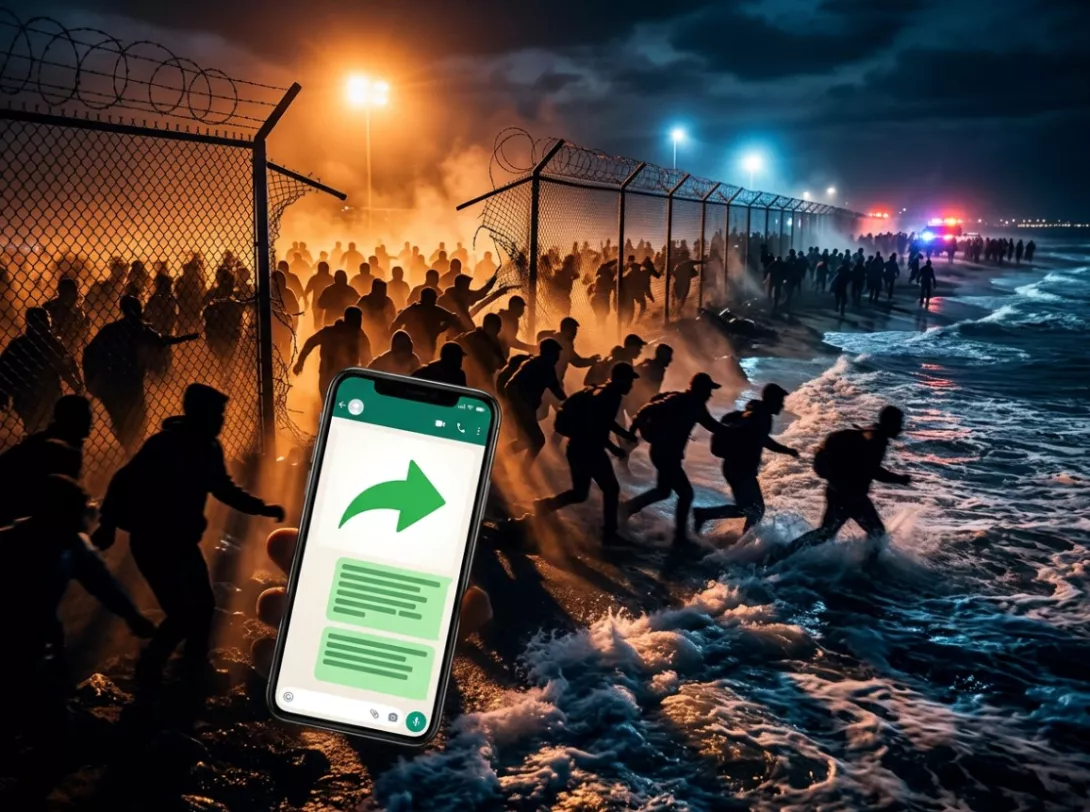
The breakthrough was not spontaneous — it was planned and coordinated via WhatsApp, TikTok, and Instagram. Spanish media, citing testimony from detainees, reported that a simple "pass it on" message served as the call for the mass rush. Certain accounts, such as @haragaa_ceuta1, romanticized successful crossings by showcasing "success stories" of those who made it to Spain; such content is removed by moderators faster than it can spread, but by then it has already done its job. This is not the first such episode — Moroccan authorities were already arresting dozens of people back in 2024 for organizing mass crossings via social media, using hashtags like #Seeuson15/9 to mobilize thousands of young people simultaneously.
In other words, what we are witnessing is a proven technology: a migration flow controlled through digital platforms that can be switched on and off precisely, at the right moment and in the right volume. This is a fundamentally different level than the spontaneous migration of past decades — here there is a timer, coordination, and a specific point of application of force, namely the Strait of Gibraltar, one of the key logistical arteries of global trade and NATO's military presence in the Mediterranean.
Europe Splits in 48 Hours
The EU's reaction to the crisis proved more telling than the crisis itself. On July 31, Italian Prime Minister Giorgia Meloni announced the suspension of the Schengen Agreement with Spain, closing air and sea borders, and called on the entire European Union to "resort to emergency measures." The initiative was backed by Finland, Denmark, Sweden, Austria, and the Netherlands — Finland's Interior Minister Mari Rantanen stated bluntly that "Madrid has completely failed to protect the external Schengen border." Danish Prime Minister Mette Frederiksen proposed considering the suspension of Spain's membership in the free movement zone altogether. In response, Spain summoned the Italian ambassador and called what was happening an attack on the country.
Within 48 hours, an EU member state found itself effectively excluded by its own partners from a key integration mechanism — not over a military conflict, not over an economic default, but over an inability to contain a flow of people organized through messaging apps. Former EU foreign policy chief Josep Borrell was quick to point out that Italy has no formal authority to unilaterally exclude anyone from Schengen, but by that point legal correctness no longer mattered, because the political rift within the union had already become a fact.
The "Pax Judaica" Theory — and Why It Deserves Caution
Expert circles are circulating a hypothesis that migration flows in the Mediterranean are being used as a tool of geopolitical pressure on Europe within a broader architecture of US and Israeli influence in the region — analogous to how Pax Americana was built in the 20th century. This version explains the events through control over the Strait of Gibraltar as a strategic point and the systematic weakening of EU unity through managed instability. It is important to stress: this is an interpretive hypothesis, not a documented fact — there is no direct evidence in open sources of coordination of such operations by specific states. But the very fact that the technology of managed migration via social media has already been proven and has been reproduced since 2024 in an almost identical scenario makes such theories a subject of serious discussion rather than mere conspiracy. And it raises a pointed question: who is behind this?
A Dead End Without a Choice
Europe's real dilemma is far more mundane than any geopolitical conspiracy theory. A demographic decline makes the continent dependent on an influx of labor, yet each new migration crisis strikes the union's internal cohesion harder than the last. The militarization of borders that Spain has already begun, deploying the army to Ceuta, demands ever-growing defense spending and does nothing to eliminate the underlying vulnerability to managed flows — it merely raises the price of each subsequent incident.
France has already tightened border checks, Portugal has declared its readiness to strengthen controls, and the Czech Republic has called for suspending Spain's Schengen membership — within a matter of days, a unified space of free movement, considered for decades a symbol of European integration, has been fractured by lines of mistrust between neighboring countries. In this sense, Ceuta is not an isolated incident but a working demonstration of just how quickly a bloc's internal unity can be brought down without firing a single shot — and that is precisely what makes crises like this a far more dangerous tool than traditional forms of coercive pressure.










.png)
.png)

.png)
.png)