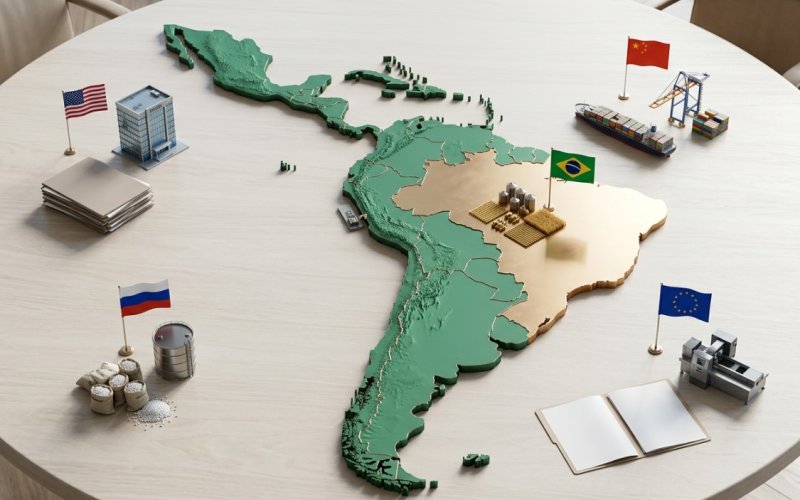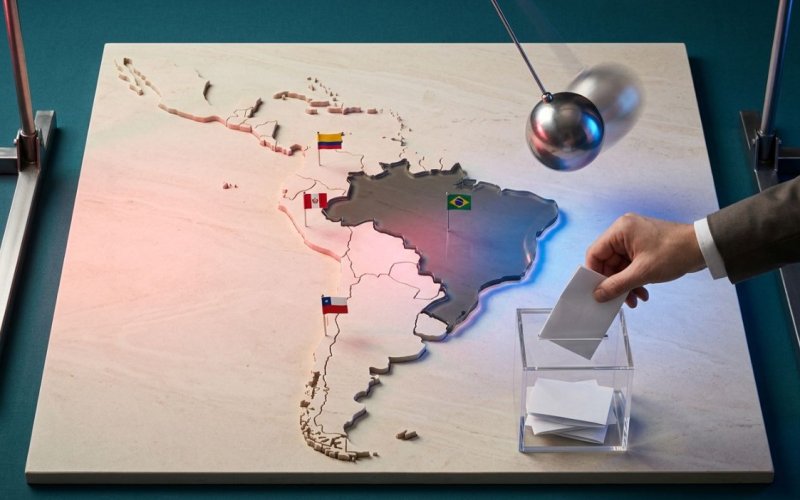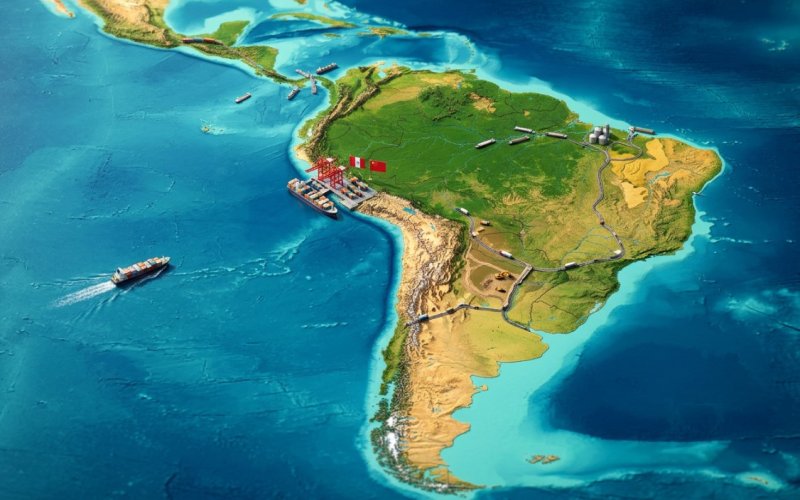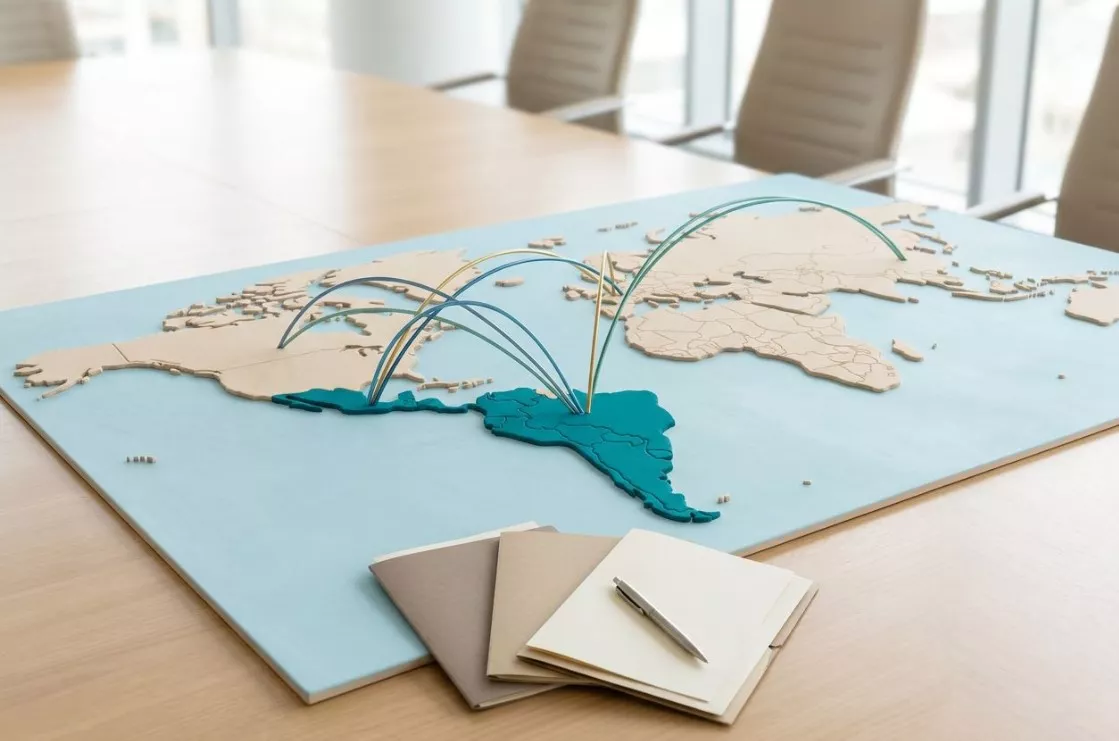
Over the first ten months of 2026, countries in the region signed documents that pull them in different directions: toward Washington on security, toward Europe on trade, and toward Beijing on political dialogue. We have laid out the events by date and looked at what each one means in practice.
How the Year Unfolded
Europe came first. On March 27, the European Commission formally told the Mercosur countries that provisional application of the trade agreement would begin on May 1. The talks on this bloc had dragged on for more than two decades, so the date itself drew plenty of comment in South America.
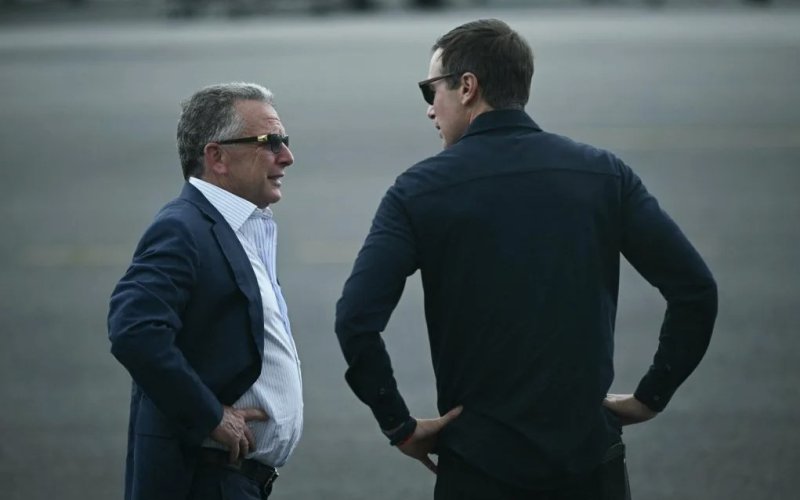
Earlier, on March 7, the news agenda was heading in a different direction. At Doral, on the grounds of a Florida resort owned by Donald Trump, the "Shield of the Americas" meeting took place in a single day. The US president presented it as a regional alliance against organized crime. Trump aide Stephen Miller spoke at a conference on fighting the cartels, and analysts at Just Security immediately raised concerns about the implications for sovereignty and for relations between the military and civilian authorities in the region's countries.
On March 21, the tenth CELAC summit convened in Colombia. Chinese President Xi Jinping sent the participants a message of congratulations. In it, he returned to the outcomes of the China-CELAC Forum ministerial meeting, which he opened in Beijing in May 2025. China did not propose any defense agreements. It spoke of cooperation and development, while Colombia, as host, remained a venue for dialogue.
On July 10, the State Department released a joint statement from the members of the Shield of the Americas. It was signed by the United States, Argentina, Bolivia, Chile and several other countries. Outlets later listed the participants differently, but reports on the Doral meeting name Colombia, Costa Rica, the Dominican Republic, Ecuador, El Salvador, Guyana, Honduras, Panama and Paraguay.
In late October, the conversation moved from declarations to commitments. On October 27, the Chilean government held a Sunday session to decide whether to sign the military pact of the Counter-Cartel Coalition of the Americas, part of the broader American framework. Two days later, the US Department of Defense announced a meeting of Western Hemisphere countries to agree on a campaign plan against the cartels. The coalition, the statement said, supports the Shield and draws on both economic and security measures.
On November 1, the Mercosur agreement with the European Free Trade Association (EFTA) took effect. For now it applies to Uruguay, Norway and Iceland, while Switzerland and Liechtenstein will join in 2027. Uruguayan Foreign Minister Mario Lubetkin said a new trade partnership was beginning, covering 309 million people. He also pointed to the purchasing power of those markets.
What Lies Behind the Agreements
Taken one by one, these documents look unrelated. Taken together, they show how regional diplomacy is built today.
Security and trade run on separate tracks. The Shield of the Americas demands political proximity from its participants: signatories align their positions on crime and migration, and sometimes on external partners. The agreements with the EU and EFTA require nothing of the kind. Europe gets a market, Mercosur gets access to European buyers, and nobody is obliged to take sides in a dispute between great powers.
That is why the same government can sign a memorandum with Washington and trade with Brussels. Argentina, Paraguay and Uruguay all belong to Mercosur, yet they take different approaches to the American initiative: on the participation of Buenos Aires and Asunción in the Shield.
China has chosen a third path. It builds no military alliances and demands no domestic political commitments, so the China-CELAC Forum remains a convenient platform even for those who have signed documents with the United States. At the March summit in Colombia this was plain to see: Xi Jinping's message was delivered in the same room as the discussion of regional problems.
Where Friction Arises
Chile showed the most visible friction. President José Antonio Kast brought the question of the military pact to a cabinet session, and that is an important signal: a country that has joined the Shield is not obliged to accept every add-on to it. Requests to share intelligence provoke less dispute than foreign troops on national soil. That is precisely why the coalition stresses economic and security measures together.
Critics of the initiative go further. In an October 25 piece, Wired argues that the Shield reveals US interest in Latin America's natural resources. Just Security, for its part, points to risks to sovereignty and to civilian control of the military.
The trade agreements face a different problem: timing. The EFTA deal did not take effect for everyone at once, and Switzerland and Liechtenstein will have to wait until 2027. The provisional European agreement has been in force since May, but its effect will show only once exporters and importers adjust to the new quotas and rules.
What to Watch
First, Chile's decision on the Counter-Cartel Coalition pact, which will show whether the region's governments are ready to take on military commitments. Second, the expansion of the Shield's membership and the content of the State Department's next statements. Third, the accession of Switzerland and Liechtenstein to the Mercosur agreement, which will complete the first stage of the EFTA arrangements.