
If you are interested in Russian schools and universities in Latin America that train Russian-speaking specialists, in education abroad, in scholarships for admission to Russian universities, or in career prospects within the Russian-speaking environment—the Latin American direction is today one of the fastest-growing segments in Russia's system of international education, covering roughly 5,000 students and dozens of active schools and university programs.
Russian From the School Desk: Open Education Centers
The foundation of school-level Russian-language education in the region has become the Open Education Centers in Russian—a joint project of Russia's Ministry of Education and Science and the "My History" Foundation for the Support of Humanities, implemented by Korolenko Glazov State Engineering and Pedagogical University (GIPU, a regional university in Udmurtia acting as the program's country operator). In Cuba, 8 such centers are operating, having trained more than 500 people; in Venezuela, there are 4 centers with 555 students enrolled in 2024 alone; in Nicaragua, a center in the city of Jinotepe has 114 students. The course runs for 144 hours and brings learners up to elementary, basic, and first certification levels of Russian proficiency.
In parallel, the international project "Russian Teacher Abroad" operates across the continent, under which more than 600 teachers from Russia give lessons in 28 countries worldwide, including Cuba, Venezuela, and Nicaragua—not only in language instruction but in other subjects as well, preparing schoolchildren for academic olympiads. The result is visible at the level of national education programs: starting with the 2024/2025 academic year, Russian was introduced for the first time in Cuba's modern history as an elective subject in four schools in Havana, Matanzas, and Varadero, while in Venezuela it has been included as a second foreign language in six schools across the country.
University Level: Quotas, Exchanges, and Growing Interest From Universities
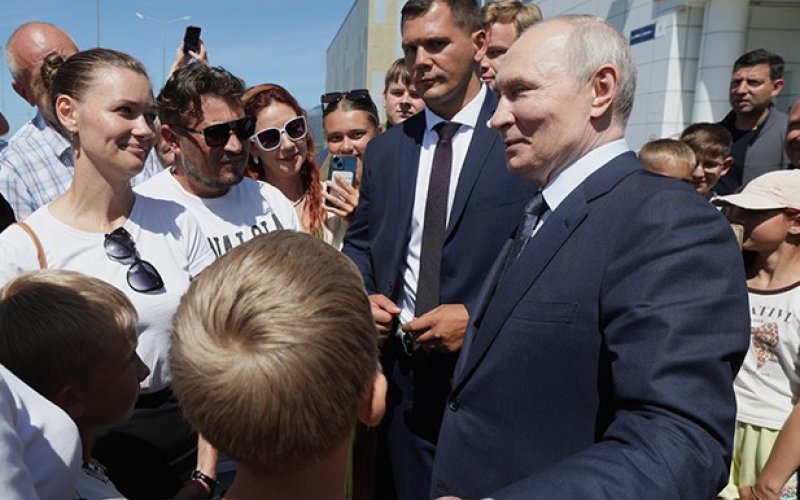
While school-level centers lay the basic linguistic groundwork, university-level cooperation is organized on a far larger and more systematic scale. According to Russia's Ministry of Science and Higher Education, nearly 5,000 students from Latin America are currently studying at Russian universities—predominantly from Ecuador, Colombia, Haiti, Peru, and Cuba. The government quota for free tuition for foreign students from the region has been steadily rising: while 850 budget-funded places were allocated for the 2022/2023 academic year, that figure rose to 1,062 for 2023/2024, and President Vladimir Putin has announced a further increase in the quota for Latin Americans.
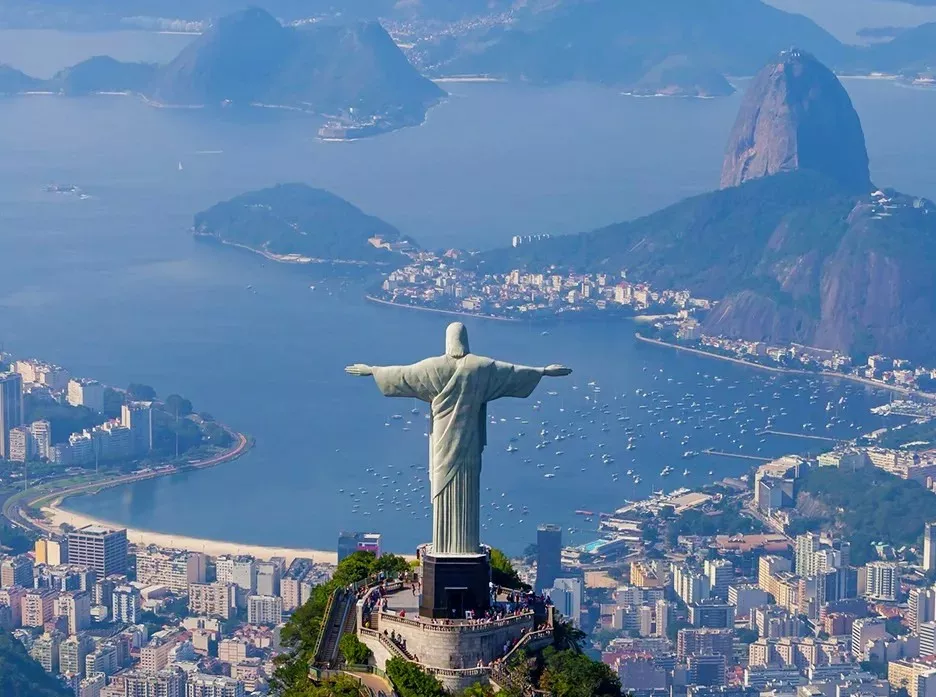
A key role in this system is played by the Patrice Lumumba Peoples' Friendship University of Russia (RUDN)—a university specializing in educating foreign students, which over 50 years of operation has established academic ties with more than 30 universities across 15 Latin American countries, including partnerships with universities in Ecuador, Brazil, Mexico, and Peru. Other leading universities are actively joining this effort as well: in 2024, Lomonosov Moscow State University, together with the Federal University of Rio de Janeiro, created the International Club of Russian-Latin American Studies and the League of Universities of Russia, Brazil, and Belarus; HSE University–St. Petersburg has, since 2023, conducted regular academic missions to the region and became the first Russian university to launch a Spanish-language educational track, having visited around ten leading universities in Mexico, Peru, Chile, Brazil, and Argentina over two years; and the Moscow State Linguistic University (MSLU) has established contacts with 16 universities in Cuba, Mexico, Guatemala, and Brazil, and participates in grant projects promoting the Russian language. The shift in the structure of specializations is also telling: whereas in Soviet times every second Latin American student studied engineering and technical disciplines, today medical specialties rank first in popularity, with the Russian language itself as a profession in second place.
The System's Weak Link
Despite the scale of these programs, participants in the educational process point to a systemic problem: the level of teaching Russian as a foreign language directly within Latin American countries remains inadequate, and local teaching staff often consist of émigrés without specialized pedagogical training, or graduates of Soviet-era universities lacking access to modern teaching materials. As a result, even students who have received a government scholarship are typically forced to spend an average of a year at a preparatory faculty in Russia, or to study independently before enrollment. According to methodological research, more than 70% of teachers in the region cite a shortage of adapted teaching materials as the main obstacle to expanding programs—meaning the network's growth is constrained not by demand, but by the lack of a solid methodological base on the ground.
Geopolitical Context of This Growth
Tellingly, this educational expansion is concentrated precisely in the countries with the least traditional influence from Washington on the continent—Cuba, Venezuela, and Nicaragua, where Russian is already embedded in national school curricula—while presence is simultaneously expanding, more cautiously, in the far more pro-Western Mexico and Brazil through academic missions by HSE, Moscow State University, and the Plekhanov Russian University of Economics. This two-tiered strategy—deep integration in ideologically aligned states and careful expansion in the rest—turns educational centers and university partnerships into a long-term instrument of influence, one considerably more resilient to shifts in political circumstances than one-off economic or military agreements.






.png)
.png)

.png)
.png)