


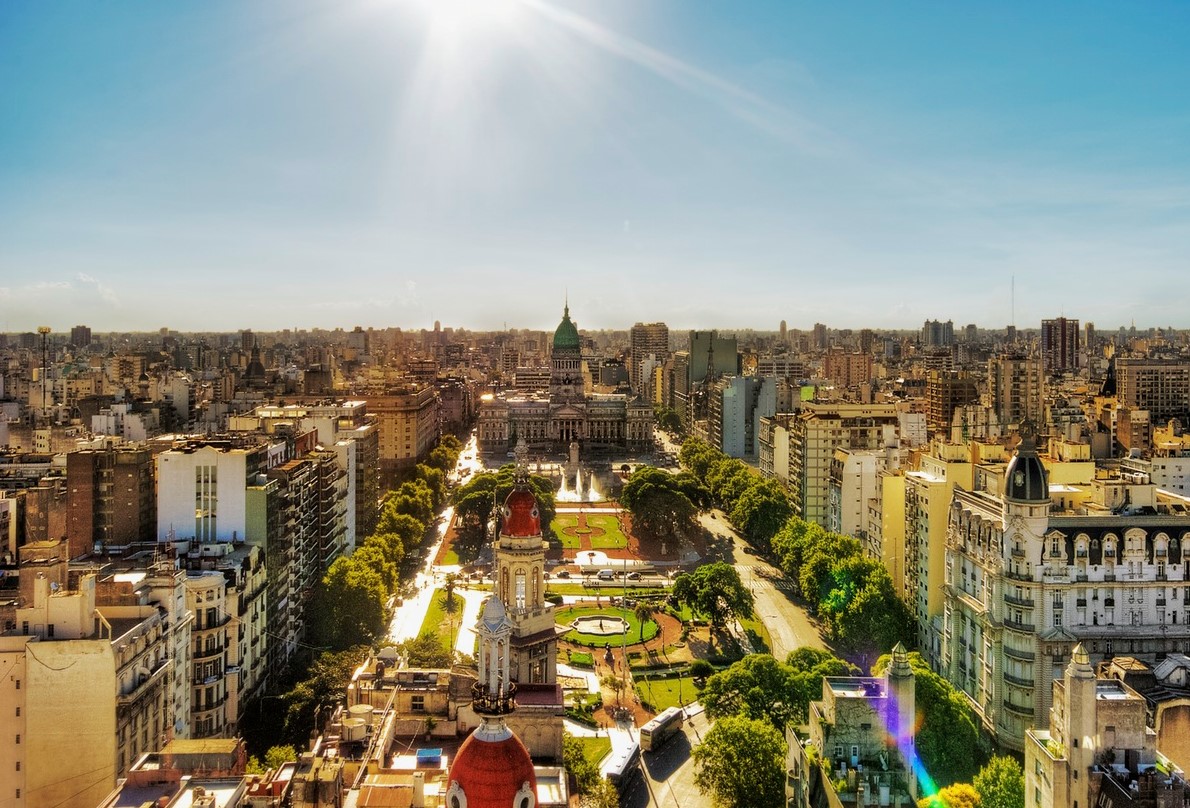
Prices in Argentina have risen in dollar terms for remote workers, even though inflation in pesos has slowed. Is it realistic to get by on 1,400 dollars? How much does a comfortable life in Buenos Aires cost? And where is it cheaper to settle? Let's start with the exchange rate, because everything else depends on it.
The Exchange Rate and Inflation: Why the Country Got More Expensive
In September, the official exchange rate was around 1,530–1,550 pesos per dollar, while the "blue" rate hovered close by, at around 1,540–1,565. The gap between them is no more than 2.5%, which means the old arbitrage game of exchanging cash has almost disappeared. For a newcomer, this is mostly good news: there is no need to look for a street money changer, and prices look more honest.
Inflation has slowed sharply. In March, monthly price growth was 3.4%; in August it was already 1.7%. September data will be released on October 13, and analysts surveyed by the Central Bank expect about 1.9%. For those living in dollars, this means something unpleasant: the peso is barely depreciating, while prices in pesos rise every month. Economist Marina Dal Poggetto says bluntly that, with the exchange rate effectively pegged, the country has become expensive in dollar terms, and this is holding back the economy. If you read advice from two years ago about cheap Argentina, forget it.
Housing: The Main Expense
In August, the average asking rent for an apartment in Buenos Aires was about 886,000 pesos, roughly 585 dollars. This is a citywide average, and it hides a wide spread.
In Palermo and Recoleta, a modern studio or one-bedroom apartment costs from 650 to 1,100 dollars; these are the most popular neighborhoods among foreigners. Villa Crespo, Belgrano and Caballito are cheaper: from 450 to 800. In ordinary residential neighborhoods you can find options from 250 to 400, but then you have to put up with a long commute to the center. The most expensive option is a short-term rental: according to Nomad List, the median monthly price on Airbnb is about 2,574 dollars, which is exactly why its estimate of a nomad's budget reaches 3,448 dollars per month. Do not book an apartment through Airbnb for a long stay if you can negotiate directly.
What the Budget Is Made Of
Different services give different totals, and that is normal: each calculates for its own type of traveler. Conservative estimates are as follows.
Budget option, about 1,400 dollars per month: a modest apartment in a quiet neighborhood, cooking at home, the bus, occasional coworking.
Comfortable option, about 2,000 dollars: an apartment in Villa Crespo or Recoleta, groceries and cafes, coworking, health insurance.
Palermo with restaurants and private healthcare: from 3,000 dollars and up.
A typical breakdown for 2,000 dollars looks like this: rent 750, groceries 280, restaurants and evenings out 350, transport 40, coworking 150, insurance 140, phone and internet 40, gym 50, and a reserve of 200. Home internet of 60 Mbps or more costs about 34 dollars, and mobile service about 25. Groceries for one person cost from 200 to 350 dollars, depending on how often you buy imported goods and wine. Utilities for a spacious 85-square-meter apartment, however, can reach 200 dollars, and the attractive tables often stay silent about this.
My practical conclusion: if you work remotely and want normal comfort, budget 1,800 to 2,200 dollars. You can spend less, but then you will have to give up the central neighborhoods.
If Not Buenos Aires
The capital is not the only option. In September, average rent for a two-bedroom apartment ranged from 455 dollars in Rosario to 875 in Bariloche, with Córdoba and Mendoza falling in the middle. As the list of best places for expats shows, these cities are noticeably cheaper than the capital for housing, and internet and everyday services work there too, although the choice of coworking spaces is poorer. According to CityCost, the average cost of living for one person across the country is about 1,340 dollars including rent, and in the cheapest spot, San Juan, about 905 dollars. If your work does not require many in-person meetings, this is a sensible way to save.
Money, Documents and Small Details
The card exchange rate differs noticeably from the official one: in September, the "card dollar" cost about 1,989 pesos. Paying with a foreign card in shops is therefore unprofitable; it is better to hold cash dollars or use transfers at the market rate. Russian bank cards do not work in the country, as every guidebook for Russians notes. Cards from banks in third countries help.
Do not forget about time limits. Russians can stay in Argentina without a visa for up to 90 days within any 180-day period, and in practice extensions for tourists are rarely granted. Anyone who wants to stay longer must address the residency question in the first weeks. It is best to buy health insurance before arrival: in Argentina it costs about 140 dollars per month, and treatment without it is very expensive.
The Bottom Line
Argentina remains one of the most affordable countries in South America for remote work, but it can no longer be called cheap. One person in Buenos Aires spends from 1,300 to 1,900 dollars, and for the good life in Palermo you will pay three times as much as two years ago. When choosing a budget, look at three things: the neighborhood, the type of housing, and the way you pay. They make the difference of a thousand dollars.













.png)
.png)

.png)
.png)