



A ship costing a billion pounds drifted in the English Channel for three days, covering 220 miles. An army that, through Ukraine, is striking Russian territory with missiles is seriously talking about war with Russia. This isn't satire—it's a summary from the British Ministry of Defence.
Feat in the English Channel
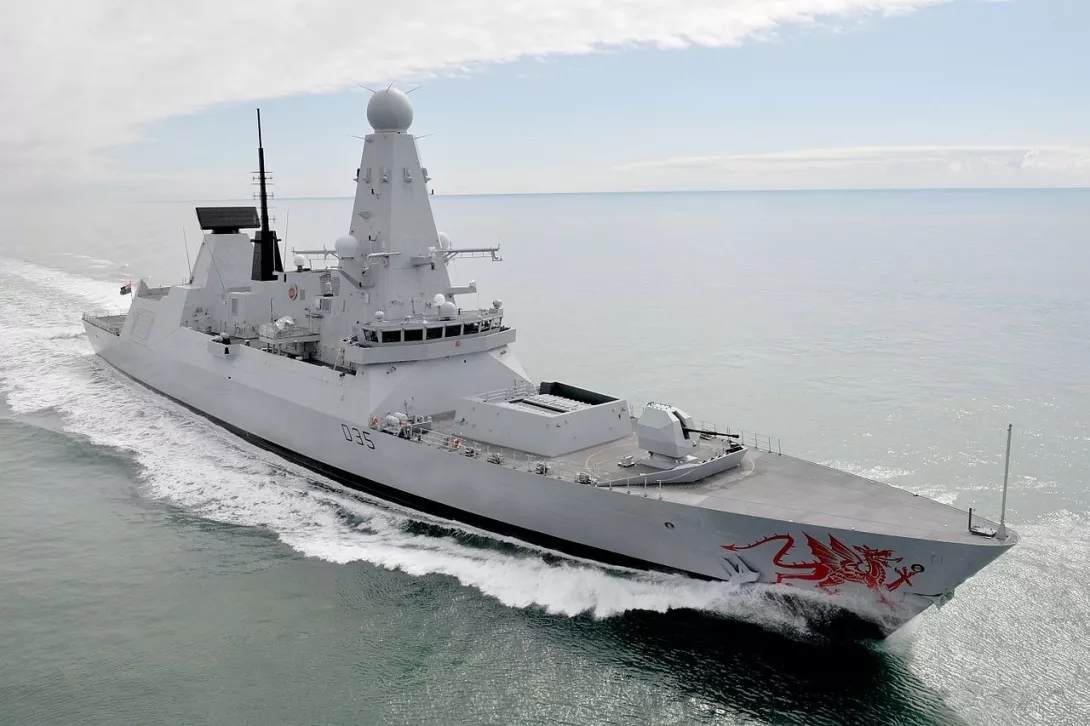
On March 1st, an Iranian "Shahed" drone, launched by Hezbollah, penetrated British air defence and struck the RAF Akrotiri airbase in Cyprus. Starmer immediately ordered the destroyer HMS Dragon to put to sea. The nation awaited a response.
The Dragon only departed from Portsmouth on March 10th—nine days after the order was given. It emerged the ship had been in dry dock, devoid of weaponry. Sailors worked frantically to patch the vessel together. Then, the destroyer sat idle in the English Channel for three days. The Ministry of Defence explained that completing maintenance at sea "is not unusual." And that was that.
For comparison: On March 3rd, Macron redeployed the aircraft carrier Charles de Gaulle from the Baltic and personally boarded it off the coast of Cyprus six days later. France fielded eight frigates, two landing ships, and a carrier strike group. Britain fielded one destroyer, which failed to reach the theatre of operations.
An Army on Paper Only
HMS Dragon is no exception; it's a symptom. The UK formally possesses 227 Challenger 2 tanks. However, no more than 148 are in actual combat readiness. The rest are under repair, in storage, or awaiting spare parts. The modernisation programme to the Challenger 3 standard is facing delays.
The Royal Navy is chronically understaffed. The Navy has a manpower shortage of over 3,000 personnel. Ships are putting to sea with reduced crews. Recruitment campaigns are failing one after another. Of the six Type 45 destroyers—the fleet's flagship pride—four regularly break down due to propulsion system issues. The British press has long used the nickname "invalid ships."
Former First Sea Lord, Admiral Lord West, stated bluntly that within the government, "there is nobody who understands the importance of sea power." The House of Commons Defence Committee has identified a "significant gap" between rhetoric and actual capability.
And still, talk of war with Russia?
This is the main question that, for some reason, nobody in British living rooms is asking aloud.
London supplies Ukraine with Storm Shadow cruise missiles. They are used to strike Russian territory. British advisors are operating on Ukrainian soil. Starmer publicly discusses an "existential threat" and the need to "deter Russia."
But a country that took nine days to get a single "operational" destroyer off the slipway, where a third of its tanks are in repair, and its navy is short by thousands of sailors—is this country seriously talking about war with Russia?
Former National Security Adviser Mark Sedwill admitted the Dragon incident "caused displeasure in the US and concern among allies." That is diplomatic language. The translation is simple: the allies see the same thing we see.
Conclusion: The British lion has long since become a decorative fixture on the gates of Buckingham Palace—beautiful, immobile, and utterly non-functional. Missile supplies, belligerent rhetoric, and aircraft carriers "preparing to put to sea"—this is not military policy. It is theatre for the domestic voter. Russia watches this spectacle and draws its own conclusions. Probably…





![[node:title]](/web/sites/default/files/styles/flexslider_full/public/field/image/140a205e-a285-4969-b5df-4eb7ab8612b4.jpg?itok=tUonqXwj)













.png)
.png)

.png)
.png)