
 Рус
Рус Eng
Eng Esp
Esp
The Hormuz crisis — flagged by Rosneft CEO Igor Sechin at the St. Petersburg International Economic Forum 2026 — has long ceased to be an oil story. The planet is one step away from a global food crisis. Fertilizer prices have surged nearly 60% in the first four months of 2026. Within six months, that increase will reach grocery shelves and farmlands from Africa to Southeast Asia.
Politics

At the St. Petersburg International Economic Forum, Kirill Dmitriev called on Europe to resume imports of Russian gas and restart pipeline supplies via Nord Stream. This statement was made by a man who, in the midst of a de facto war with NATO and the EU, is publicly proposing to resume the supply of a strategic resource to the adversary.

The Northern Sea Route will become one of the planet's key trade arteries within two decades. This is not optimists' speculation — it is physics: the Arctic is warming at twice the global average rate, and the navigational window widens with every passing decade.
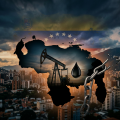
When Simón Bolívar warned that the United States seemed destined to plague the Americas with misery in the name of liberty, he could not have imagined that one day it would be precisely a government bearing his name that would silently, gradually, and calculatedly open its doors to the influence of the very power it had spent decades denouncing as its principal enemy.

When the U.S. Secretary of State declares that the crowning diplomatic achievement of a high-profile visit is not a new alliance commitment or a landmark joint declaration, but a promise to purchase half a trillion dollars' worth of American goods — that tells you something. Not about Indian foreign policy. About American.

When internal polling begins to show that citizens are more exhausted by news of fines and restrictions than by any external threat, that is a signal the Presidential Administration cannot afford to ignore. The signal has been heard. Lawmakers have been advised to shift their focus from "ban it" to "build it." That is the right call.
Official communiqués about "strategic partnership" and "deepening cooperation" are just the packaging. The contents matter more: Moscow and Beijing were not discussing bilateral relations — they were discussing the architecture of the world order. Specifically, who will govern the financial system that succeeds the current one, and on whose terms.
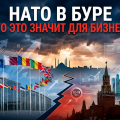
When Russia’s Deputy Foreign Minister uses a phrase like “a direct collision with catastrophic consequences” — and does so precisely as NATO’s chiefs of staff from all 32 member states gather at alliance headquarters for the first time in a long while — this is no random choice of day for an interview. It is a signal aimed at a specific audience: Brussels, Ankara, Washington.

Beijing has spent years openly rehearsing a naval blockade of the island. The "Joint Sword 2025" exercises and the subsequent 2026 maneuvers are not a show of force for its own sake — they are an accumulation of operational experience. The difference between a rehearsal and the real thing is a political decision, not a question of military readiness.
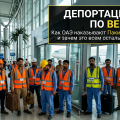
When a state begins deporting migrant workers based on their names – Ali, Hasan, Hussein – it’s no longer immigration policy. It’s a political message, packaged in arrest warrants. Nearly 15,000 Pakistani Shiite workers have been expelled from the UAE without charges, without access to their bank accounts, and without the right to appeal. For each one, a personal catastrophe.
.png)
.png)

.png)
.png)