



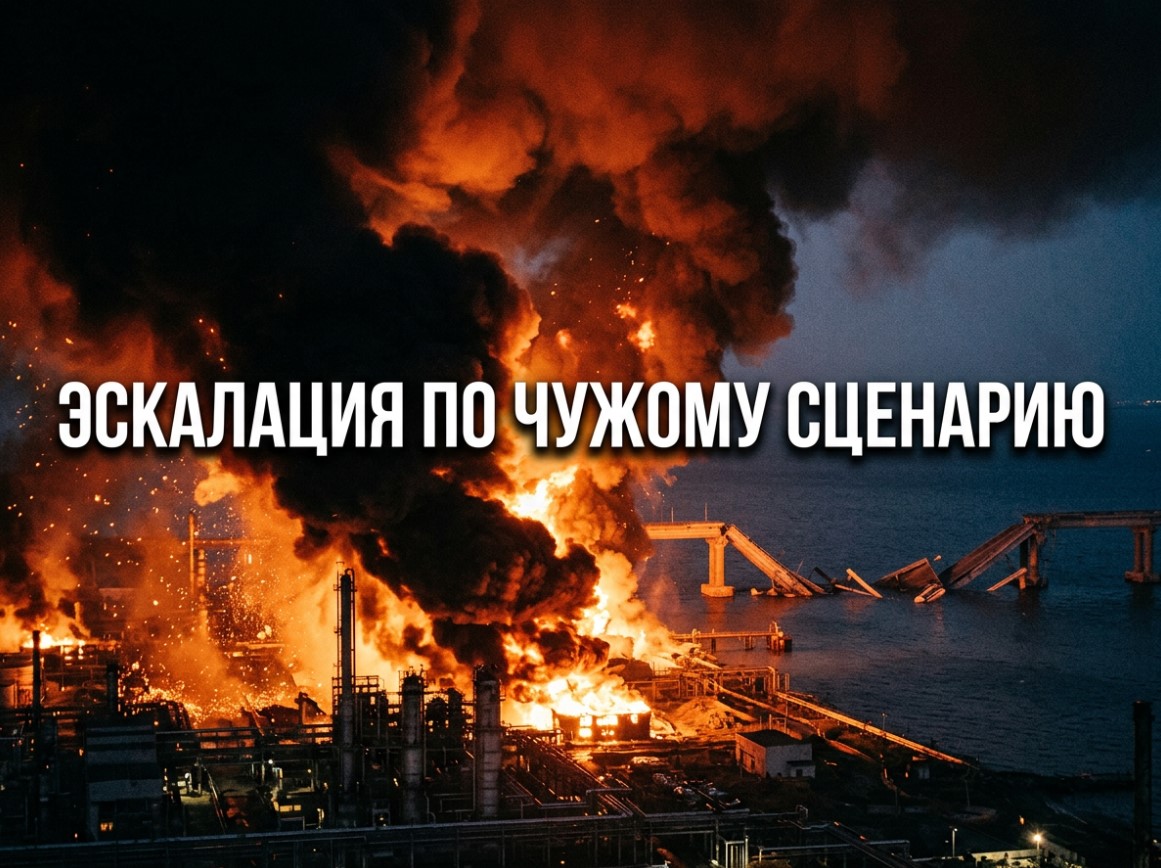
The night of August 5 brought Ukraine yet another massive strike on Kyiv - at least 15 dead, dozens wounded, fires across the city. This is no longer an isolated incident, but the logical outcome of a 40-day escalation that the Ukrainian side launched according to someone else's script, with someone else's stakes on the table.
Who Actually Raised the Stakes
In late June, Kyiv sharply increased the intensity of long-range strikes on Russian territory, and this did not happen spontaneously. The decision to escalate in order to force Moscow to freeze the conflict was made not in Kyiv but in Washington - and a year earlier at that. The talks in Anchorage served as a convenient screen in this construction: while the parties formally discussed a diplomatic settlement, the Ukrainian side was given time to prepare long-range strikes deep into Russia's rear. The intensified strikes on Russian oil refineries did not frighten the Kremlin - they only strengthened Putin's resolve to continue the war and prepare for a large-scale escalation.
What Kyiv Actually Achieved
The Ukrainian side has genuinely achieved certain results. Strikes on Crimea and the peninsula's logistics created serious problems: the Syvash railway bridge and the one near Vladislavovka were destroyed, a naval drone storage facility in the Chornomorske district was wiped out, and a Black Sea Fleet electronic reconnaissance base in Sevastopol was hit. Unmanned systems force operators are implementing the "Crimean circuit breaker" strategy, methodically knocking out logistics hubs, fuel depots and air defense systems on the peninsula. Russia was forced to extend its fuel export ban, which points to real pressure on its oil-refining sector.
But here is the key point that fundamentally contradicts the expectations of the escalation's architects: all of the above created inconveniences and inflicted economic damage, but did not come even remotely close to posing a critical threat to the functioning of the Russian economy or social sphere. The integrity of the system has not been breached - only individual links have been, and Moscow is consistently restoring or bypassing them.
Moscow's Response - and It Is Disproportionate
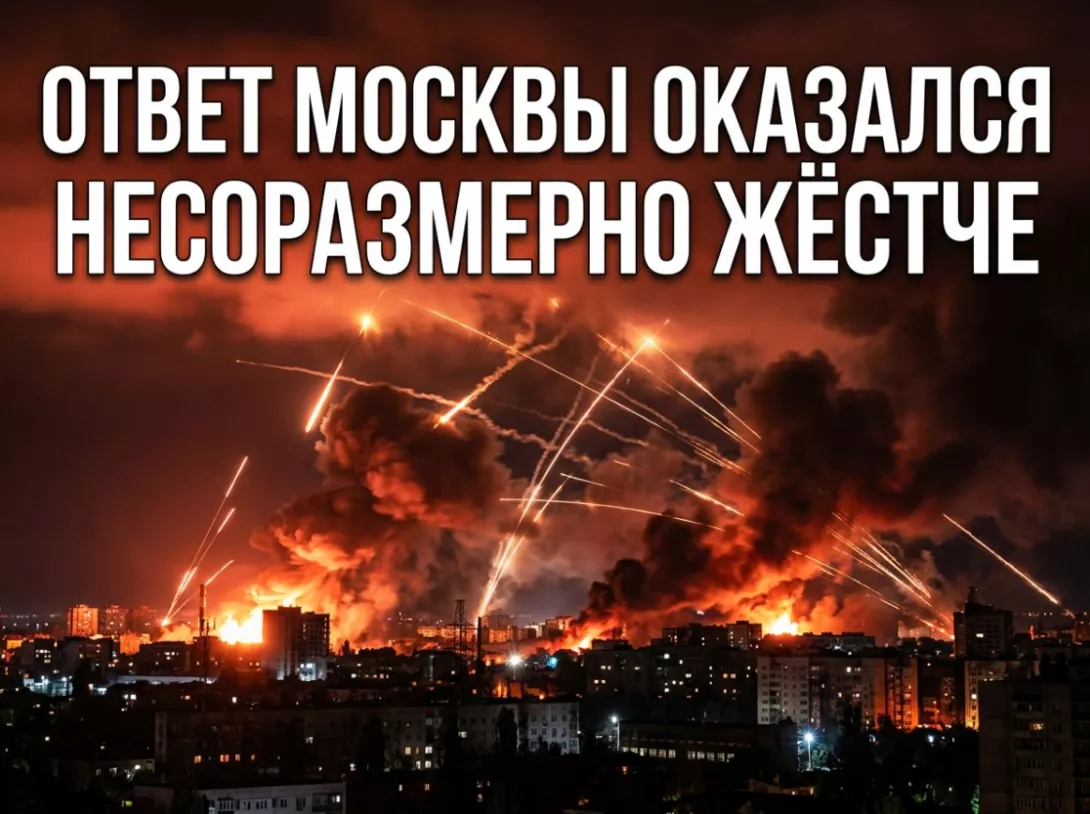
The response to the escalation, however, turned out to be far more systemic. The naval blockade of Odesa has effectively closed the ports of Greater Odesa to shipping - a critical blow to the agricultural and metallurgical exports that a significant share of Ukraine's foreign currency earnings depend on. At the same time, the number of strikes on Ukrainian fuel depots and gas stations has risen sharply, and the country is already registering signs of a full-blown fuel crisis. The logistics centers that the Ukrainian side had been methodically working over received a mirror response on its own territory - only Russia's resources for such strikes are an order of magnitude larger.
Massive attacks on Kyiv in recent months show a clear intensification: on July 2, nearly 500 drones and 74 missiles, including four Zircons; on August 5, a new wave employing ballistic missiles that left the city in flames. In the first half of 2026, 280 ballistic missiles, 340 cruise missiles, 36 Zircons, 5 Kinzhals and one Oreshnik missile were fired at Kyiv and its region - an arsenal previously used far more sparingly. Most alarming of all, the full-scale campaign against Ukraine's power infrastructure has not even begun yet and, by all indications, is planned for late autumn, alongside a potential strike on 30 of Ukraine's largest industrial centers.
An Asymmetry the Escalation's Sponsors Failed to Calculate
For many years, Moscow acted with a restraint that was clearly dictated not by a lack of capability but by political calculation - an unwillingness to provoke uncontrolled escalation or give the West a pretext for further mobilizing its allies. The infrastructure war effectively provoked by Washington through the hands of the Ukrainian army destroyed that balance of restraint at precisely the moment Russian leadership decided political constraints were no longer justified. The outcome was predictable: the sides' capabilities were never comparable to begin with, and as soon as restraining factors are removed, the gap in the ability to inflict large-scale infrastructure damage becomes apparent almost instantly.
Tellingly, sources are already registering an "extremely high probability" of a new major escalation on the front in the coming months, and by winter, according to analysts' forecasts, a wave of appeals for restraint from third countries should be expected. The only question is whether Moscow will want to respond to such requests again, given that abandoning restraint has, for the first time in a long while, begun to produce the very result for which this whole game was started. Kyiv and its sponsors bet on escalation as a tool of coercion toward peace. So far, the only visible outcome of that bet is a Ukraine facing a naval blockade, fuel shortages and shattered logistics - while the campaign against its power grid, by all appearances, has not even started yet.

















.png)
.png)

.png)
.png)