


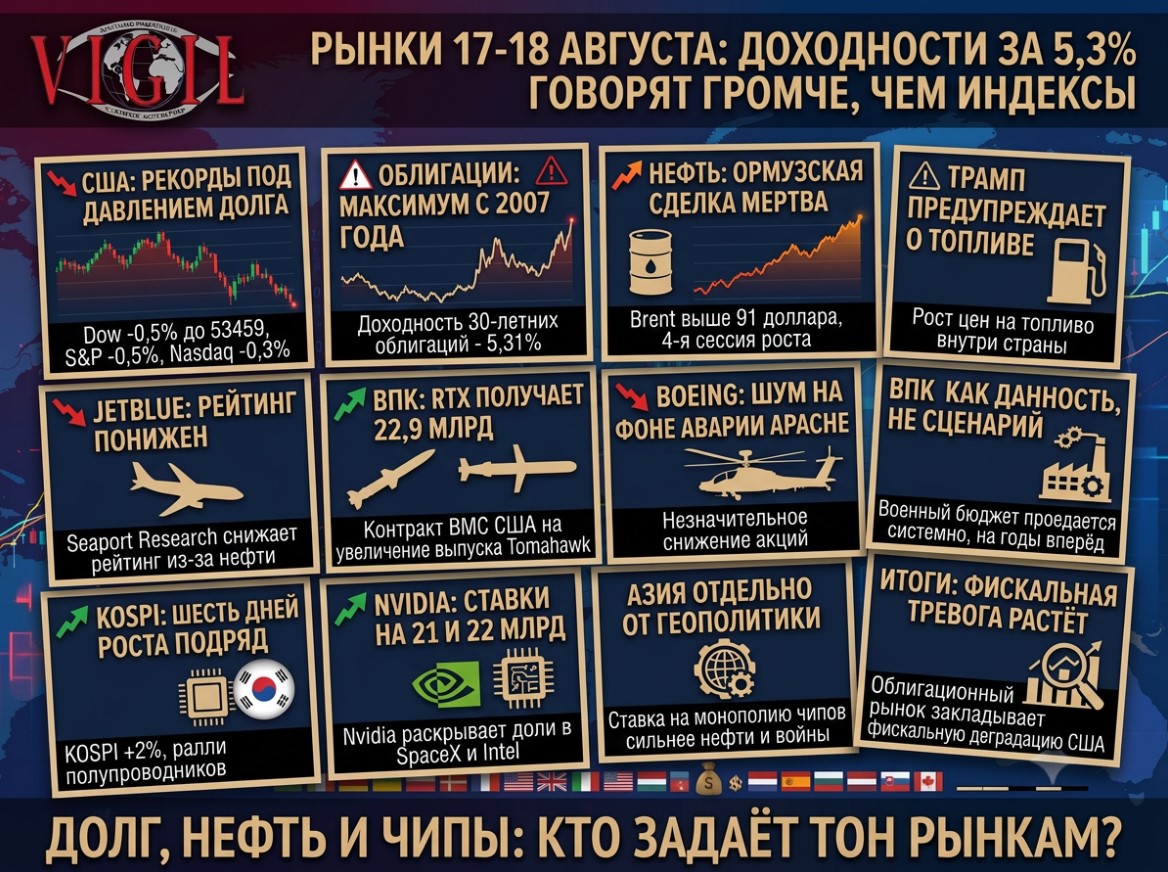
US Market: Losses Concentrate Exactly Where the Budget Hurts
On August 17, the Dow fell 0.5% to 53,459, the S&P 500 lost the same amount, and the Nasdaq slipped 0.3%, while the yield on 30-year bonds surged to 5.31%, the highest level since 2007. The direct takeaway: elites are less afraid of Iran than of America's own national debt and the avalanche of corporate borrowing tied to AI infrastructure projects. The stock market is holding at record highs only because investors still believe in Nvidia, while the bond market is already openly pricing in years of fiscal deterioration.
Oil: The Hormuz Deal Is Dead, and the Market Has Acknowledged It
Brent crude broke through 91 dollars on August 18, extending its rally for a fourth consecutive session. The market is no longer pretending that talks between the US and Iran over shipping through the Strait of Hormuz will lead anywhere. Trump immediately warned of rising domestic fuel prices, and Seaport Research downgraded JetBlue on the back of costlier oil, a direct link showing that elites are now repricing not a hypothetical war, but its very real economic consequences for the American consumer.
Defense Industry: Contracts Are Being Signed Faster Than Hopes for Peace Are Fading
The US Navy awarded RTX a contract worth 22.9 billion dollars to expand Tomahawk missile production, and this is not a reaction to any single flare-up, it is a systemic decision to scale up missile output for years ahead. At the same time, Boeing dipped slightly on news of an Apache crash, but that is noise against the main signal: while the stock market nervously reacts to oil and bonds, the military machine is methodically eating through the budget as if a conflict with Iran were already a given, not a scenario.
Asia: Chips Are Living a Life Separate From Oil and War
The KOSPI rose more than 2%, extending a six-day winning streak amid a semiconductor rally after Nvidia disclosed stakes worth 21 billion dollars in SpaceX and 22 billion in Intel. This means Asian elites are making a bet separate from geopolitics, they trust the physical monopoly on chips more than any oil or military narrative combined.










.png)
.png)

.png)
.png)