

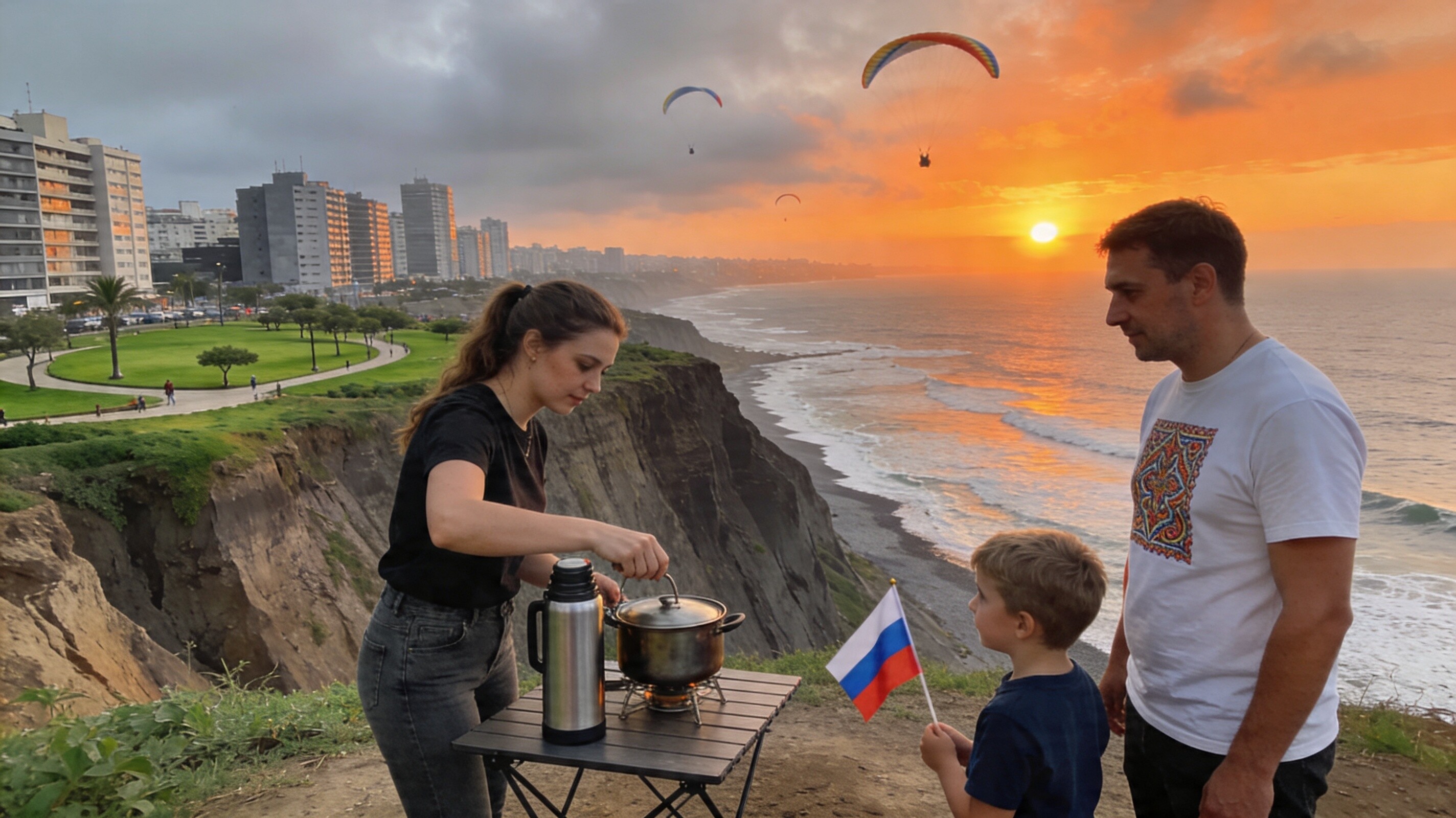
Lima. The Pacific Ocean. Tropical sun that almost never shines through the famous grey mist. Somewhere in Miraflores, the upscale district of the Peruvian capital, a Russian woman is cooking borscht while a Spanish-speaking metropolis hums outside her window. She came here twenty years ago – for love. And stayed. There are about two thousand people like her here. Not many. But each one is a universe unto themselves.
The First Russian Footprint: The Ship Suvorov and an Inca Chronicler
The history of the Russian presence in Peru begins long before any Russian actually settled there. The first mentions of Russia in Peruvian intellectual circles date back to the 16th century – to the era of the great Inca chronicler Garcilaso de la Vega, who lived in Madrid and received news of distant lands from travellers and envoys who had visited the Spanish court. For him, Russia was an exotic land on the edge of the known world.
The first real Russian footprint on Peruvian soil was left by Otto von Kotzebue – in November 1815, his ship, the Suvorov, approached the Peruvian coast during a round-the-world expedition. The sailors went ashore, replenished their water supplies, marvelled at Lima, and left. No one stayed. But a mark on the history of bilateral relations had been made.
Mass Russian emigration to Peru – unlike to Argentina or Brazil, which welcomed tens of thousands of subjects of the Russian Empire – never happened. The occasional official, military advisor in different eras, Soviet specialists in mining and energy – but never a flood, never a wave. Peru remained for Russia a distant, almost unreachable point on the far side of the planet.
The First Orthodox Church on the Land of the Incas
By the mid-20th century, a small but stable Russian émigré community had formed in Lima. Its core was the Orthodox community – the very one that, in the 1950s, undertook the construction of the Church of the Holy Trinity.
This was the first Orthodox church in all of Peru and one of the few in all of Latin America. It was built with their own hands, with great difficulty, on donations from modest parishioners – émigrés of the first and second waves, people who had lost Russia and found her anew in the liturgy in Church Slavonic under the Peruvian sky.
For many years, the church was served by Hieromonk Seraphim (Fetisov) – a legendary figure for the local community. Under him, the parish experienced both periods of growth and years of quiet, when parishioners became very few. Today, the Church of the Holy Trinity remains the spiritual centre of Lima’s small but vibrant Orthodox community – a place where old-timers, newcomers, and Peruvians who have converted to Orthodoxy all come.
For a diaspora without a large "Russian colony" – without its own neighbourhood, its own shops, its own newspapers – the church plays a special role. Here, people speak Russian. Here, Easter smells of kulich. Here, for an hour, you can feel at home.
Who Are the Russians in Peru?
About two thousand people. By the standards of large diasporas – nothing. By Peruvian standards – a noticeable, though outwardly invisible, layer.
The community’s structure is heterogeneous, and it is important to understand this. There are several distinct "strata" that sometimes barely intersect.
The first and most numerous group is women who came for love. A Peruvian student or professional meets his future wife in Russia – at university, during an internship, through mutual acquaintances. The couple lives in Russia for a while, then moves to Peru. This story has repeated itself hundreds of times with variations, but with the same narrative backbone. As one Peruvian student who had been to Russia put it: "About two thousand Russians live in Peru, many of them – girls who married Peruvians."
Dina Perу – one of the best-known Russian-language voices on emigration to this country. She met her husband in Russia, moved to him, lived there for several years, and speaks openly about the realities of life in Latin America. Her conclusion is ambiguous: "It’s better to give up everything silently, otherwise they’ll just kill you" – this is not a metaphor; it is a description of the street reality in certain districts of Lima. Stark inequality, class divisions, a criminal environment – all of this comes as a shock to people from Russia, accustomed to a different level of street safety. Some Russians, she says, "simply run away" – unable to endure it.
The second group is the diplomatic and professional corps. Embassy staff, trade representatives, military attachés, specialists in Russian-Peruvian mining and energy projects. These are temporary people – they are rotated every three to five years. But they shape the visible, official image of Russia in the country.
The third, slowly growing group is freelancers and digital nomads. Programmers, designers, copywriters working remotely for the Russian or international market. For them, Lima is attractive for its combination of relatively low cost of living, tolerable climate, and developed infrastructure for a "laptop-based" existence.
The fourth group, which has become more distinct in recent years, is relocants – people who have left Russia for political or other reasons and have chosen Peru as a country with a relatively lenient visa regime and possibilities for legalisation.
All these groups live parallel lives in Lima, occasionally intersecting – at the Russian House, at the church, in Telegram chats.
The Russian House: A Cultural Island in a Spanish-Speaking Ocean
The Russian House in Lima – the official name of the Rossotrudnichestvo agency – functions as a cultural centre, performing several roles simultaneously.
For the diaspora, it is a meeting place and a space for identity. For Peruvians, it is a window into Russia: exhibitions, screenings of Russian films, Russian language courses, concerts, lectures. For official Russia, it is an instrument of soft power in a region that often remains in the shadow of more priority directions.
In March 2026, the Russian House hosted the exhibition "Russian Art in Peru: A View from Compatriots" – organised by the association "With You, Russia", with the support of the Russian House and the Coordination Council of Russian Compatriots in Peru (KSORS). The event attracted not only the diaspora but also a Peruvian audience – the local press, art lovers, students. This is an important sign: Russian culture in Peru is not confined to the community’s internal circle but reaches out to a wider audience.
The Russian House also runs a Telegram channel, CasaRusaLima – a modern means of communication, without which no institution claiming lively contact with its audience can exist today. A small but important detail: the institution is attuned to the times.
Lima Through Russian Eyes: Climate, Traffic, and the Class Divide
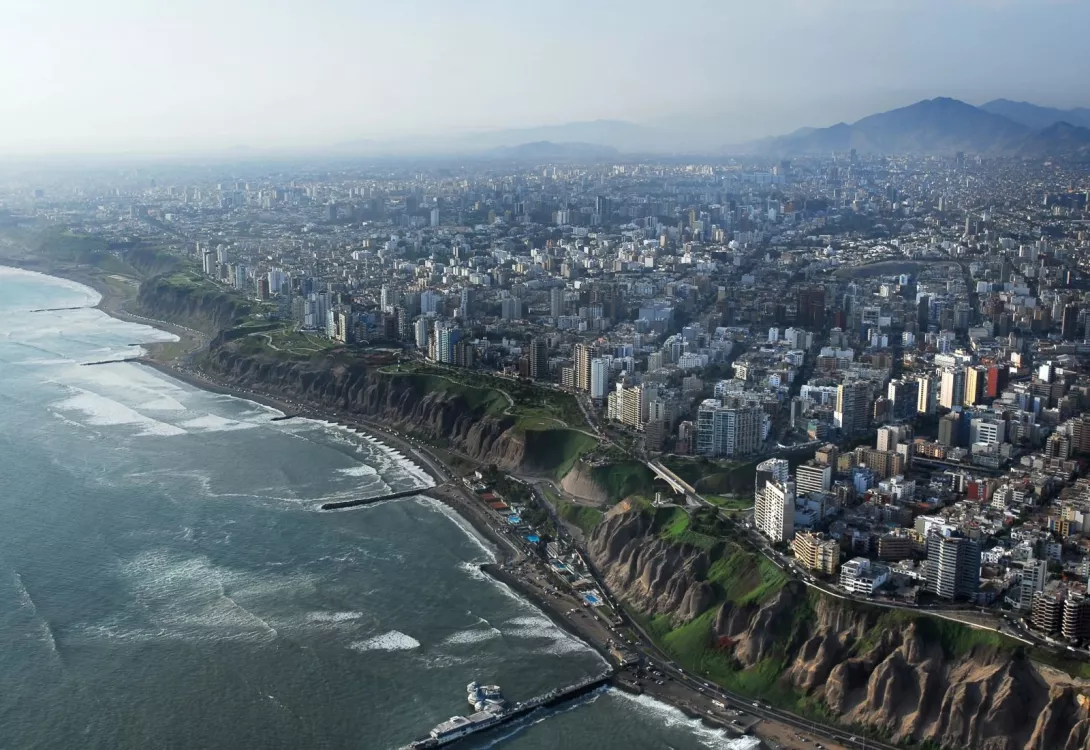
Lima is a metropolis on the shores of the Pacific Ocean, stretching for tens of kilometres. Almost ten million people. One of the largest cities in Latin America.
For a Russian person arriving here for the first time, several things come as an immediate shock. First – the sky. The famous garúa, the sea mist, blankets Lima for most of the year, making the sky pale and heavy. There is almost no sun – a paradox for a tropical country.
Second – the traffic. Lima consistently ranks among the world’s worst cities for congestion. Crossing the city is always an adventure with an unpredictable finish time.
Third – social stratification. Here, it is not just palpable – it is literally visible to the eye. Fancy Miraflores with its restaurants, shopping centres, and ocean views – and the poor districts on the city’s periphery, where life follows entirely different rules. Russian diplomats usually live in safe areas and see one Lima. Russians who came for love and are building a life from scratch often get to know another.
Russian and Peruvian: Mutual Discoveries
Peruvians who have been to Russia – usually students who came on exchange or to study – return home with a set of enduring impressions. The cold (of course). The metro (astounding). Soviet-era architecture (fascinating). Russian women (an eternal topic). And – the most unexpected for many – the warm hospitality behind closed doors, contrasting with the outward sternness.
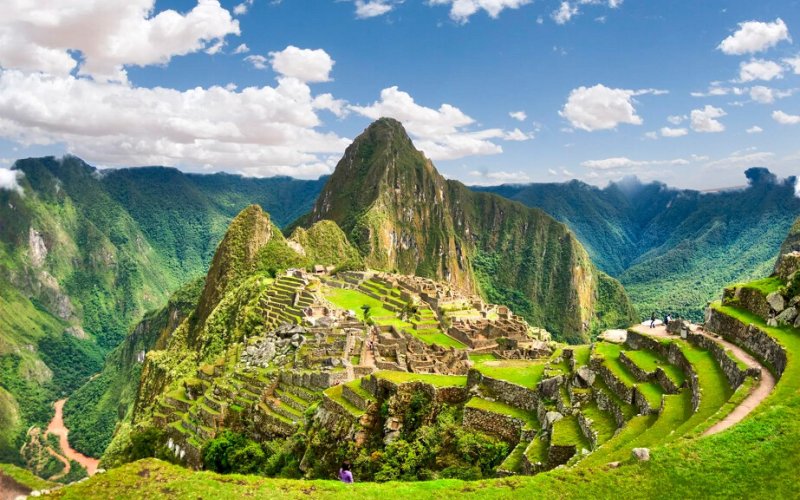
Russians in Peru, in turn, discover the country gradually. First – the surface layer: Machu Picchu, the cuisine (Peruvian gastronomy is among the best in the world, no exaggeration), the festivals. Then – reality: bureaucratic labyrinths of legalisation, the difficulty of starting a business, criminal risks in certain areas, the fundamental importance of social class in everyday life.
Russian diplomats describe life in Peru as "a different planet" – not in a negative sense, but in the sense of a radical dissimilarity of rhythms, values, and everyday norms from what they are used to. This requires not just adaptation – it requires a restructuring of basic expectations.
The Future: Digital Nomads and Cultural Diplomacy
The Russian community in Peru will likely grow slowly – and change in composition. The classic "wives of Peruvians" will not disappear, but a new type is joining them – the digital nomad, choosing Lima for its cost of living and relative accessibility. The pandemic and the subsequent wave of remote work have made this scenario not exotic but quite ordinary.
The Russian House and KSORS continue to work in the field of cultural diplomacy – at a time when big politics makes this labour simultaneously more important and more difficult. The exhibition of March 2026 showed that the Peruvian audience remains receptive to Russian culture regardless of the geopolitical conjuncture. This is a valuable resource that requires systematic work, not occasional events.
The Orthodox Church of the Holy Trinity remains an anchor for those who need something more than a Telegram chat and an art exhibition. A spiritual assembly point – in a country where few know you and even fewer understand you.
Conclusion: Two thousand people on the other side of the planet – this is not a diaspora in the usual, loud sense of the word. They are scattered destinies across a metropolis, united by language, faith, and the memory of snow. They are not building a "Russian quarter" or organising marches with tricolours. They simply live – cooking borscht in Miraflores, baptising their children in the Church of the Holy Trinity, texting on Telegram, and occasionally gathering at the Russian House to look at paintings by their compatriots. A little Russia under the Peruvian sky – quiet, unassuming, stubbornly existing on the far shore of the world.








.png)
.png)

.png)
.png)