United States: AI Rebounds, but Nerves Remain Frayed
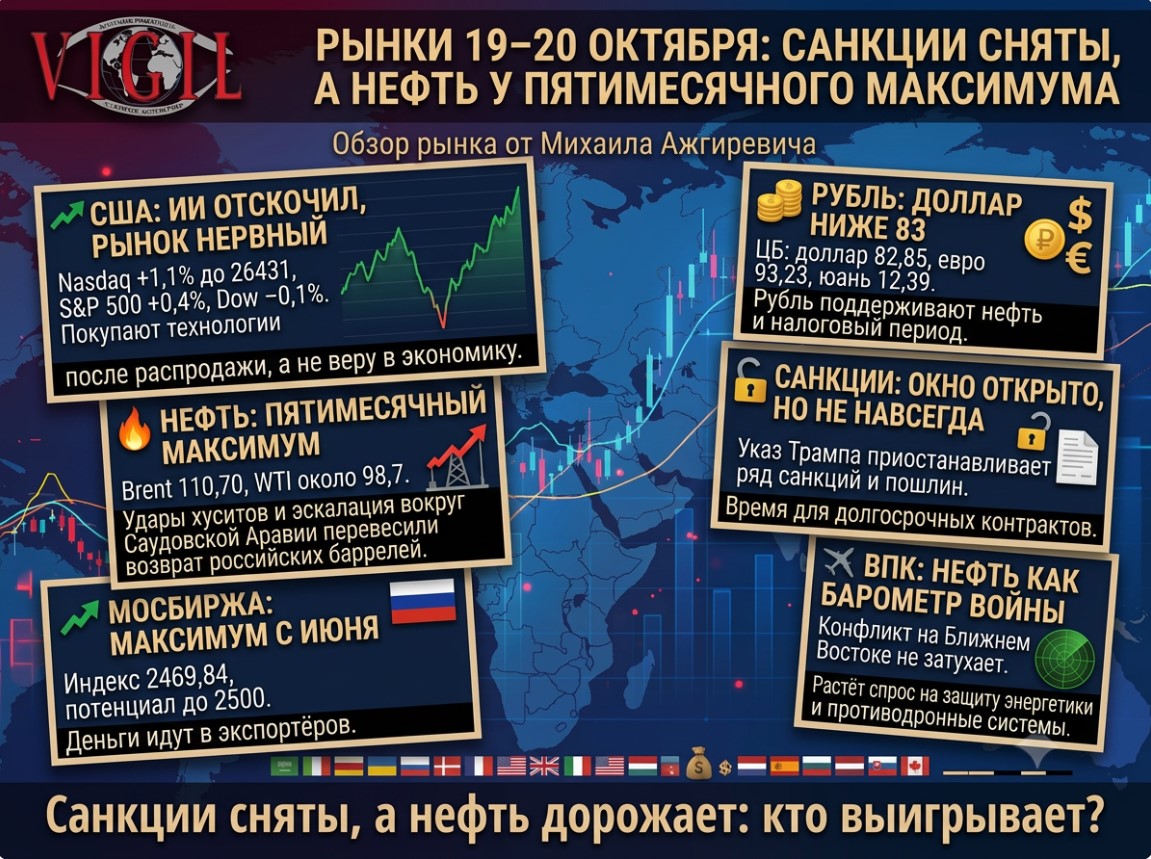
On October 19, the Nasdaq rose 1.1% to 26,431, the S&P 500 gained 0.4%, and the Dow slipped 0.1%. A week earlier, the S&P 500 had dropped almost 2% and the Nasdaq 4.5%. By Moscow time on the evening of October 20, the Dow was trading roughly 1% higher, at about 52,458, though the session's final results have yet to be confirmed.
The takeaway: investors are buying tech after the selloff, not buying into the economy. The elites are catching the bounce while keeping a finger on the sell button.
Oil: A Correction to My Earlier Version. Prices Rose, Not Fell
On the morning of October 19, Brent fell after President Trump signed an order suspending some sanctions on Russia and lifting tariffs for buyers of Russian oil. By the close, however, it had hit a five-month high of $110.70, and on October 20 it hovered around $109–110. WTI stood at about $98.7 for the December contract. The cause was Houthi strikes and escalation around Saudi Arabia.
The takeaway: the return of Russian barrels did not outweigh the Gulf's war premium. The market does not believe the sanctions relief will fix the supply shortfall.
Moscow Exchange: Highest Since June
On October 20, the MOEX Russia Index reached 2,469.84, a four-month high, and held near 2,467 (+0.5%) in the evening. Analysts see potential for 2,500 and beyond, driven by geopolitics and expensive energy. A strong ruble is holding back further gains.
The takeaway: the Russian market is getting two tailwinds at once, easing sanctions and costly crude. Money is flowing into exporters, while importers and domestic consumers get only a cheap exchange rate.

Ruble: Central Bank Sets Dollar Below 83 for the First Time in Two Months
The official rates for October 20 were $1 = 82.85 rubles, €1 = 93.23 rubles and 1 yuan = 12.39 rubles. On the Moscow Exchange, the yuan cost 12.42 rubles on October 19, and the dollar was about 83.46 for next-day ("tomorrow") settlement. The ruble is supported by oil and by the approach of the tax period, when exporters sell their foreign-currency earnings.
The takeaway: the state needs a strong ruble to fight inflation, but it squeezes ruble-denominated revenue. Russian businesses are better off selling for hard currency now and locking in the rate.
Sanctions: The Window Is Open, but Not Forever
Trump's order suspends "a number of" sanctions and tariffs, but the exact list and the duration remain in dispute.
The takeaway: Washington is trading eased pressure on Moscow for lower gasoline prices ahead of the November elections. This is tactics, not a policy overhaul. Russian businesses should use the window to sign long-term contracts and arrange settlements while it lasts.
Defense Sector: Oil as a Barometer of War
I could not find fresh quotes for defense companies for October 19–20. Oil's surge toward $110 amid Houthi strikes on Saudi Arabia says enough, though: the Middle East conflict is not subsiding.
The takeaway: demand for protecting energy infrastructure and for counter-drone systems is rising, regardless of how defense stocks trade.