

July 20–21: Middle East Escalation Weighs on Risk
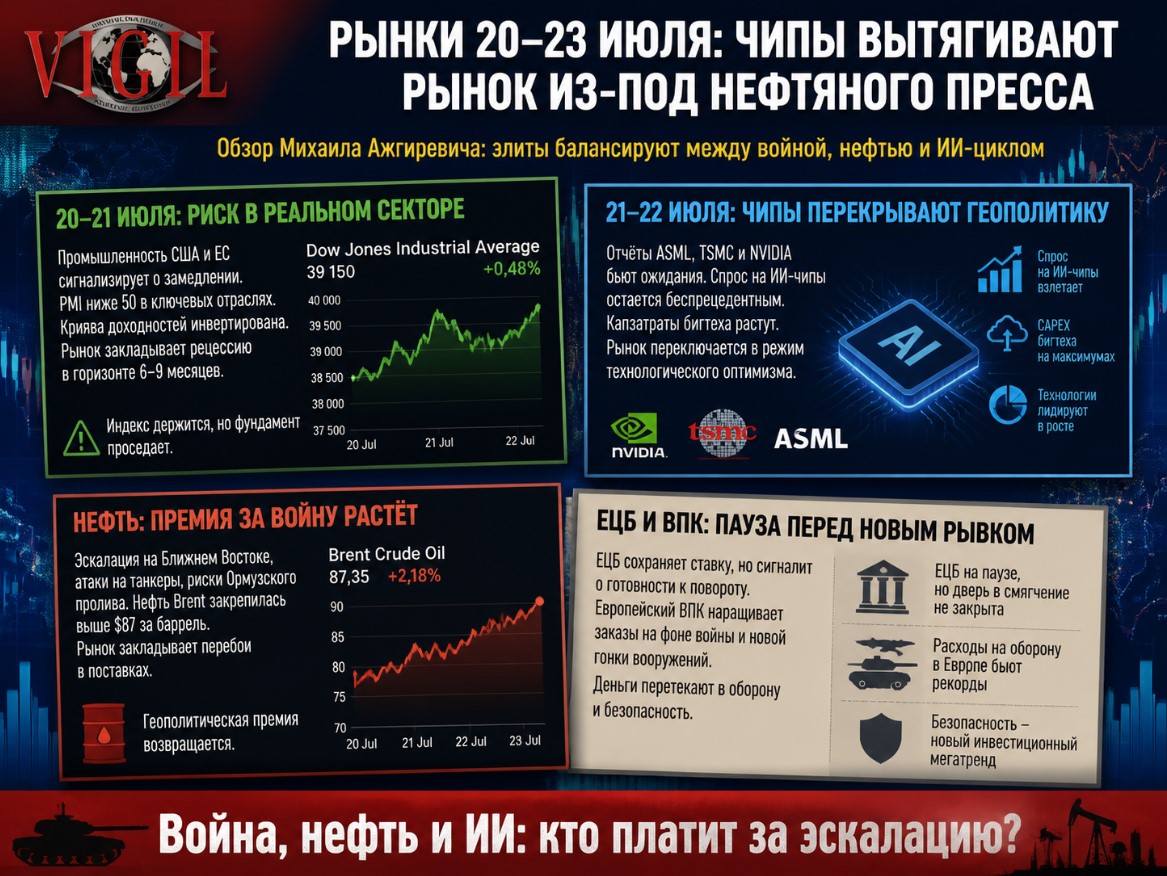
On July 20, the Dow fell 0.6% and the S&P 500 dropped 0.2%, with eight of the index's 11 sectors closing in the red — healthcare and industrials each lost more than a percentage point amid a fresh flare-up of war in the Middle East and oil climbing above $90 a barrel for Brent. The direct takeaway: elites price in risk to the real economy at the slightest escalation of the conflict, and confidence in industrials remains fragile, sustained by volume rather than conviction.
July 21–22: Chips Override Geopolitics
Just a day later, on July 21, the Nasdaq gained 1.3%, the S&P 500 rose 0.9%, and the Dow added 0.7%, with the rally driven by Nvidia and Micron ahead of Big Tech earnings season, while technology and energy were the only sectors to post notable gains. This means elites remain willing to look past the war and rising oil prices as long as the AI-cycle bet is at stake — risk appetite is returning selectively, not systemically.
Oil: The War Premium Keeps Climbing
Brent settled above $90 for the first time in over a month, briefly breaking through $96 by mid-July — levels exceeding those seen at the start of June's escalation. The direct connection: elites are pricing in not a one-off spike but a prolonged phase of conflict. The oil market is trading the actual war, while the stock market keeps trading hope in AI.
Defense Sector: The ECB Holds Rates, Watching the War
At its meeting on July 23, the ECB intends to keep its rate at 2.25%, taking a pause specifically to assess the fallout from the renewed US-Iran conflict, while leaving the door open to a further hike in September. This is a direct signal: European regulators — and the elites behind them — do not believe the conflict will be resolved quickly, and are preparing to live with elevated inflationary and defense-spending pressure for an extended period, not just a week or two.










.png)
.png)

.png)
.png)