
 Рус
Рус Eng
Eng Esp
Esp
Taiwan and the Strait of Malacca: What Comes Next

Beijing has spent years openly rehearsing a naval blockade of the island. The "Joint Sword 2025" exercises and the subsequent 2026 maneuvers are not a show of force for its own sake — they are an accumulation of operational experience. The difference between a rehearsal and the real thing is a political decision, not a question of military readiness.
What This Story Is Really About
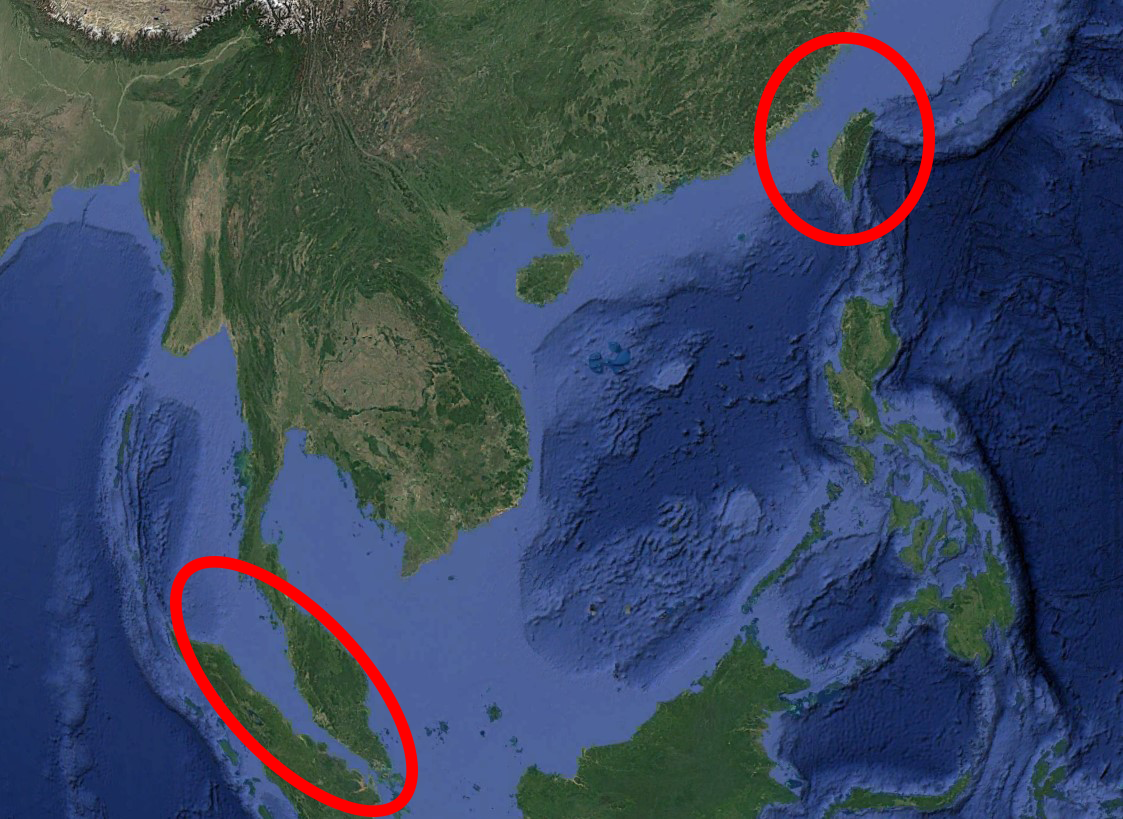
This is not about Taiwan. It is a struggle for control over the chokepoints of global trade. Taiwan is the world's sole producer of the most advanced semiconductors — chips without which everything grinds to a halt, from automobiles to data centers. The Strait of Malacca is the artery through which roughly 22% of all global maritime trade flows, including oil bound for Japan, South Korea, and China itself.
Beijing has no desire to shut down Malacca — it is critically dependent on it. Yet in April 2026, Washington signaled its intention to use control of the strait as a pressure lever against China in the event of a Taiwan scenario. Both sides have each other by the throat, and both know it.
What Is Already Happening
China has officially shifted to a policy of "comprehensive coercion" of Taiwan — short of direct invasion, but sustained in pressure. The toolkit is already in use: quasi-permanent military exercises with closures of maritime and airspace zones, cyberattacks, economic pressure, and the accelerated conversion of civilian vessels for amphibious operations. Western intelligence agencies have documented plans to construct dozens of large landing ships by the end of 2026.
The Economic Impact
The Strait of Hormuz crisis already demonstrated the mechanism: even the threat of a blockade drives up insurance premiums, extends shipping routes, and stokes inflation through supply chains. A Taiwan scenario is an order of magnitude larger. The Red Sea disruptions of 2025 cut Suez Canal traffic by roughly 70% — and that was a regional conflict of moderate intensity. A Taiwan crisis would strike supply chains deeper and wider. For Russia, the picture is ambiguous: high oil prices are advantageous, but a drop in Asian demand and more expensive imports are direct negatives.
Forecast: Three Years Under Pressure
2026 is the year of maximum pressure short of war. There are no signs yet of mass mobilization or the logistical preparation required for an amphibious invasion. A full-scale assault remains unlikely; a sharp escalation is nearly inevitable.
2027 is the year marked in red on the calendar. Xi Jinping has tasked the PLA with achieving operational readiness by this deadline. U.S. admirals have said so openly before Congress. Invasion shifts from a tail risk to a scenario that must be factored into serious planning. Continued pressure and blockade-style actions are virtually guaranteed.
2028 will be either a post-crisis year or one of continued "stranglehold pressure" — depending entirely on whether Beijing manages to break Taiwan's resistance without a direct military strike.
The key indicator to watch is not rhetoric, and not exercises. The indicator is PLA logistics: military rail movements, port congestion, changes in civilian shipping routes. That cannot be hidden.
What Clear-Headed Businesses Should Do
Any contract tied to Taiwanese electronics, Malacca-routed logistics, or production capacity in South Korea and Japan already requires a contingency plan for "the strait closes for three months." Not because war is inevitable — but because even a meaningful probability of disruption cannot fit into a standard contract without a force majeure clause. Diversify your suppliers. Study alternative routes. Insurance premiums respond to escalation far faster than any government can formulate a position.
.png)
.png)

.png)
.png)