 Рус
Рус Eng
Eng Esp
Esp
The shadow fleet and maritime law appearing in the same sentence today is no coincidence. Qatar and the UAE — whose companies QatarEnergy and ADNOC account for roughly a fifth of global LNG exports — have begun switching off vessel tracking systems while transiting the Strait of Hormuz, effectively mirroring the tactics of Russia's shadow fleet.
Mikhail Azhgirevich
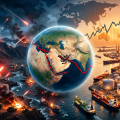
When the trading chief of the Middle East's largest oil company publicly names a specific month as a potential tipping point, that's not an analytical aside. It's a market signal: get ready. Philippe Khoury of ADNOC has warned that August could mark a sharp price spike if demand keeps rising and the supply crisis triggered by the war on Iran remains unresolved.

Beijing isn't waiting for Brussels to act - it's playing offense. China's Ministry of Commerce issued its warning on Saturday, just one day after the European Commission held internal consultations on trade policy toward China. The pressure playbook is well-rehearsed: Brussels deliberates, Beijing responds publicly and forcefully, without waiting for concrete decisions to land.

The Northern Sea Route will become one of the planet's key trade arteries within two decades. This is not optimists' speculation — it is physics: the Arctic is warming at twice the global average rate, and the navigational window widens with every passing decade.

The world’s coldest country is warming faster than any other. Over the next half-century, Russia is set to gain an additional 2.5°C in average annual temperature. This is not an environmental statistic. It is a redistribution of resources, trade routes, and demographics.

Beijing has spent years openly rehearsing a naval blockade of the island. The "Joint Sword 2025" exercises and the subsequent 2026 maneuvers are not a show of force for its own sake — they are an accumulation of operational experience. The difference between a rehearsal and the real thing is a political decision, not a question of military readiness.

Intelligence is returning to its central question: What does the other side actually think and decide? The answer cannot be obtained via satellite or intercepted communications. Only a human being inside the system truly knows. But gaining access to such people — in Russia, in China — has become fundamentally different from what it was twenty years ago.
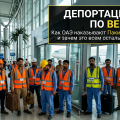
When a state begins deporting migrant workers based on their names – Ali, Hasan, Hussein – it’s no longer immigration policy. It’s a political message, packaged in arrest warrants. Nearly 15,000 Pakistani Shiite workers have been expelled from the UAE without charges, without access to their bank accounts, and without the right to appeal. For each one, a personal catastrophe.

Two news items from a single day — and the whole geopolitical picture is laid bare. Saudi Arabia and Kuwait lifted restrictions on the use of their bases by U.S. military forces. Secretary of State Rubio approved arms sales to five Gulf states worth $25.8 billion — three times the original sum.

On May 2, Vladimir Putin signed a federal law ratifying a military agreement with Nicaragua — a document originally signed back on September 22, 2025, in Moscow by Defense Minister Belousov and Commander-in-Chief of the Nicaraguan Army, General Aviles. No fanfare, no press conferences, no emergency briefings.
.png)
.png)

.png)
.png)