
 Рус
Рус Eng
Eng Esp
Esp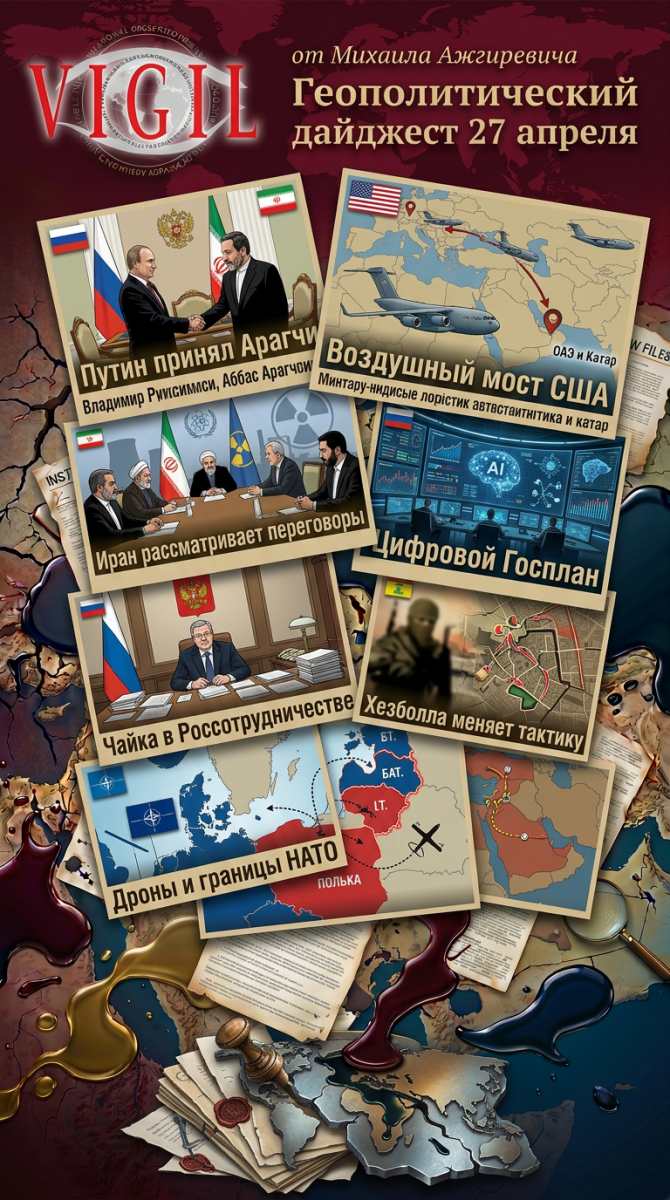
Putin Meets Araghchi — Moscow Takes on the Role of Peacemaker
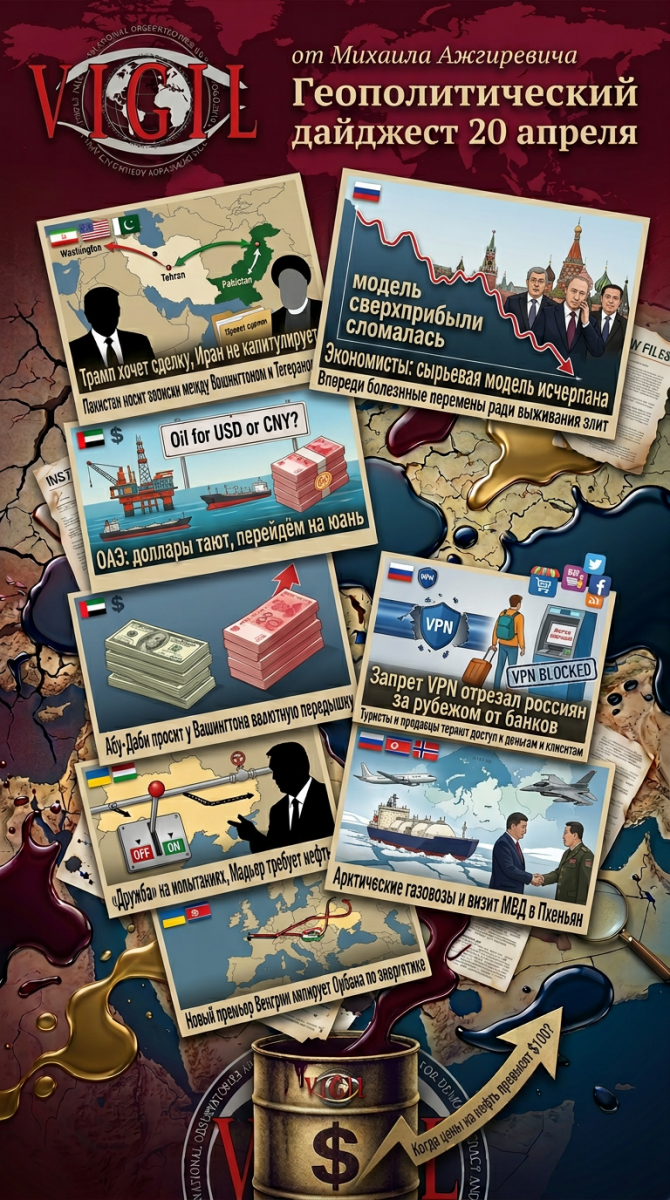
Russian President Vladimir Putin has hosted Iranian Foreign Minister Abbas Araghchi in Moscow, stating that Russia will do everything in its power to bring about a swift peace in the Middle East. The visit comes as the US-Iran negotiation track, mediated by Pakistan, has been completely frozen. Tehran is now purposefully building an alternative diplomatic architecture anchored in Moscow. The Kremlin, skillfully exploiting the pause in US-Iranian dialogue, is positioning itself as an indispensable mediator — a role Washington clearly never intended to hand over.
US Air Bridge Is No Longer Just Logistics
The US Air Force has sharply increased the intensity of cargo and personnel transfers to bases in the UAE and Qatar, with refueling aircraft spotted over Saudi Arabia and near the Strait of Hormuz. Meanwhile, Vice President Vance has publicly questioned Pentagon assessments — according to his data, stockpiles of key munitions may be "catastrophically low," even as Hegseth and military leadership insist the operation is proceeding "very successfully."
Iran Is 'Considering' Talks — and Humiliating Washington in the Process
Araghchi announced that the US has proposed a new round of negotiations, and Tehran is "considering this possibility" — a turn of phrase that upends the entire logic of diplomacy. Not long ago, the US side was painting a picture in which "Uncle Sam" dictated terms to a recalcitrant Tehran. Now, it is Iran that leisurely decides whether to deign to respond to the American offer. Meanwhile, the nuclear file has been officially removed from the negotiating table.
Oreshkin Announces the Reincarnation of Gosplan — Only Digital
Maxim Oreshkin, Deputy Head of the Russian Presidential Administration, has publicly declared a "return and reincarnation of the planned economy in its best form," linking this to total digitalization and automation of management processes. On the same day, Putin called for developing Russia's own model for AI regulation, taking foreign experience into account. Meanwhile, the Digital Ministry has already drafted legislation requiring mandatory certification of AI models by law enforcement agencies and the screening of algorithms for "traditional values."
Chaika Takes Over Rossotrudnichestvo — Primakov Exits in Silence
Putin has signed a decree appointing Igor Chaika — son of former Prosecutor General Yuri Chaika — as the head of Rossotrudnichestvo, replacing journalist Yevgeny Primakov. The new head of the "soft power" agency thanked the president for his trust — a customary ritual behind which lies a complete change of personnel and, in all likelihood, a complete overhaul of the agency's concept for working with foreign audiences. The Chaika name in Russia's political system signifies not just an appointment but the integration of an agency into a different orbit of influence. A changing of the guard.
Hezbollah Remembers the 1980s — Are Suicide Bombings Making a Comeback?
A senior Hezbollah commander has stated that the group is considering a return to "martyrdom operations" — suicide attacks it actively practiced in the 1980s. Against the backdrop of continued Israeli ceasefire violations and overall escalation of the conflict with Iran, this statement is not nostalgia but a very concrete warning of a tactical shift. If Hezbollah does return to this method, the Middle East will face a fundamentally new level of unpredictability.
Poland and the Baltics Allow Ukrainian Drones to Pass — Moscow Takes Note
Deputy Secretary of Russia's Security Council Shevtsov has officially stated that Poland and the Baltic states are not hindering the flight of Ukrainian attack drones through their airspace. Such a statement from a Russian official is a classic narrative for domestic audiences, yet it inevitably raises the question of the de facto blurring of the line between neutrality and complicity in Moscow's eyes.
.png)


.png)
.png)

.png)
.png)