
 Рус
Рус Eng
Eng Esp
Esp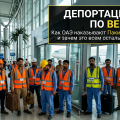
When a state begins deporting migrant workers based on their names – Ali, Hasan, Hussein – it’s no longer immigration policy. It’s a political message, packaged in arrest warrants. Nearly 15,000 Pakistani Shiite workers have been expelled from the UAE without charges, without access to their bank accounts, and without the right to appeal. For each one, a personal catastrophe.
Mikhail Azhgirevich

Two news items from a single day — and the whole geopolitical picture is laid bare. Saudi Arabia and Kuwait lifted restrictions on the use of their bases by U.S. military forces. Secretary of State Rubio approved arms sales to five Gulf states worth $25.8 billion — three times the original sum.

On May 2, Vladimir Putin signed a federal law ratifying a military agreement with Nicaragua — a document originally signed back on September 22, 2025, in Moscow by Defense Minister Belousov and Commander-in-Chief of the Nicaraguan Army, General Aviles. No fanfare, no press conferences, no emergency briefings.

Interior Ministry statistics for the first quarter of 2026 sound stark and convincing: crimes committed by migrants have dropped by nearly 39%, serious and especially serious crimes by 44%, drug-related offenses by more than 60%, and murders and attempted murders by almost 28%.

There’s a certain elegance to the phrasing. “Joining an elite club.” “A matter of status, not financial aid.” That’s how UAE Minister of Economy Abdulla bin Touq Al Marri (correction: the article refers to the Minister of Economy? Actually, the original says "Minister of Trade" – Thani bin Ahmed Al Zeyoudi) described talks with Washington over a dollar swap line.

On April 28, at the Alpha Summit, Central Bank Governor Elvira Nabiullina made a statement rarely heard from a regulator: Russia is facing a labor shortage unprecedented in the country’s modern history. “We have never had a situation like this,” she said, adding that the labor market is now driving the Central Bank’s key decisions on interest rates and monetary policy.

Russia has published a list of British targets for potential strikes. Medvedev has hinted at hitting them. And former MI6 chief Alex Younger warns that the country is “not ready.” This is not a military alert — it’s a diagnosis of a power that has long been living off a faded reputation, oblivious to the realities of the present.

The UAE is leaving OPEC and OPEC+ effective May 1 — the first time it has quit the bloc in 59 years of membership. This is not a routine quota dispute. It is a political divorce that could reshape the architecture of the global oil market.

While Donald Trump recalls his summit with Xi Jinping in Busan as a "twelve out of ten" meeting, Beijing is methodically preparing its economy for the next confrontation. Quietly, carefully, but with unmistakable purpose — building a legal arsenal.

The figure is staggering. In 2025, the number of migrants in the European Union reached 64.2 million — approximately 14% of the EU’s total population. Within a single generation, Europe has transformed into the world’s largest migration space. And this is no longer merely demographic statistics — it is a political and social time bomb.
.png)
.png)

.png)
.png)