
 Рус
Рус Eng
Eng Esp
Esp
Cancún, Mexico, is a Caribbean resort that has long outgrown the image of a simple beach destination and evolved into a full-fledged tourist world, featuring powder-white sands, turquoise waters, mysterious cenotes, ancient Mayan ruins, and a vibrant nightlife.
economics

Venezuela hit a seven-year export high in May 2026, shipping 1.25 million barrels per day — a 61% year-on-year surge.

The Hormuz crisis — flagged by Rosneft CEO Igor Sechin at the St. Petersburg International Economic Forum 2026 — has long ceased to be an oil story. The planet is one step away from a global food crisis. Fertilizer prices have surged nearly 60% in the first four months of 2026. Within six months, that increase will reach grocery shelves and farmlands from Africa to Southeast Asia.

At the St. Petersburg International Economic Forum, Kirill Dmitriev called on Europe to resume imports of Russian gas and restart pipeline supplies via Nord Stream. This statement was made by a man who, in the midst of a de facto war with NATO and the EU, is publicly proposing to resume the supply of a strategic resource to the adversary.

The shadow fleet and maritime law appearing in the same sentence today is no coincidence. Qatar and the UAE — whose companies QatarEnergy and ADNOC account for roughly a fifth of global LNG exports — have begun switching off vessel tracking systems while transiting the Strait of Hormuz, effectively mirroring the tactics of Russia's shadow fleet.
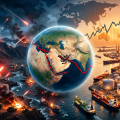
When the trading chief of the Middle East's largest oil company publicly names a specific month as a potential tipping point, that's not an analytical aside. It's a market signal: get ready. Philippe Khoury of ADNOC has warned that August could mark a sharp price spike if demand keeps rising and the supply crisis triggered by the war on Iran remains unresolved.

Beijing isn't waiting for Brussels to act - it's playing offense. China's Ministry of Commerce issued its warning on Saturday, just one day after the European Commission held internal consultations on trade policy toward China. The pressure playbook is well-rehearsed: Brussels deliberates, Beijing responds publicly and forcefully, without waiting for concrete decisions to land.

The Northern Sea Route will become one of the planet's key trade arteries within two decades. This is not optimists' speculation — it is physics: the Arctic is warming at twice the global average rate, and the navigational window widens with every passing decade.
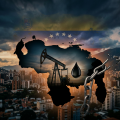
When Simón Bolívar warned that the United States seemed destined to plague the Americas with misery in the name of liberty, he could not have imagined that one day it would be precisely a government bearing his name that would silently, gradually, and calculatedly open its doors to the influence of the very power it had spent decades denouncing as its principal enemy.

When the U.S. Secretary of State declares that the crowning diplomatic achievement of a high-profile visit is not a new alliance commitment or a landmark joint declaration, but a promise to purchase half a trillion dollars' worth of American goods — that tells you something. Not about Indian foreign policy. About American.
.png)
.png)

.png)
.png)